Psychiatric mental health nursing is where the science of nursing meets its most human dimension. There are no wounds to dress, no labs to titrate, no surgical sites to monitor. The primary tool is the therapeutic relationship — and building it requires a precision of language, a quality of presence, and a depth of self-awareness that no other nursing specialty demands quite as directly.
Most nursing students find psychiatric content one of two things — either immediately captivating or profoundly uncomfortable. The discomfort usually comes from the same source. Psychiatry feels ambiguous. There are no clear vital signs for psychological distress, no imaging studies that confirm a diagnosis of depression, no wound that heals in a predictable number of days. The therapeutic communication questions on the NCLEX feel arbitrary until you understand the principles behind them — and once you understand those principles, they become some of the most predictable and learnable questions on the entire examination.
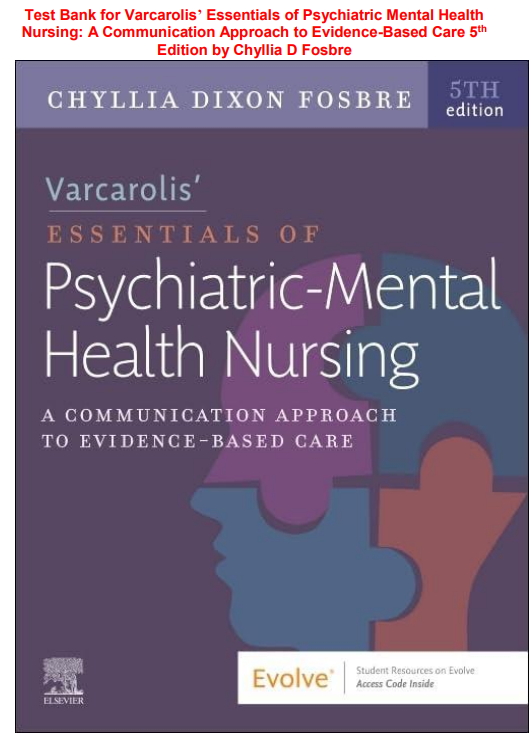
Varcarolis’ Essentials of Psychiatric Mental Health Nursing has been the leading undergraduate psychiatric nursing text for years. The 5th edition, now authored by Chyllia Fosbre, continues the tradition that Elizabeth Varcarolis built — grounding every aspect of psychiatric nursing in evidence-based practice while keeping therapeutic communication and the nurse-patient relationship at the center of everything. It integrates updated DSM-5-TR diagnostic criteria, current psychopharmacological guidelines, expanded trauma-informed care content, stronger coverage of health equity in mental health, and deeper alignment with the clinical judgment framework the Next Generation NCLEX demands.
This test bank was built to match it. Every question reflects both the evidence-based clinical content and the communication-centered philosophy of the 5th edition. You practice not just identifying a psychiatric condition but responding to it therapeutically — with the right words, the right boundaries, the right clinical priorities, and the right evidence-based nursing interventions that make psychiatric nursing genuinely effective.
What Is Inside
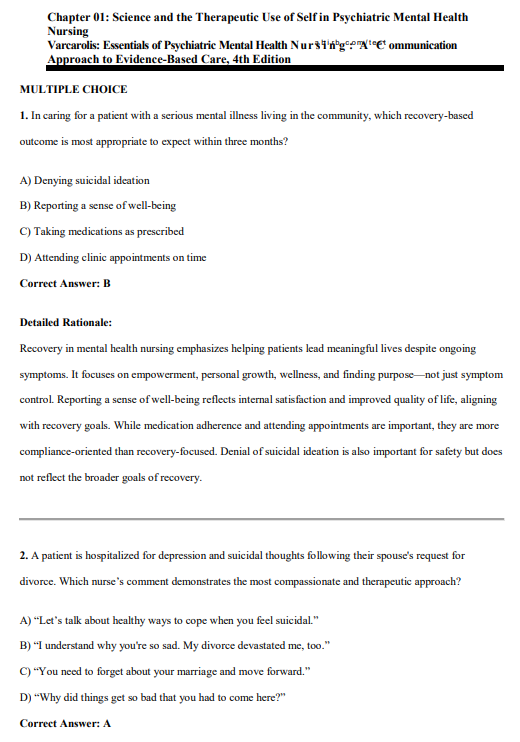
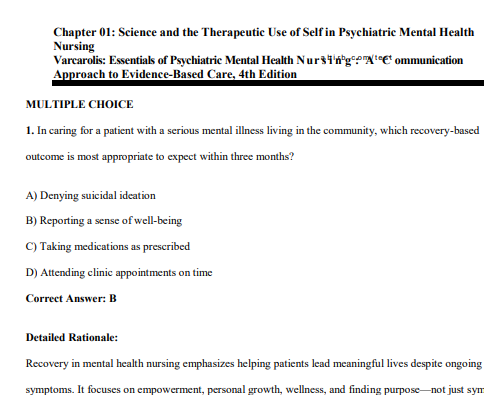
You get over a thousand practice questions covering every major psychiatric condition, therapeutic communication technique, pharmacological treatment, and evidence-based nursing intervention in Fosbre’s 5th edition. Questions are written in multiple-choice, select-all-that-apply, and ordered response formats — consistent with what you will encounter on nursing school exams and the NCLEX-RN and NCLEX-PN.
Every question has a clearly marked correct answer. Every answer includes a full written rationale. The rationale explains the psychiatric nursing principle, therapeutic communication rationale, DSM-5-TR diagnostic criterion, evidence-based treatment guideline, or psychopharmacological concept behind the correct choice and addresses why each wrong option reflects a non-therapeutic response, a boundary violation, a diagnostic error, or a clinical judgment failure. In psychiatric nursing, the difference between a therapeutic and a non-therapeutic response is often subtle — and the rationales in this test bank treat those distinctions with the clinical seriousness they deserve.
Topics Covered
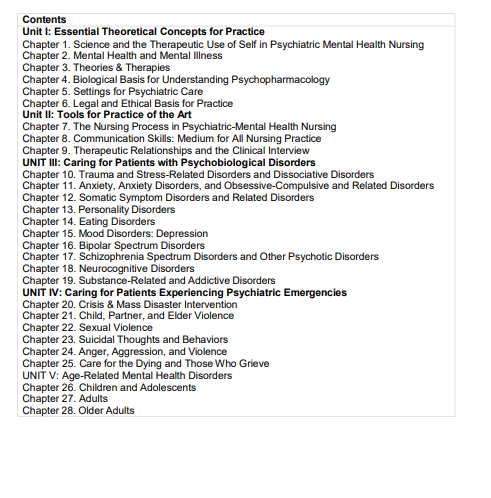
The test bank follows the complete structure of Fosbre’s 5th edition across every major content area, including:
Foundations of Psychiatric Mental Health Nursing — the history and evolution of psychiatric nursing and mental health treatment, the recovery model and its implications for nursing practice, the psychiatric mental health nursing role and scope of practice, the biopsychosocial model of mental illness, stigma and its impact on mental health care seeking and nursing practice, legal and ethical issues in psychiatric nursing including voluntary and involuntary hospitalization, the least restrictive environment principle, patient rights in psychiatric settings, confidentiality and its limits including duty to warn, documentation in psychiatric settings, standards of psychiatric mental health nursing practice, and the nurse’s role in trauma-informed care
Therapeutic Communication and the Nurse-Patient Relationship — the definition and characteristics of the therapeutic relationship, phases of the nurse-patient relationship including orientation, working, and termination phases and the nursing responsibilities at each phase, therapeutic communication techniques and their specific clinical applications, non-therapeutic communication patterns and the reasoning behind why each is harmful, active listening and attending behaviors, silence as a therapeutic tool, the appropriate and inappropriate use of self-disclosure, maintaining therapeutic boundaries and recognizing boundary violations, countertransference recognition and its management through supervision, and the use of self as the primary therapeutic instrument in psychiatric nursing
Mental Status Examination and Psychiatric Assessment — components of the comprehensive psychiatric nursing assessment, systematic mental status examination including appearance, behavior, speech, mood, affect, thought process, thought content, perceptual disturbances, cognition, insight, and judgment, the difference between mood and affect and its clinical documentation implications, risk assessment for suicide and homicidal ideation, trauma-informed assessment principles, cultural considerations in psychiatric assessment, and documentation standards for psychiatric nursing assessment
Psychopharmacology in Psychiatric Nursing — antipsychotic medications including first-generation typical antipsychotics and second-generation atypical antipsychotics with mechanism of action, target symptoms, and extrapyramidal side effect monitoring including acute dystonia, akathisia, pseudoparkinsonism, and tardive dyskinesia, neuroleptic malignant syndrome recognition and emergency response, antidepressant medications including SSRIs, SNRIs, tricyclic antidepressants, and MAOIs with safety profiles, onset of action patient teaching, serotonin syndrome recognition, and MAOI dietary restrictions, mood stabilizers including lithium carbonate with narrow therapeutic index monitoring, toxicity recognition, and drug and dietary interactions, anticonvulsant mood stabilizers, anxiolytic medications including benzodiazepines and buspirone with patient teaching, sedative-hypnotic medications and their risks in older adults, stimulant medications for ADHD with monitoring, and electroconvulsive therapy nursing care including pre-procedure preparation, monitoring, and post-procedure assessment
Trauma-Informed Care — the definition and prevalence of trauma and its neurobiological impact, adverse childhood experiences and their long-term health implications, the six principles of trauma-informed care including safety, trustworthiness, peer support, collaboration, empowerment, and cultural sensitivity, assessing for trauma history in nursing practice, avoiding re-traumatization in clinical interactions, and nursing interventions that promote safety and empowerment in trauma survivors across healthcare settings
Anxiety and Related Disorders — DSM-5-TR criteria for generalized anxiety disorder, panic disorder, social anxiety disorder, specific phobia, and agoraphobia, the anxiety spectrum from mild to severe to panic with corresponding nursing responses at each level, physiological and psychological manifestations of anxiety, therapeutic nursing interventions for each level of anxiety, anxiolytic and antidepressant pharmacological management for anxiety disorders, non-pharmacologic anxiety management techniques including relaxation and breathing strategies, and patient and family education for anxiety disorders
Obsessive-Compulsive and Related Disorders — DSM-5-TR criteria for obsessive-compulsive disorder, body dysmorphic disorder, hoarding disorder, trichotillomania, and excoriation disorder, nursing assessment of obsessions and compulsions and their impact on daily functioning, therapeutic communication with patients whose rituals are ego-syntonic versus ego-dystonic, exposure and response prevention principles relevant to nursing care, pharmacological management nursing implications, and the difference between therapeutic limit-setting and reinforcement of compulsive behavior
Trauma and Stressor-Related Disorders — DSM-5-TR criteria for posttraumatic stress disorder, acute stress disorder, and adjustment disorders, the neurobiology of trauma and its clinical presentation, nursing assessment of trauma responses including hyperarousal, avoidance, and intrusion symptoms, trauma-informed therapeutic nursing interventions, communication approaches that avoid re-traumatization, pharmacological management nursing considerations, and special considerations for nursing care of military veterans and first responders with combat-related PTSD
Depressive Disorders — DSM-5-TR criteria for major depressive disorder, persistent depressive disorder, premenstrual dysphoric disorder, and seasonal affective disorder, nursing assessment of depression including vegetative signs such as sleep disturbance, appetite changes, psychomotor changes, and fatigue, cognitive manifestations of depression including hopelessness and worthlessness, suicide risk assessment within the context of depression, therapeutic communication with depressed patients including appropriate use of hope and avoiding platitudes, antidepressant nursing management including onset of action education and safety monitoring, electroconvulsive therapy nursing care, and the recovery-focused nursing approach to depressive disorders
Bipolar and Related Disorders — DSM-5-TR criteria for bipolar I disorder, bipolar II disorder, and cyclothymia, nursing assessment during manic episodes including elevated mood, grandiosity, decreased need for sleep, pressured speech, and impulsivity, nursing assessment during depressive episodes within bipolar disorder, safety management during acute mania including limit-setting and environmental modification, therapeutic communication with manic patients including calm, clear, and consistent messaging, mood stabilizer and atypical antipsychotic nursing management, the particular challenges of medication adherence in bipolar disorder and nursing strategies to address them, and psychoeducation for patients and families about bipolar disorder management
Schizophrenia Spectrum and Other Psychotic Disorders — DSM-5-TR criteria for schizophrenia, schizoaffective disorder, delusional disorder, and brief psychotic disorder, positive symptoms including hallucinations, delusions, disorganized speech, and disorganized behavior versus negative symptoms including alogia, avolition, anhedonia, and affective flattening and their nursing implications, nursing assessment of psychosis, therapeutic communication with patients experiencing hallucinations including the appropriate acknowledgment response, therapeutic communication with patients experiencing delusions without confronting or reinforcing delusional content, reality orientation versus validation approaches and when each is appropriate, antipsychotic medication management and adherence support, and psychosocial rehabilitation nursing support
Personality Disorders — DSM-5-TR criteria and clinical characteristics across cluster A, B, and C personality disorders, nursing assessment of personality disorder presentations across care settings, therapeutic communication and consistent limit-setting strategies with borderline personality disorder, managing splitting behavior in therapeutic relationships and inpatient settings, countertransference recognition in personality disorder nursing relationships, dialectical behavior therapy principles relevant to nursing practice, and self-care strategies for nurses working with personality disorder patients
Eating Disorders — DSM-5-TR criteria for anorexia nervosa, bulimia nervosa, binge-eating disorder, and avoidant restrictive food intake disorder, nursing assessment of eating disorder behaviors and their medical complications, medical monitoring priorities in anorexia nervosa including refeeding syndrome recognition, therapeutic communication with patients who minimize or deny symptoms without confrontation or reinforcement, behavioral treatment program nursing roles including meal supervision and post-meal monitoring, pharmacological management nursing implications, and family involvement in eating disorder treatment
Substance Use and Addictive Disorders — DSM-5-TR criteria for substance use disorders across alcohol, opioids, stimulants, cannabis, and other substance classes, nursing assessment using CAGE and AUDIT screening tools, intoxication and withdrawal nursing management across substance classes, alcohol withdrawal delirium recognition and pharmacological management including benzodiazepine protocol nursing care, CIWA-Ar scoring and its use in guiding alcohol withdrawal management, motivational interviewing as an evidence-based communication approach for substance use, harm reduction philosophy and nursing application, medication-assisted treatment including methadone, buprenorphine, and naltrexone nursing implications, and the role of 12-step and recovery support in nursing care planning
Neurocognitive Disorders — DSM-5-TR criteria for delirium and major and mild neurocognitive disorders, the clinical differentiation of delirium from dementia including onset, fluctuation, and attention, nursing management of delirium including identification of precipitating factors and non-pharmacologic delirium prevention using the HELP model, nursing care for patients with Alzheimer’s disease across stages, behavioral and psychological symptoms of dementia nursing management including redirection and validation therapy, safety considerations for patients with cognitive impairment, caregiver burden assessment and support, and the ethical dimensions of caring for patients with diminished decision-making capacity
Suicide and Self-Harm — the epidemiology of suicide and its relationship to psychiatric disorders, static and dynamic suicide risk factors, protective factors and their clinical application, comprehensive suicide risk assessment frameworks, therapeutic communication during suicide risk assessment including direct questioning without reinforcing suicidal ideation, safety planning as an evidence-based nursing intervention, the distinction between suicidal behavior and non-suicidal self-injury, inpatient suicide precaution levels and nursing implementation, and the nurse’s role in means restriction counseling and lethal means safety
Crisis Intervention — the definition and types of crises including situational, maturational, and adventitious crises, crisis theory and the Aguilera crisis intervention model, the nurse’s role in acute crisis assessment and intervention, de-escalation techniques for agitated and aggressive patients, verbal de-escalation principles and evidence-based approaches, seclusion and restraint as last-resort interventions including nursing responsibilities before, during, and after restraint use, post-incident debriefing, and trauma-informed approaches to managing psychiatric emergencies
Child and Adolescent Psychiatric Nursing — developmental considerations in child and adolescent psychiatric assessment, DSM-5-TR criteria for ADHD, autism spectrum disorder, oppositional defiant disorder, conduct disorder, separation anxiety disorder, and selective mutism, therapeutic communication across developmental stages with children and adolescents, family-centered care in child and adolescent psychiatry, pharmacological management nursing considerations in pediatric psychiatric populations, school refusal and school-related anxiety nursing assessment, and mandatory reporting of child abuse and neglect
Older Adult Psychiatric Nursing — psychiatric conditions common in older adults including late-life depression, anxiety disorders, late-life psychosis, and grief, distinguishing depression from dementia in older adults, polypharmacy risks and the Beers Criteria application to psychotropic medications in older adults, therapeutic communication adapted for older adults with sensory or cognitive impairments, the intersection of medical illness and psychiatric presentation in aging, and grief and bereavement support in older adults
Community Mental Health and Recovery — the recovery model and its eight dimensions of wellness, community mental health nursing roles including case management and assertive community treatment, principles of psychiatric rehabilitation, the nurse’s role in supporting community reintegration, social determinants of mental health and health equity in psychiatric care, and cultural humility in community mental health nursing practice
Who Should Use This
This test bank is the right resource for nursing students enrolled in a psychiatric mental health nursing course whose program uses Fosbre’s 5th edition, students who find therapeutic communication questions unpredictable and want structured practice to build pattern recognition in this question type, NCLEX-RN and NCLEX-PN candidates who want focused practice on psychosocial integrity content — one of the most consistently tested domains on both examinations, students who have previously struggled with psychiatric nursing course examinations and need a resource that clarifies the principles behind therapeutic versus non-therapeutic responses, nursing faculty teaching psychiatric mental health nursing who need a clinically grounded, DSM-5-TR aligned, and communication-focused question pool for building course assessments, and students in LPN-to-RN bridge or accelerated nursing programs who need efficient and structured psychiatric nursing content review.
Why the 5th Edition Specifically
Psychiatric nursing practice continues to evolve. The DSM-5-TR brought diagnostic updates across multiple disorder categories. Evidence-based psychopharmacological guidelines are revised as new research emerges. Trauma-informed care has moved from a specialty framework to a universal nursing competency expectation. The recovery model continues to reshape how psychiatric nursing approaches the patient relationship. Health equity has become an explicit focus in mental health nursing education. The 5th edition of Varcarolis’ Essentials under Fosbre reflects all of these developments — with DSM-5-TR diagnostic criteria, updated pharmacological content, expanded trauma-informed care framework, stronger health equity integration, and alignment with the Next Generation NCLEX clinical judgment emphasis.
This test bank was written to align with the 5th edition specifically. If your program uses the 5th edition, this is the resource that matches it.
5 Sample Questions
Question 1
A nurse on an inpatient psychiatric unit is sitting with a patient who was admitted following a suicide attempt by medication overdose. The patient has been silent for several minutes and then says quietly: “Sometimes I think everyone would be better off without me.” Which nursing response best reflects evidence-based therapeutic communication for this clinical situation?
A. “That is not true — your family loves you very much and needs you here.”
B. “It sounds like you are having thoughts of harming yourself again. Can you tell me more about what you mean by that?”
C. “You should not say things like that. You have so much to live for.”
D. “I understand — everyone feels that way sometimes when they are going through a difficult time.”
Correct Answer: B
This patient has made a statement that contains implicit suicidal ideation — expressing that others would be better off without them is a well-recognized warning sign that warrants direct, non-reactive exploration. The therapeutic response acknowledges what the patient has communicated, names it clearly without alarm, and opens space for the patient to elaborate. Direct questioning about suicidal ideation does not plant the idea — it communicates that the nurse is paying attention and that the patient can be honest about their thoughts. Option A offers false reassurance by contradicting the patient’s perception rather than exploring it. Option C is dismissive and moralistic. Option D minimizes the patient’s experience by universalizing it, which closes down rather than opens up therapeutic communication about a clinically serious disclosure.
Question 2
A nurse is caring for a patient with schizophrenia who becomes increasingly agitated during a group therapy session, stands up abruptly, and says loudly: “They are all watching me through the television. I have to get out of here.” Which nursing response best reflects de-escalation and therapeutic communication principles?
A. “There is no one watching you through the television. Please sit back down and participate in the group.”
B. Calmly approach the patient, speak in a low and steady tone, acknowledge the patient’s distress without validating the delusion, invite the patient to step out of the group into a quieter space, and offer a brief redirection activity
C. Immediately call a code and prepare for physical restraint since the patient is a safety risk to other group members
D. Ask the group facilitator to address the patient’s concerns while the nurse documents the behavior from across the room
Correct Answer: B
De-escalation of an agitated psychiatric patient requires a calm, non-confrontational approach that acknowledges the patient’s emotional state without reinforcing psychotic content. Speaking quietly and steadily reduces environmental stimulation. Offering to move to a quieter space removes the patient from the triggering environment and reduces stimulation from other group members. Inviting rather than directing gives the patient a sense of agency, which is a key de-escalation principle. Directly confronting the delusion typically increases defensiveness and agitation rather than reducing it. Physical restraint is a last-resort intervention — not the first response to verbal agitation. Distancing from the patient and delegating to another provider without nursing engagement fails the patient at a moment requiring direct therapeutic presence.
Question 3
A patient with bipolar I disorder who was stabilized on lithium 900 mg daily has been discharged two weeks ago. The patient calls the clinic and tells the nurse they have stopped taking lithium because they feel so well that they do not think they need it anymore. The patient reports feeling “amazing, full of energy, and full of great ideas.” They have not slept more than three hours per night for five days and have placed three large online orders totaling over five thousand dollars. Which nursing assessment and response is most appropriate?
A. Validate the patient’s positive mood and encourage them to continue monitoring how they feel before making a decision about restarting the medication
B. Recognize these as warning signs of a manic episode emerging from lithium discontinuation, express concern directly and non-judgmentally, instruct the patient not to make any further financial decisions, advise them to restart lithium immediately if safe to do so per provider guidance, and facilitate an urgent appointment with the provider
C. Reassure the patient that feeling well after discharge is expected and that lithium can be restarted when they feel they need it again
D. Advise the patient to take a double dose of lithium today to rapidly restore therapeutic levels and then return to their regular dosing schedule
Correct Answer: B
This patient is demonstrating multiple classic signs of a manic episode — elevated mood described as “amazing,” markedly decreased need for sleep, racing thoughts characterized as “great ideas,” and impulsive high-cost spending behavior. These are not signs of wellness — they are signs that a manic episode has been triggered by lithium discontinuation, which is a well-documented clinical risk. Lithium discontinuation is particularly dangerous in bipolar disorder because rebound mania can be more severe than the patient’s typical episodes. The nurse must communicate concern clearly and non-judgmentally, protect the patient from further impulsive decision-making, facilitate urgent clinical follow-up, and support safe lithium reinstatement per provider guidance. Validating the mood or advising self-directed double dosing are both inappropriate responses.
Question 4
A nurse is working the evening shift on an inpatient psychiatric unit and is assigned to a patient with a history of borderline personality disorder who has been hospitalized following a superficial self-cutting episode. During the shift, the patient tells the nurse: “You are the only one who really understands me here. The day nurse was terrible and did not care about me at all. But you actually listen.” Which nursing concept does this statement most clearly represent, and what is the most therapeutic response?
A. The patient is building appropriate rapport with the nurse — accept the compliment and reinforce the therapeutic relationship
B. The patient is exhibiting splitting — a defense mechanism in which people and relationships are perceived as entirely good or entirely bad without integration — and the nurse should avoid reinforcing the idealization while maintaining a warm and consistent therapeutic stance
C. The patient is providing feedback about inadequate care from the day nurse — document the concern and escalate it to the charge nurse for follow-up
D. The patient is testing the nurse’s boundaries and should be redirected to a group activity immediately to prevent further manipulation
Correct Answer: B
Splitting is a hallmark defense mechanism in borderline personality disorder in which the individual perceives people, relationships, and situations as either entirely good or entirely bad, without the capacity to integrate both positive and negative qualities into a balanced whole. The patient’s statement — idealizing the current nurse while devaluing the day nurse — is a textbook example of splitting in a clinical setting. The therapeutic response is neither to accept the idealization at face value nor to confront it aggressively, but to maintain a consistent, warm, boundaried stance that does not reinforce the splitting dynamic. The nurse might respond by acknowledging the patient’s experience while gently noting that all staff members care about their patients’ wellbeing. Characterizing the patient’s behavior as manipulation and immediately redirecting is a non-therapeutic response that fails to engage with the underlying defense mechanism.
Question 5
A nurse is providing psychoeducation to a patient newly prescribed sertraline 50 mg daily for major depressive disorder. The patient asks: “How will I know if this medication is working?” Which patient-centered teaching response most accurately reflects the pharmacology and clinical trajectory of SSRI therapy?
A. “If the medication is working, you should feel significantly better within the first two or three days.”
B. “Sertraline begins to relieve physical symptoms like sleep and appetite changes within one to two weeks, while mood improvement typically takes two to four weeks and full therapeutic effect may take six to eight weeks — it is important to continue taking it even if you do not notice immediate mood change, and to let us know if you develop any concerning symptoms.”
C. “You will know it is working when your depression is completely gone — if you still have any symptoms after two weeks, the medication is not effective for you.”
D. “Sertraline works immediately on serotonin in your brain, so you should feel better within 24 hours of the first dose.”
Correct Answer: B
SSRIs like sertraline produce their antidepressant effect through gradual neuroadaptive processes that take time to develop. Physical or vegetative symptoms of depression — sleep disturbance, appetite changes, and fatigue — often begin to improve within one to two weeks. Mood, anhedonia, and cognitive symptoms typically improve more slowly, with meaningful improvement emerging over two to four weeks and full therapeutic effect taking six to eight weeks. Side effects, by contrast, often appear within the first few days — particularly nausea, headache, and agitation — which can be discouraging before mood improvement is apparent. This discordance is a leading reason patients discontinue antidepressants prematurely. Patient-centered teaching must set accurate expectations, explain the trajectory of improvement, and provide guidance about when to contact the provider if concerning symptoms develop.
Frequently Asked Questions
Is this the official Elsevier test bank for Fosbre’s 5th edition?
No. This is an independently developed study resource based on the content of Chyllia Fosbre’s 5th edition. It is not published or endorsed by Elsevier or the original author. It is a supplementary exam preparation tool for nursing students and faculty.
How many questions are in the test bank?
There are over a thousand questions distributed across all major psychiatric nursing content areas in the 5th edition, with strong representation in the highest-yield topics including therapeutic communication, suicide risk assessment, psychopharmacology, mood disorders, schizophrenia, substance use disorders, and personality disorders.
Psychiatric nursing questions are the ones I most often miss on practice NCLEX exams. What makes them so difficult?
The most common reason students miss therapeutic communication questions is that the correct answer feels less “helpful” than the wrong answers. The student wants to reassure the patient, offer advice, ask about other topics, or explain the reality of the situation — all of which are natural human responses but non-therapeutic nursing responses. The correct answer usually acknowledges the patient’s feelings, opens space for the patient to continue, and avoids changing the subject. Working through the rationales in this test bank repeatedly builds the pattern recognition that makes these questions predictable.
Does this test bank use DSM-5-TR diagnostic criteria?
Yes. The diagnostic content reflects the DSM-5-TR updates incorporated into Fosbre’s 5th edition, including revised diagnostic criteria and updated specifiers across the major psychiatric disorder categories.
Is psychosocial integrity heavily tested on the NCLEX?
Yes. The NCLEX-RN and NCLEX-PN both include psychosocial integrity as a major client needs category covering therapeutic communication, coping and adaptation, crisis intervention, mental health concepts, and behavioral interventions. Students who practice psychiatric nursing questions consistently and engage deeply with the rationales perform significantly better in this category on the actual examination.
How does Fosbre’s communication-centered approach show up in this test bank?
The communication focus of the 5th edition is embedded in the question framing throughout the test bank. Many questions present a patient statement and ask what the nurse says next — which is the direct application of the communication-centered approach. The rationales explain not just which response is correct but why each option is therapeutic or non-therapeutic based on the specific communication principle it reflects or violates.
Does every question include a rationale?
Yes, without exception. Every question has a correct answer and a full written rationale that explains the psychiatric nursing principle, therapeutic communication rationale, or pharmacological concept behind the correct choice and addresses why each wrong option is non-therapeutic, unsafe, or clinically incorrect. In psychiatric nursing, where the therapeutic response is often counter-intuitive, the rationale is where the most important learning happens.
Can nursing faculty use this to build psychiatric nursing course assessments?
Yes. Questions are organized by disorder category and conceptual domain, making it straightforward to build unit exams, communication competency assessments, or comprehensive finals that reflect the evidence-based, communication-centered philosophy of Fosbre’s 5th edition.
What file format is the test bank delivered in?
It comes as a digital file, typically in Word or PDF format. You can search by disorder category, communication technique, or medication class, print specific sections for focused study sessions, and access it across multiple devices.
Is this test bank specific to the 5th edition only?
Yes. It was written to align with the DSM-5-TR diagnostic criteria, updated pharmacological guidelines, trauma-informed care framework, and communication-centered philosophy of the 5th edition specifically. Earlier editions used DSM-5 rather than DSM-5-TR criteria and have different content organization. Always confirm your edition before purchasing.
Aadhya Priya –
Useful questions for strengthening understanding of difficult material.
Terry Anne –
Good resource for maintaining an organized revision routine.
Karen Njiru –
Practice materials support focused and independent studying.
Harry Peters –
Convenient study aid for reviewing essential information.
Dorcas M. –
Helpful questions for reinforcing recently covered concepts.
Samuel Collins –
Perfect!
Lucille Maria –
Helpful practice questions for refreshing important study material.
Warren Brent –
Useful resource for reinforcing concepts through frequent review.
Beverly –
Good study aid for checking knowledge after lessons.
Carol Kay –
Convenient questions for practicing topics independently.