
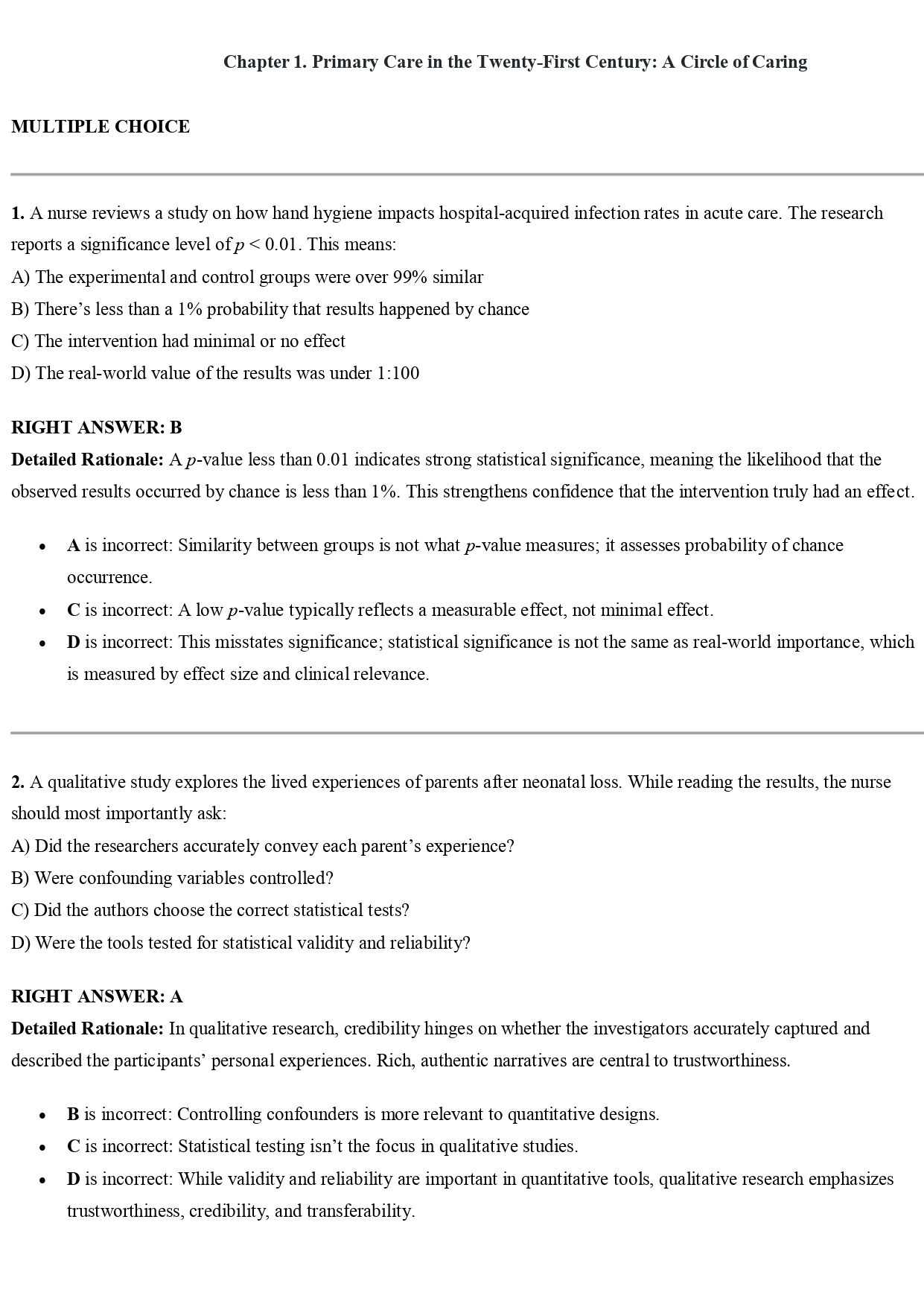


Advanced practice nursing in primary care demands a level of clinical independence that most nurses spend their entire careers building toward. You are no longer functioning within a defined set of delegated tasks. You are the provider. You are the one taking the history, forming the differential, ordering the diagnostics, interpreting the results, initiating the treatment, and managing the follow-up — often without a physician in the room.
That shift in responsibility requires a completely different kind of preparation. Knowing pathophysiology is not enough. Knowing pharmacology is not enough. You need to be able to synthesize a patient’s story, physical findings, and diagnostic data into a coherent clinical picture — and then act on it with confidence and precision.
Primary Care: The Art and Science of Advanced Practice Nursing – An Interprofessional Approach, 6th Edition by Dunphy, Winland-Brown, Porter, and Thomas has long been the definitive resource for nurse practitioner and advanced practice nursing students preparing for that role. It combines rigorous clinical content with the interprofessional and humanistic dimensions of primary care that no algorithm can capture.
This test bank was built to match it. Every question is written at the level of clinical complexity and decision-making that advanced practice primary care demands. You practice diagnosing, not just identifying. You practice managing, not just describing. You practice the full scope of what an NP in primary care actually does every day.
What Is Inside
You get over a thousand practice questions covering every major clinical domain in Dunphy’s 6th edition. Questions are written in multiple-choice, select-all-that-apply, and ordered response formats — consistent with what you will face on advanced practice nursing course exams and the AANPCB and ANCC family nurse practitioner certification examinations.
Every question has a clearly marked correct answer. Every answer includes a full written rationale. The rationale walks you through the clinical reasoning behind the correct diagnosis, management decision, or interprofessional action — and explains specifically why each wrong option reflects incomplete or incorrect clinical thinking. At the advanced practice level, that depth of reasoning is not supplementary. It is the point.
Topics Covered
The test bank follows the complete structure of Dunphy’s 6th edition across every major primary care content domain, including:
Foundations of Advanced Practice Primary Care — the advanced practice nursing role in primary care, interprofessional collaboration and team-based care, the patient-centered medical home model, health promotion and disease prevention frameworks, evidence-based practice in primary care, cultural humility and health equity in advanced practice, motivational interviewing and behavior change counseling, and social determinants of health in primary care assessment
Health Assessment and Diagnostic Reasoning — comprehensive and focused history taking in advanced practice, advanced physical examination skills, clinical reasoning and diagnostic hypothesis generation, use of clinical decision tools and risk calculators, interpretation of laboratory and diagnostic imaging results, and documentation standards in primary care practice
Cardiovascular Conditions — hypertension diagnosis and management including current JNC guidelines, hyperlipidemia screening and treatment, coronary artery disease risk stratification and management, heart failure in primary care, atrial fibrillation diagnosis and anticoagulation management, peripheral artery disease, venous insufficiency and varicose veins, and chest pain differential diagnosis and workup
Respiratory Conditions — upper respiratory infections and sinusitis, pharyngitis and tonsillitis, allergic rhinitis, asthma diagnosis and stepwise management, COPD diagnosis, staging, and management, community-acquired pneumonia, tuberculosis screening and management, and dyspnea differential diagnosis in primary care
Neurological Conditions — headache differential diagnosis including tension, migraine, and cluster headaches, dizziness and vertigo workup, stroke risk assessment and TIA management in primary care, seizure disorders, peripheral neuropathy, Parkinson’s disease management in primary care, and cognitive impairment screening and referral
Musculoskeletal Conditions — acute and chronic low back pain assessment and management, neck pain, shoulder disorders including rotator cuff injury and impingement, knee pain differential diagnosis, osteoarthritis management, rheumatoid arthritis in primary care, gout diagnosis and management, osteoporosis screening and treatment, and sports medicine considerations in primary care
Gastrointestinal Conditions — GERD diagnosis and management, peptic ulcer disease, H. pylori testing and treatment, irritable bowel syndrome, inflammatory bowel disease management in primary care, constipation and diarrhea workup, colorectal cancer screening, hepatitis screening and management, and abdominal pain differential diagnosis
Endocrine Conditions — diabetes mellitus type 1 and type 2 diagnosis and comprehensive management, prediabetes and prevention counseling, thyroid disorders including hypothyroidism and hyperthyroidism, thyroid nodule evaluation, obesity management in primary care, and metabolic syndrome assessment and treatment
Renal and Urologic Conditions — urinary tract infections in adults, recurrent UTI management, hematuria workup, chronic kidney disease monitoring and management in primary care, urinary incontinence assessment and treatment, benign prostatic hyperplasia, and erectile dysfunction
Dermatological Conditions — common skin lesion identification and management, acne vulgaris, rosacea, eczema and atopic dermatitis, psoriasis, fungal skin infections, bacterial skin infections including cellulitis and impetigo, skin cancer screening and referral, and wound assessment and management in primary care
Eye, Ear, Nose, and Throat Conditions — conjunctivitis differential diagnosis and treatment, acute otitis media and otitis externa, hearing loss screening and referral, epistaxis management, and oral health conditions in primary care
Mental Health in Primary Care — depression screening and management in primary care, anxiety disorders including GAD and panic disorder, PTSD recognition and management, attention-deficit hyperactivity disorder in adults, substance use disorder screening and brief intervention, suicide risk assessment, and psychiatric medication management basics for primary care providers
Women’s Health — well-woman examination, cervical cancer screening and colposcopy referral, contraception counseling and management, sexually transmitted infection screening and treatment, premenstrual syndrome and PMDD, abnormal uterine bleeding, menopause management, osteoporosis prevention, breast health and mammography guidelines, and polycystic ovary syndrome
Men’s Health — well-man examination, prostate cancer screening controversy and shared decision-making, testicular health, male hypogonadism, and cardiovascular risk reduction in men
Older Adult Primary Care — comprehensive geriatric assessment in primary care, polypharmacy and Beers Criteria application, falls prevention in the primary care setting, dementia screening and management, frailty assessment, advance care planning in primary care, and age-friendly primary care principles
Pediatric Primary Care — well-child examinations across developmental stages, immunization schedules and vaccine counseling, growth and developmental surveillance, common pediatric acute illness management, pediatric behavioral and mental health concerns in primary care, and adolescent health screening including HEADSS assessment
Interprofessional and Systems Considerations — care coordination and case management, health information technology in primary care, quality improvement in advanced practice, telehealth in primary care, billing and coding basics for NPs, scope of practice and prescriptive authority, and NP practice across regulatory environments
Who Should Use This
This test bank is the right resource for family nurse practitioner and advanced practice nursing students whose primary care courses use Dunphy’s 6th edition, NP students preparing for the AANPCB Family Nurse Practitioner certification examination or the ANCC Family Nurse Practitioner board examination, advanced practice nursing students who struggle with the diagnostic reasoning and clinical management complexity of primary care and need structured case-based question practice, DNP and MSN students in primary care tracks who need exam preparation resources that reflect the full scope of advanced practice, and nursing faculty teaching advanced practice primary care courses who need a rigorous, interprofessional, and clinically comprehensive question bank for building course assessments.
Why the 6th Edition Specifically
Primary care practice guidelines change constantly. Hypertension treatment thresholds are revised. Diabetes management algorithms are updated. Cancer screening recommendations are debated and refined. Antibiotic stewardship principles evolve. The 6th edition of Dunphy’s textbook incorporates the most current evidence-based guidelines across every clinical domain — including updated ACC/AHA cardiovascular guidelines, revised ADA diabetes management standards, current USPSTF preventive care recommendations, and expanded content on telehealth, health equity, and interprofessional practice models.
This test bank was written to align with the 6th edition specifically. The diagnostic criteria, management algorithms, screening recommendations, and prescribing guidelines in the questions reflect what is in this edition. If your NP program uses the 6th edition, this is the test bank that fits it.
5 Sample Questions
Question 1 A 54-year-old male presents to the primary care clinic with a three-week history of exertional chest discomfort that resolves with rest. He has a 20-pack-year smoking history, hypertension managed with lisinopril, and a fasting LDL of 148 mg/dL. His resting ECG is normal. Using clinical reasoning, which is the most appropriate next step in management?
A. Reassure the patient that a normal resting ECG rules out significant cardiac disease B. Prescribe sublingual nitroglycerin and schedule a follow-up in four weeks C. Refer the patient for exercise stress testing and initiate antiplatelet and statin therapy D. Order a chest X-ray and complete blood count to evaluate for pulmonary and hematologic causes
Correct Answer: C This patient’s presentation — exertional chest discomfort relieved by rest in a middle-aged male smoker with hypertension and hyperlipidemia — is classic for stable angina until proven otherwise. A normal resting ECG does not rule out significant coronary artery disease. The appropriate workup is exercise stress testing to evaluate for inducible ischemia. Evidence-based guidelines also support initiating aspirin for antiplatelet therapy and a statin for cardiovascular risk reduction in this patient given his risk factor burden. Nitroglycerin alone without workup is insufficient and delays necessary diagnostic evaluation.
Question 2 A 34-year-old woman presents with a three-month history of fatigue, weight gain of 12 pounds, cold intolerance, constipation, and dry skin. She reports her mother has hypothyroidism. On examination, the thyroid is mildly enlarged and non-tender. TSH is 9.8 mIU/L and free T4 is low. Which management plan is most appropriate?
A. Repeat the TSH in six months to confirm the trend before initiating treatment B. Initiate levothyroxine therapy, counsel the patient on proper administration, and recheck TSH in six to eight weeks C. Prescribe a short course of corticosteroids to reduce thyroid inflammation before starting hormone replacement D. Refer the patient to endocrinology before initiating any treatment for primary hypothyroidism
Correct Answer: B This patient has overt primary hypothyroidism — elevated TSH with low free T4 accompanied by classic clinical symptoms. Treatment with levothyroxine is clearly indicated. The NP should initiate therapy, counsel the patient to take it on an empty stomach 30 to 60 minutes before eating, avoid calcium and iron supplements within four hours, and recheck TSH in six to eight weeks to assess response and adjust dosing. Delaying treatment to repeat labs or referring to endocrinology for uncomplicated primary hypothyroidism is unnecessary and prolongs the patient’s symptoms. Corticosteroids have no role in autoimmune hypothyroidism.
Question 3 A 28-year-old woman presents requesting contraception. She has a history of migraines with aura, smokes half a pack of cigarettes per day, and her blood pressure today is 148/92 mmHg. She asks about combined oral contraceptive pills. Which response by the NP is most appropriate?
A. Prescribe a low-dose combined oral contraceptive and advise her to quit smoking B. Explain that combined oral contraceptives are contraindicated for her due to multiple risk factors and discuss safer alternatives C. Prescribe the combined oral contraceptive for three months and recheck her blood pressure at the next visit D. Refer her to gynecology before prescribing any hormonal contraception
Correct Answer: B Combined oral contraceptives containing estrogen are contraindicated in women with migraines with aura due to significantly increased stroke risk. They are also contraindicated in smokers over 35, but in a younger smoker with uncontrolled hypertension, the combination of these risk factors makes estrogen-containing contraceptives unsafe regardless of age. The NP should clearly explain these contraindications and offer safer alternatives including progestin-only pills, the hormonal IUD, the copper IUD, or the progestin implant. Addressing blood pressure management and smoking cessation counseling are also essential components of this visit.
Question 4 A 67-year-old man with type 2 diabetes, CKD stage 3b, and a history of myocardial infarction presents for a routine diabetes management visit. His HbA1c is 8.9%. He is currently on metformin 1000 mg twice daily. His eGFR is 38 mL/min/1.73m². Which medication adjustment is most appropriate based on current evidence-based guidelines?
A. Increase metformin to 2000 mg twice daily to achieve better glycemic control B. Discontinue metformin due to his eGFR and initiate an SGLT-2 inhibitor with demonstrated cardiovascular and renal benefit C. Add a sulfonylurea to his current regimen for additional glucose lowering D. Start insulin therapy immediately given his HbA1c above 8%
Correct Answer: B Metformin is generally contraindicated or requires dose reduction when eGFR falls below 30 and should be used with caution between 30 and 45 mL/min — this patient’s eGFR of 38 places him in a zone where metformin should typically be discontinued. Current ADA guidelines strongly recommend SGLT-2 inhibitors for patients with type 2 diabetes, established cardiovascular disease, and CKD due to demonstrated benefits in reducing cardiovascular events, slowing CKD progression, and reducing hospitalization for heart failure. Sulfonylureas increase hypoglycemia risk in CKD. Insulin is not the first escalation choice in this clinical scenario.
Question 5 A nurse practitioner is seeing a 16-year-old male for a sports physical. During the visit, the patient is evasive and appears anxious. Using the HEADSS assessment framework, the NP asks about home, education, activities, drugs, sex, and safety. The patient eventually discloses that he has been using marijuana daily for the past four months and asks the NP not to tell his parents. Which response best reflects ethical advanced practice nursing?
A. Immediately inform the parents since the patient is a minor and has no right to confidentiality B. Document the disclosure in the medical record as mandatory reporting and refer to law enforcement C. Acknowledge the patient’s trust, assess for associated risks including mental health and academic impact, provide brief intervention counseling, and discuss the limits of confidentiality honestly D. Dismiss the concern since marijuana use is common in adolescents and unlikely to cause harm
Correct Answer: C Adolescent confidentiality is a nuanced ethical area. In most states, substance use counseling for adolescents carries specific confidentiality protections unless there is imminent harm. The NP’s priority is to honor the therapeutic relationship that allowed this disclosure, conduct a thorough risk assessment, and provide a brief motivational intervention. The NP should also be transparent about the limits of confidentiality — explaining what would and would not trigger mandatory disclosure. Immediately involving parents without assessment may damage trust and deter future help-seeking. Marijuana use in adolescents carries real risks including impact on developing brain function, academic performance, and mental health, and should not be dismissed.
Frequently Asked Questions
Is this the official F.A. Davis test bank for Dunphy’s 6th edition? No. This is an independently developed study resource based on the content of Dunphy, Winland-Brown, Porter, and Thomas’s 6th edition. It is not published or endorsed by F.A. Davis or the original authors. It is a supplementary exam preparation tool for advanced practice nursing students and faculty.
How many questions are in the test bank? There are over a thousand questions distributed across all major clinical domains in the 6th edition, with the greatest concentration in the highest-yield primary care content areas including cardiovascular, respiratory, endocrine, women’s health, and mental health in primary care.
Can this test bank help me pass the FNP certification examination? Yes. The clinical content in Dunphy’s 6th edition maps closely to the AANPCB and ANCC FNP certification blueprints, and the questions in this test bank are written at the diagnostic reasoning and clinical management level those exams demand. It works best as part of a broader certification preparation strategy that includes a dedicated review course and practice examination program.
The jump from RN to NP clinical thinking is significant. Will this test bank help bridge that gap? Yes, and that is precisely what it was designed to do. The questions do not ask you to identify what a disease is. They ask you to decide what to do about it — which test to order, which treatment to initiate, which finding changes your management plan, and when to refer. Working through these questions regularly builds the diagnostic reasoning and clinical confidence that NP students need most.
Does this test bank cover interprofessional care content? Yes. Dunphy’s 6th edition is explicitly framed around interprofessional collaboration, and this test bank includes questions on team-based care, referral decision-making, care coordination, and the NP’s role within the broader healthcare team. This content reflects real primary care practice and is increasingly tested on advanced practice certification exams.
Does every question include a rationale? Yes, without exception. Every question has a correct answer and a full written rationale that explains the clinical reasoning, references relevant guidelines where applicable, and addresses why each distractor reflects a common clinical error or incomplete reasoning. At the advanced practice level, understanding the reasoning is the preparation — not just knowing the answer.
Can nursing faculty use this to build NP course exams? Yes. Questions are organized by clinical domain and chapter, making it straightforward to build unit exams, OSCE preparation materials, or comprehensive final assessments. The questions are written at the cognitive complexity appropriate for graduate-level advanced practice nursing programs.
What file format is the test bank delivered in? It comes as a digital file, typically in Word or PDF format. You can search by clinical condition, body system, or population, print specific sections for focused study sessions, and access it across multiple devices. Many NP students organize their preparation by organ system in the months before their certification examination.
Is this test bank specific to the 6th edition only? Yes. It was written to align with the clinical guidelines, diagnostic frameworks, and management algorithms in the 6th edition. Primary care guidelines — including cardiovascular risk management, diabetes treatment algorithms, cancer screening recommendations, and antibiotic stewardship protocols — are updated regularly, and earlier editions may not reflect current evidence-based standards. Always confirm your edition before purchasing.

Norah Helen –
Perfect
Nelly –
it has exceeded my expectations
Rosemary R –
Perfectly organized study guide
Grace W. –
Exceeded my expectations
Winnie M. –
A good test bank
Beverly –
A very good resource
Caleb Martins –
Excellent resource
Leo Fernandez –
I like it a lot
Kevin May –
A solid study resource
Terence V. –
Excellent tool for reviewing difficult nursing concepts
Melania Angel –
Great variety of realistic relevant exam questions
Marcus R. –
Helpful practice for building confidence before exams.
Lisa Horton –
Clear explanations made difficult concepts easier to understand