Critical care nursing sits at the edge of what nursing practice demands. Your patients have no margin. Their physiology is unstable. Their trajectory can shift from manageable to catastrophic within a single assessment cycle. And the nurse at the bedside is often the first — and sometimes the only — person positioned to catch that shift before it becomes irreversible.
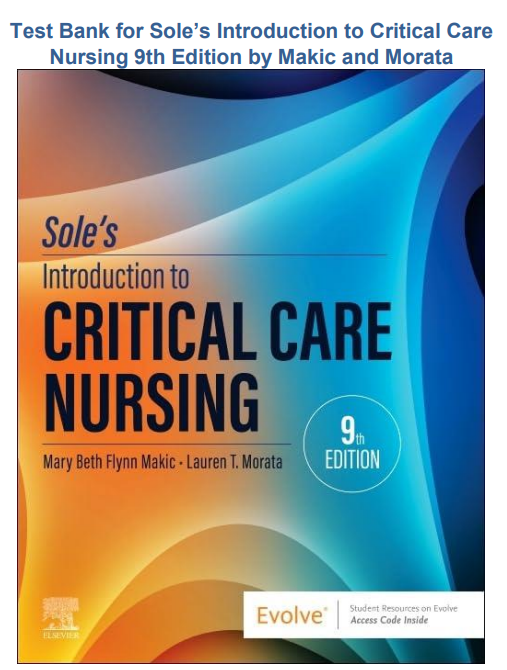
The 9th edition of Introduction to Critical Care Nursing, now led by Marie Beth Flynn Makic and Tanya Morata, carries forward the legacy of one of the most respected critical care nursing textbooks in health professions education. It brings updated evidence-based guidelines, expanded coverage of emerging critical care challenges, and a stronger emphasis on the clinical judgment skills that define safe, competent intensive care nursing practice.
This test bank was built to match it question by question. Every item pushes you past the level of recognition and into the territory of analysis, prioritization, and intervention — because that is where critical care nursing actually lives. Whether you are preparing for a critical care nursing course, the NCLEX-RN, or the CCRN certification exam, this test bank gives you the high-stakes practice that builds real ICU thinking.
What Is Inside
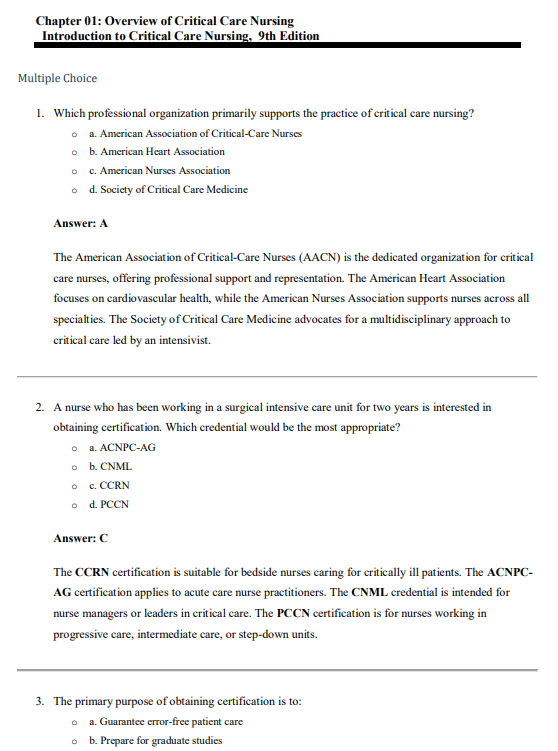
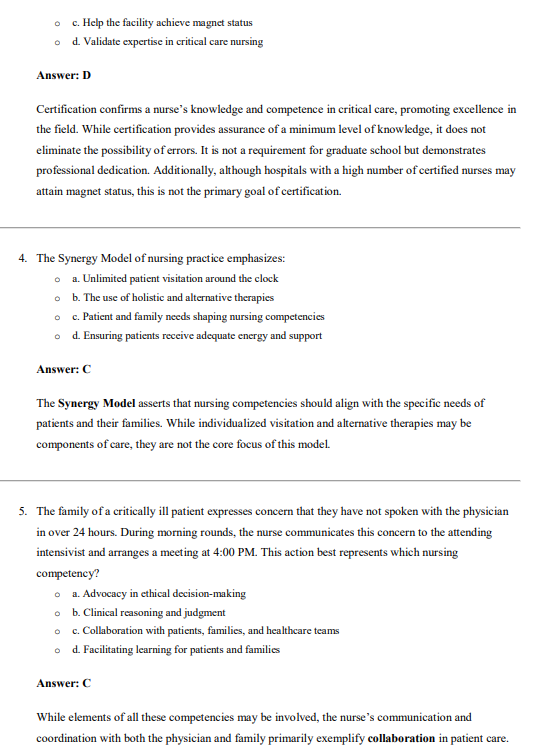
You get over a thousand practice questions covering every major system, condition, monitoring concept, and nursing intervention in Makic and Morata’s 9th edition. Questions are written in multiple-choice, select-all-that-apply, ordered response, and NGN-style clinical judgment formats — consistent with what you will encounter on advanced nursing course exams, the NCLEX-RN, and the CCRN certification examination.
Every question has a clearly marked correct answer. Every answer includes a full written rationale. The rationale does not simply validate the correct choice — it walks you through the hemodynamic reasoning, the pathophysiological mechanism, the monitoring parameters, and the clinical priority framework that makes the answer correct. It also addresses each wrong option specifically, explaining why it is unsafe, premature, or clinically incorrect. In critical care, that depth of explanation is not supplementary. It is essential.
Topics Covered
The test bank follows the complete structure of the 9th edition across every major critical care content area, including:
Foundations of Critical Care Nursing Practice — the critical care nursing role and environment, interprofessional collaboration in the ICU, ethical decision-making and surrogate decision-making, palliative and end-of-life care in critical illness, family-centered critical care and visitation, ICU communication strategies, and the nurse’s role in preventing ICU-acquired complications
Pain, Agitation, Delirium, Immobility, and Sleep — the PADIS guidelines framework, pain assessment tools in non-verbal and intubated patients, sedation scales including RASS and SAS, CAM-ICU delirium assessment, early mobility protocols, sleep disruption in the ICU, and pharmacologic and non-pharmacologic management strategies
Nutritional Support in Critical Illness — malnutrition screening in the ICU, enteral nutrition initiation and management, parenteral nutrition indications and complications, refeeding syndrome, glycemic control in critically ill patients, and nutritional considerations in specific critical care populations
Hemodynamic Monitoring — arterial line insertion, setup, and waveform interpretation, central venous pressure monitoring and limitations, pulmonary artery catheter use and hemodynamic profiles, cardiac output and cardiac index interpretation, stroke volume variation, mixed and central venous oxygen saturation, and troubleshooting and zeroing of monitoring systems
Cardiovascular Critical Care — acute coronary syndromes including STEMI and NSTEMI management, cardiogenic shock hemodynamics and management, acute decompensated heart failure, hypertensive emergencies, life-threatening dysrhythmia recognition and intervention, temporary transvenous and transcutaneous pacing, intra-aortic balloon pump therapy, cardiac tamponade and pericarditis, post-cardiac surgery critical care, and therapeutic hypothermia after cardiac arrest
Pulmonary Critical Care — acute respiratory failure pathophysiology and management, invasive mechanical ventilation modes and parameters, lung-protective ventilation strategies, ventilator-associated pneumonia prevention bundles, non-invasive positive pressure ventilation, ventilator liberation and extubation readiness, acute respiratory distress syndrome, pulmonary embolism in the ICU, pleural space emergencies, and tracheostomy care in critical illness
Neurological Critical Care — intracranial pressure monitoring and cerebral perfusion pressure management, traumatic brain injury grading and management, ischemic stroke and hemorrhagic stroke in the ICU, subarachnoid hemorrhage and vasospasm, status epilepticus management, Guillain-Barré syndrome and myasthenic crisis, brain death determination and organ donation, and spinal cord injury management in the ICU
Shock and Systemic Inflammatory Response — pathophysiology of hypovolemic, distributive, cardiogenic, and obstructive shock, sepsis and septic shock recognition and management using current Surviving Sepsis Campaign guidelines, systemic inflammatory response syndrome, multiple organ dysfunction syndrome, anaphylactic shock management, and vasopressor and inotrope pharmacology in shock states
Renal Critical Care — acute kidney injury staging using KDIGO criteria, causes and management of AKI in the ICU, continuous renal replacement therapy modalities and nursing management, electrolyte emergencies including hyperkalemia, hyponatremia, and hypophosphatemia, rhabdomyolysis, and fluid resuscitation and fluid balance in critical illness
Gastrointestinal Critical Care — upper and lower gastrointestinal hemorrhage in the ICU, acute liver failure and hepatic encephalopathy, acute pancreatitis severity and management, abdominal compartment syndrome monitoring and intervention, stress ulcer prophylaxis indications, mesenteric ischemia, and ileus management in critically ill patients
Endocrine Critical Care — diabetic ketoacidosis management in the ICU, hyperosmolar hyperglycemic state, stress hyperglycemia and insulin infusion protocols, adrenal insufficiency in critical illness, thyroid storm and myxedema coma, and syndrome of inappropriate antidiuretic hormone
Hematologic and Immunologic Critical Care — coagulation disorders in the ICU, disseminated intravascular coagulation, heparin-induced thrombocytopenia, massive transfusion protocols and transfusion reactions, neutropenic fever management, and care of immunocompromised patients in the ICU
Trauma and Environmental Emergencies — initial trauma assessment using primary and secondary surveys, traumatic injury by organ system, damage control resuscitation, traumatic brain and spinal cord injury, thoracic and abdominal trauma, burn injury assessment and fluid resuscitation, inhalation injury, hypothermia and hyperthermia emergencies, and near-drowning in the ICU
Multisystem and Toxicological Emergencies — sepsis-induced organ failure, overdose and poisoning management in the ICU, alcohol withdrawal delirium, serotonin syndrome, neuroleptic malignant syndrome, and toxidrome recognition and antidote administration
Who Should Use This
This test bank is the right resource for nursing students enrolled in a critical care or intensive care nursing course using Makic and Morata’s 9th edition, NCLEX-RN candidates who want to strengthen performance on the highest-acuity priority and management of care questions, registered nurses preparing for CCRN certification who need comprehensive, system-by-system question-based practice across the full critical care blueprint, new graduate nurses transitioning into ICU or step-down environments who want to accelerate clinical reasoning development before or during orientation, and nursing faculty teaching critical care who need a rigorous, evidence-aligned question pool for building course exams, case-based assessments, and simulation preparation materials.
Why the 9th Edition Specifically
Critical care medicine evolves rapidly. Sepsis definitions and management bundles are updated. Ventilation strategies are refined based on new trial data. Sedation and analgesia protocols are revised to align with ICU liberation principles. The 9th edition under Makic and Morata incorporates all of these updates — including current PADIS guidelines for pain, agitation, delirium, immobility, and sleep, updated KDIGO criteria for acute kidney injury staging, revised Surviving Sepsis Campaign recommendations, current lung-protective ventilation evidence, and expanded content on equity and diversity in critical care populations.
This test bank was written to align with the 9th edition specifically. The clinical scenarios, monitoring values, pharmacologic protocols, and nursing management approaches in the questions reflect what is in this edition. If your course or CCRN preparation uses the 9th edition, this is the test bank that matches it.
5 Sample Questions
Question 1 A nurse is caring for a patient in septic shock who is receiving norepinephrine at 0.25 mcg/kg/min. The mean arterial pressure is 58 mmHg despite 30 mL/kg of IV crystalloid. Lactate is 6.2 mmol/L and rising. Urine output is 10 mL over the last two hours. The patient’s hands are mottled and cool. Which intervention should the nurse anticipate and prepare for next?
A. Administer an additional 2 L normal saline bolus to maximize preload before adjusting vasopressors B. Add vasopressin per protocol and notify the provider of persistent hemodynamic instability C. Switch from norepinephrine to dopamine due to inadequate MAP response D. Initiate cooling measures to reduce metabolic demand from the underlying infection
Correct Answer: B The patient has received adequate fluid resuscitation per Surviving Sepsis Campaign guidelines and remains hypoperfused — rising lactate, oliguria, mottling, and MAP below 65 mmHg despite norepinephrine. The guideline-recommended next step is adding a second vasopressor, with vasopressin most commonly added to norepinephrine in refractory septic shock. Additional fluid beyond 30 mL/kg without evidence of fluid responsiveness risks fluid overload and worsening organ function. Dopamine is not a preferred first or second-line vasopressor in septic shock due to increased dysrhythmia risk. Cooling does not address hemodynamic collapse.
Question 2 A mechanically ventilated patient with ARDS has the following ventilator settings and values: tidal volume 520 mL, body weight 65 kg, FiO₂ 0.80, PEEP 8 cmH₂O, plateau pressure 34 cmH₂O, SpO₂ 88%. Which change should the nurse anticipate and advocate for based on current lung-protective ventilation evidence?
A. Increase tidal volume to improve minute ventilation and oxygenation B. Reduce PEEP to decrease the risk of barotrauma C. Reduce tidal volume to 6 mL/kg of predicted body weight and reassess plateau pressure D. Increase FiO₂ to 1.0 before making any ventilator changes
Correct Answer: C Lung-protective ventilation for ARDS, based on the ARDSNet protocol and current evidence, calls for tidal volumes of 4 to 6 mL/kg of predicted body weight and plateau pressures below 30 cmH₂O. This patient’s tidal volume of 520 mL on a 65 kg patient exceeds 8 mL/kg, and the plateau pressure of 34 cmH₂O is above the safe threshold. Both findings indicate volutrauma and barotrauma risk. Reducing tidal volume is the priority intervention. Increasing FiO₂ to 1.0 without first optimizing mechanics exposes the patient to oxygen toxicity without addressing the root ventilator problem. Reducing PEEP worsens alveolar recruitment and oxygenation in ARDS.
Question 3 A nurse is performing a CAM-ICU assessment on a patient who was alert and oriented yesterday but today is restless, pulling at lines, and answering questions inconsistently. The patient’s RASS score is +2. Current medications include lorazepam 2 mg IV every 4 hours as needed, which has been given three times in the last 12 hours. Which interpretation and action is most appropriate?
A. The patient is experiencing expected ICU anxiety — increase lorazepam frequency to maintain calm B. The CAM-ICU is positive for delirium — notify the provider, minimize benzodiazepines, and initiate non-pharmacologic reorientation measures C. The patient’s RASS of +2 indicates adequate sedation — continue current management D. This behavior is likely pain-related — administer an opioid analgesic and reassess
Correct Answer: B The acute change in mental status, fluctuating attention, disorganized thinking, and altered level of consciousness are consistent with ICU delirium, and the CAM-ICU would be positive in this presentation. Benzodiazepines are a known risk factor for ICU delirium, and continuing or increasing lorazepam would worsen the condition. Per PADIS guidelines, management includes minimizing or eliminating benzodiazepines, ensuring adequate analgesia, promoting sleep hygiene, early mobility, reorientation, and family engagement. The provider must be notified. A RASS of +2 indicates agitation, not adequate sedation.
Question 4 A patient is admitted to the ICU following a large subarachnoid hemorrhage from a ruptured cerebral aneurysm. On day 7 of admission, the nurse notes that the patient’s level of consciousness has declined from baseline, and transcranial Doppler velocities have increased significantly from the previous day. Blood pressure is 148/88 mmHg. Which complication does the nurse suspect and what is the priority nursing action?
A. Rebleeding from the aneurysm — prepare the patient for emergency return to the operating room B. Cerebral vasospasm — notify the provider immediately and anticipate interventions to optimize cerebral perfusion C. Hydrocephalus — prepare for emergent external ventricular drain placement D. Increased intracranial pressure from cerebral edema — hyperventilate the patient to reduce ICP
Correct Answer: B Cerebral vasospasm is the most feared delayed complication of subarachnoid hemorrhage, typically occurring between days 4 and 14. Rising transcranial Doppler velocities combined with a declining level of consciousness in this timeframe are the hallmark presentation. The nurse must notify the provider immediately. Management focuses on optimizing cerebral perfusion pressure through induced hypertension, hypervolemia, and hemodilution — historically called triple-H therapy — along with calcium channel blockers like nimodipine and possible endovascular intervention. Prolonged hyperventilation causing hypocapnia is not recommended as sustained management due to risk of cerebral ischemia.
Question 5 A nurse is caring for a burn patient who sustained 45% total body surface area burns 8 hours ago. Using the Parkland formula, the calculated 24-hour fluid requirement is 18 liters of lactated Ringer’s solution. The first half is to be infused over the first 8 hours from the time of injury. It is now 8 hours post-injury. How much fluid should have been administered in the first 8 hours, and if the patient received only 6 liters, what should the nurse do?
A. The first 8-hour amount was 9 liters — administer the remaining 3 liters rapidly as a bolus B. The first 8-hour amount was 9 liters — notify the provider, as the remaining volume should be administered carefully with close hemodynamic monitoring C. The first 8-hour amount was 18 liters — the patient is severely under-resuscitated and requires immediate aggressive fluid replacement D. The first 8-hour amount was 4.5 liters — the patient has received adequate volume and should remain on maintenance fluids
Correct Answer: B The Parkland formula delivers half the 24-hour volume in the first 8 hours from the time of injury — in this case, 9 liters. The patient received only 6 liters, creating a 3-liter deficit. However, bolusing the remaining volume rapidly without hemodynamic guidance risks fluid overload, pulmonary edema, and abdominal compartment syndrome in an already compromised patient. The nurse must notify the provider, who will determine how to safely make up the deficit while monitoring urine output, blood pressure, and other perfusion parameters closely. Burn resuscitation requires titration, not aggressive bolus replacement.
Frequently Asked Questions
Is this the official Elsevier test bank for Makic and Morata’s 9th edition? No. This is an independently developed study resource based on the content of the 9th edition. It is not published or endorsed by Elsevier, Marie Beth Flynn Makic, or Tanya Morata. It is a supplementary exam and certification preparation tool.
How many questions are in the test bank? There are over a thousand questions distributed across all major critical care content areas in the 9th edition, with the greatest concentration in cardiovascular, pulmonary, neurological, and sepsis and shock content — the highest-yield areas for both the NCLEX-RN and CCRN examination.
How is this test bank different from the one for the 8th edition by Sole? The 9th edition under Makic and Morata includes updated clinical guidelines, expanded PADIS content, revised sepsis management protocols, updated AKI staging criteria, and new emphasis on equity and diversity in critical care. This test bank reflects those updates specifically. If your course uses the 9th edition, this is the resource aligned with it.
Can this test bank help me prepare for the CCRN certification exam? Yes. The content in Makic and Morata’s 9th edition maps closely to the AACN CCRN blueprint, and questions in this test bank are written at the application and analysis levels the CCRN demands. It is a strong supplementary resource for system-by-system certification preparation, particularly when used alongside an AACN CCRN review program.
I am a new RN transitioning into the ICU. Is this test bank appropriate for me? Yes, and many new ICU nurses find question-based practice one of the most efficient ways to build clinical reasoning during orientation. Working through scenarios system by system builds the pattern recognition that develops faster through deliberate practice than through clinical exposure alone, especially in the early months when the pace of the ICU can make it hard to consolidate learning.
Does every question include a rationale? Yes, without exception. Every question has a correct answer and a full written rationale that explains the pathophysiology, hemodynamic reasoning, and clinical priorities behind the correct choice, and specifically addresses why each wrong option is incorrect. In critical care, understanding why an answer is wrong is as clinically important as knowing why the right answer is right.
What file format is the test bank delivered in? It is delivered as a digital file, typically in Word or PDF format. You can search by system, condition, or clinical concept, print specific sections for focused study sessions, and access it across multiple devices. Many students and nurses run timed practice sets to simulate the time pressure of the NCLEX-RN and CCRN examination environments.
Is this test bank specific to the 9th edition only? Yes. It was written to align with the clinical guidelines, evidence-based protocols, and content organization of the 9th edition specifically. Critical care guidelines — including sepsis bundles, ventilation strategies, sedation protocols, and AKI staging — are updated frequently, and earlier editions may not reflect current evidence-based standards. Always confirm your edition before purchasing.

Morgan Fraiser –
A solid study guide
Grace W. –
Perfect
Winnie M. –
Very very good
Janny Cummings –
It helped me pass my finals
Nelly –
A very useful resource for ICU nursing exam studies
Carol Kay –
Much better than I though
Lisa Horton –
Excellent!
Leo Fernandez –
Easy to study anywhere
Ivy N. –
Clear explanations made difficult concepts understandable
Bruno Molino –
A helpful addition to my nursing study routine
Leo Fernandez –
Good variety of questions covering essential ICU nursing material.
Thomas K. –
Exactly what nursing students need
Yunice M –
Boosted my confidence before exams
Lucas Gabriel –
Well-organized questions covering essential ICU nursing topics
Craig Bellamy –
A convenient way to test my knowledge and identify weak areas
Peris Hart –
The explanations make difficult concepts much easier to understand
Leah Kiptum –
The explanations were especially helpful when I missed a question