


Medical-surgical nursing is the backbone of nursing practice. It is where most nurses spend the majority of their careers. It is also where the NCLEX tests hardest — across the widest range of body systems, conditions, medications, and clinical decisions a nurse will ever face.
The challenge with med-surg is not that any single topic is impossible. It is the sheer volume. Cardiovascular disorders. Respiratory conditions. Neurological emergencies. Endocrine dysfunction. Renal failure. Oncology. Immune disorders. Gastrointestinal disease. Musculoskeletal trauma. The list goes on. And in every one of those areas, you are expected to assess, prioritize, intervene, delegate, educate, and evaluate — all at once.
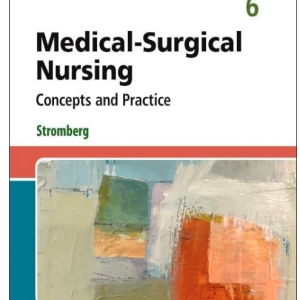
This test bank was built to help you handle that volume without burning out. It follows Medical-Surgical Nursing: Concepts and Practice, 5th Edition — one of the most widely used med-surg textbooks in practical and registered nursing programs. Every question maps directly to the textbook’s content. Every answer is backed by a rationale that explains the clinical thinking behind it. You build knowledge and clinical judgment at the same time.
What Is Inside
You get over a thousand practice questions covering every major body system, condition, and nursing intervention in the 5th edition. Questions are written in multiple-choice, select-all-that-apply, and ordered response formats — the same formats you will face on nursing school exams and the NCLEX-RN and NCLEX-PN.
Every question has a clearly marked correct answer. Every answer includes a full written rationale. The rationale does not just confirm what is right. It walks you through the assessment findings, the pathophysiology behind the condition, the nursing priorities, and why the other options are incorrect or unsafe. Over time, reading those rationales builds the kind of layered clinical thinking that carries you through both exams and real patient care.
Topics Covered
The test bank follows the complete structure of the 5th edition across every major content area, including:
Foundations of Medical-Surgical Nursing — the nursing process in med-surg practice, clinical judgment and critical thinking, evidence-based practice, safety and quality improvement, legal and ethical considerations, cultural competence, pain assessment and management, and fluid and electrolyte balance
Perioperative Nursing — preoperative assessment and patient preparation, intraoperative nursing responsibilities, postoperative care and recovery, surgical complications, and discharge planning following surgery
Cardiovascular System — heart failure, coronary artery disease, myocardial infarction, angina, hypertension, cardiac dysrhythmias, valvular disorders, peripheral vascular disease, deep vein thrombosis, and venous insufficiency
Respiratory System — pneumonia, tuberculosis, chronic obstructive pulmonary disease, asthma, pulmonary embolism, pleural effusion, pneumothorax, lung cancer, and care of patients on mechanical ventilation and with tracheostomies
Neurological System — stroke and TIA, traumatic brain injury, increased intracranial pressure, seizure disorders, meningitis, Parkinson’s disease, multiple sclerosis, amyotrophic lateral sclerosis, and spinal cord injury
Musculoskeletal System — fractures and orthopedic trauma, osteoporosis, osteoarthritis, rheumatoid arthritis, gout, total joint replacement, amputation, and cast and traction care
Gastrointestinal System — peptic ulcer disease, GERD, inflammatory bowel disease, appendicitis, intestinal obstruction, cirrhosis, hepatitis, cholecystitis, pancreatitis, colorectal cancer, and ostomy care
Endocrine System — diabetes mellitus type 1 and type 2, diabetic complications including DKA and HHNS, thyroid disorders, adrenal disorders including Cushing’s syndrome and Addison’s disease, and pituitary conditions
Renal and Urinary System — urinary tract infections, kidney stones, acute and chronic kidney disease, dialysis including hemodialysis and peritoneal dialysis, urinary incontinence, and bladder cancer
Immune and Lymphatic System — HIV and AIDS, autoimmune disorders, organ transplantation and immunosuppression, allergic reactions and anaphylaxis, and lymphoma
Integumentary System — wound assessment and care, pressure injury prevention and staging, burns, skin infections, and dermatological conditions
Oncology Nursing — cancer pathophysiology and staging, chemotherapy and radiation therapy, targeted therapy, oncologic emergencies, cancer pain management, and palliative and end-of-life care
Reproductive System — breast cancer, prostate disorders, sexually transmitted infections, pelvic inflammatory disease, and reproductive cancers in men and women
Sensory System — eye disorders including cataracts, glaucoma, and retinal detachment, ear conditions including hearing loss and Ménière’s disease, and care of patients with sensory impairments
Who Should Use This
This test bank is the right resource for practical nursing students and registered nursing students whose med-surg course uses the 5th edition of this textbook, NCLEX-PN and NCLEX-RN candidates who need comprehensive medical-surgical practice questions covering every major body system, nursing students who find the volume of med-surg content overwhelming and need structured chapter-by-chapter practice to stay on top of it, students who have already attempted the NCLEX and need focused remediation across specific body system content areas, and nursing instructors who teach medical-surgical nursing and need a deep, well-organized question pool to build unit exams, quizzes, and comprehensive finals.
Why the 5th Edition Specifically
Medical-surgical nursing is not static. Treatment guidelines for conditions like heart failure, sepsis, stroke, and diabetes are updated regularly. Medication protocols change. Evidence-based wound care evolves. The 5th edition reflects current clinical standards and best practices across every body system it covers.
This test bank was written to match the 5th edition directly. The clinical scenarios, drug references, nursing management approaches, and patient education content in the questions all align with what is in this edition. If your program uses the 5th edition, this is the resource that fits it.
5 Sample Questions
Question 1 A nurse is caring for a patient admitted with an acute myocardial infarction. The patient suddenly becomes diaphoretic, reports feeling faint, and the cardiac monitor shows a heart rate of 38 beats per minute with regular rhythm. What is the nurse’s priority action?
A. Administer a 500 mL normal saline bolus to increase cardiac output B. Prepare the patient for immediate cardioversion C. Notify the provider and prepare atropine for administration D. Reposition the patient in Trendelenburg to improve cerebral perfusion
Correct Answer: C A heart rate of 38 beats per minute with symptoms of hemodynamic compromise — diaphoresis and near-syncope — indicates symptomatic bradycardia requiring immediate intervention. Atropine is the first-line pharmacologic treatment for symptomatic bradycardia. The nurse should notify the provider immediately and have atropine ready. Cardioversion is used for tachydysrhythmias, not bradycardia. Trendelenburg is no longer recommended as a standard intervention for hemodynamic instability and can worsen certain cardiac conditions.
Question 2 A nurse is assessing a patient with cirrhosis who is becoming increasingly confused and difficult to arouse. Ammonia level is elevated. Which intervention should the nurse anticipate implementing?
A. Administering a high-protein diet to support liver regeneration B. Preparing to administer lactulose as ordered C. Restricting all oral intake until mental status improves D. Increasing IV fluid rate to flush ammonia through the kidneys
Correct Answer: B The patient is showing signs of hepatic encephalopathy — confusion and decreased level of consciousness caused by the accumulation of ammonia, which a failing liver cannot adequately clear. Lactulose is the standard treatment. It works by acidifying the colon to trap ammonia as ammonium, which is then excreted in stool. A high-protein diet would worsen ammonia production. Restricting all oral intake is not the appropriate response, and increasing IV fluids does not address the underlying mechanism of ammonia accumulation.
Question 3 A patient returns from surgery following a right total knee replacement. During the initial postoperative assessment, the nurse notes that the patient’s right calf is warm, tender, and slightly swollen compared to the left. What should the nurse do first?
A. Encourage the patient to ambulate to promote circulation B. Apply compression stockings and elevate both legs C. Notify the provider and avoid massaging the affected leg D. Administer the next scheduled dose of low-molecular-weight heparin
Correct Answer: C Warmth, tenderness, and unilateral swelling of the calf in a postoperative orthopedic patient are classic warning signs of deep vein thrombosis. The nurse must notify the provider immediately. The affected leg should not be massaged because this can dislodge the clot and cause a pulmonary embolism. Ambulation and compression are appropriate preventive measures but should not be initiated when DVT is suspected. Anticoagulation management requires a provider order based on assessment findings and diagnostic confirmation.
Question 4 A nurse is caring for a patient with type 1 diabetes who is found unresponsive with a blood glucose of 34 mg/dL. The patient has no IV access and cannot swallow safely. What is the most appropriate intervention?
A. Place glucose tablets under the patient’s tongue and wait for absorption B. Administer glucagon intramuscularly as prescribed C. Crush an oral glucose tablet and mix it with water for nasogastric administration D. Hold all insulin and recheck the glucose in 30 minutes
Correct Answer: B When a patient is unresponsive and cannot swallow, oral glucose administration is unsafe due to the risk of aspiration. Glucagon, administered intramuscularly or subcutaneously, stimulates the liver to release stored glycogen, which raises blood glucose rapidly. This is the correct intervention for severe hypoglycemia in a patient without IV access who cannot take anything by mouth. IV dextrose would be appropriate if IV access were available. Holding insulin does not address the immediate crisis of critically low blood glucose.
Question 5 A nurse is providing discharge teaching to a patient diagnosed with chronic obstructive pulmonary disease who has been prescribed a long-acting bronchodilator inhaler. Which statement by the patient indicates the teaching was effective?
A. “I will use this inhaler whenever I feel short of breath during an attack.” B. “I should take two puffs of this inhaler every day at the same time, even when I feel well.” C. “I can stop using this once my breathing feels better for a few weeks.” D. “This inhaler will give me immediate relief if I am having trouble breathing.”
Correct Answer: B Long-acting bronchodilators are maintenance medications taken on a scheduled basis to prevent bronchospasm and reduce airflow obstruction over time. They are not intended for acute symptom relief. Patients should use them consistently every day as prescribed, regardless of how they feel, to maintain open airways. Short-acting rescue inhalers, such as albuterol, are used for acute episodes of breathlessness. Stopping the medication when symptoms improve risks rapid deterioration of lung function.
Frequently Asked Questions
Is this the official Elsevier test bank for this textbook? No. This is an independently developed study resource based on the content of the 5th edition. It is not published or endorsed by Elsevier or the original authors. It is a supplementary exam preparation tool designed for nursing students studying medical-surgical nursing.
How many questions are in the test bank? There are over a thousand questions in total. They are distributed across all major body systems and chapters in the 5th edition, with more questions in high-volume areas such as cardiovascular, respiratory, neurological, and endocrine nursing.
Can this test bank be used for both NCLEX-PN and NCLEX-RN preparation? Yes. This textbook is used in both practical and registered nursing programs, and the test bank reflects that range. Questions are written at different cognitive levels — some targeting foundational knowledge and application appropriate for PN-level practice, others targeting the higher-order analysis and priority-setting expected at the RN level.
Med-surg is my hardest subject. How should I use this test bank most effectively? Work through it one body system at a time. Before each unit exam, complete all the questions for that system. Read every rationale — especially for questions you got wrong. Focus on understanding the pattern: what does early deterioration look like in this system, what is the priority nursing action, and what would you teach this patient before discharge. Those three questions drive most of the high-yield med-surg content on the NCLEX.
Does this test bank cover perioperative nursing? Yes. Pre-operative assessment, intraoperative nursing responsibilities, and post-operative care — including complications like atelectasis, wound dehiscence, and DVT — are all included in dedicated questions.
Can nursing instructors use this to build their own exams? Yes. Questions are organized by body system and chapter, making it easy to select items for unit exams, comprehensive finals, or ATI-style assessments. The questions are written at application and analysis levels, which aligns with the expectations of most medical-surgical nursing courses.
Does every question include a rationale? Yes, without exception. Every question has a correct answer and a full written rationale that explains the clinical reasoning and addresses all the distractors. In med-surg especially, understanding why a wrong answer is wrong is just as important as knowing why the right answer is right.
What file format is the test bank delivered in? It comes as a digital file, typically in Word or PDF format. You can search by body system, condition, or keyword, print chapters for focused study sessions, or access it across multiple devices. Many students find it helpful to print question sets for each body system and work through them the week before each unit exam.
Is this test bank specific to the 5th edition only? Yes. It was written to align with the clinical content, nursing management guidelines, and organizational structure of the 5th edition. Medical-surgical nursing guidelines are updated regularly, and earlier editions may not reflect current evidence-based practice. Always confirm which edition your course uses before purchasing.
Winnie M. –
A solid study material
Peterson S. –
Really helped me pass my finals
Norah Helen –
Helped improve my confidence and test-taking skills
Melania Angel –
Great resource for testing my nursing knowledge.