Pharmacology is hard enough on its own. Drug names pile up. Mechanisms blur together. Side effect profiles overlap. And just when you think you have a drug class figured out, a new one appears with a slightly different suffix and a completely different mechanism.
Now add the complexity of Canadian healthcare. Different drug approval processes. Health Canada regulations instead of FDA guidelines. Provincial and territorial variations in scope of practice. Canadian brand names that differ from American ones. Metric-only dosing. The unique demographic and health priorities of the Canadian population. And a regulatory environment that shapes everything from how drugs are brought to market to how nurses document and report adverse events.
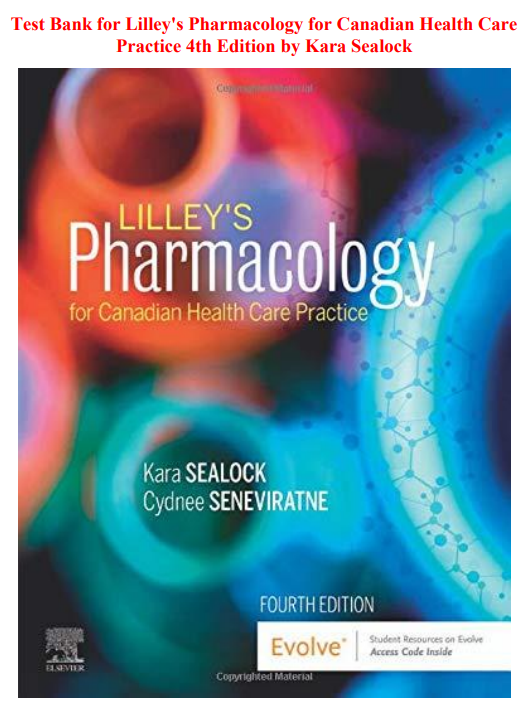
Kara Sealock’s Lilley’s Pharmacology for Canadian Health Care Practice was written specifically to address all of that. It takes the foundational pharmacology excellence of the Lilley tradition and grounds it fully in the Canadian healthcare context — with Canadian drug names, Health Canada guidelines, Canadian nursing scope of practice, and clinical scenarios that reflect the realities of nursing in Canada. The 4th edition updates that content with current evidence, revised drug information, and stronger integration of the nursing process framework that Canadian nursing education emphasizes.
This test bank was built to match it. Every question connects pharmacology to Canadian nursing practice — not just what a drug does, but what a Canadian nurse does with that knowledge at the bedside, in the community, and across the continuum of care. You do not just study pharmacology. You practice applying it the way a Canadian nurse actually uses it.
What Is Inside
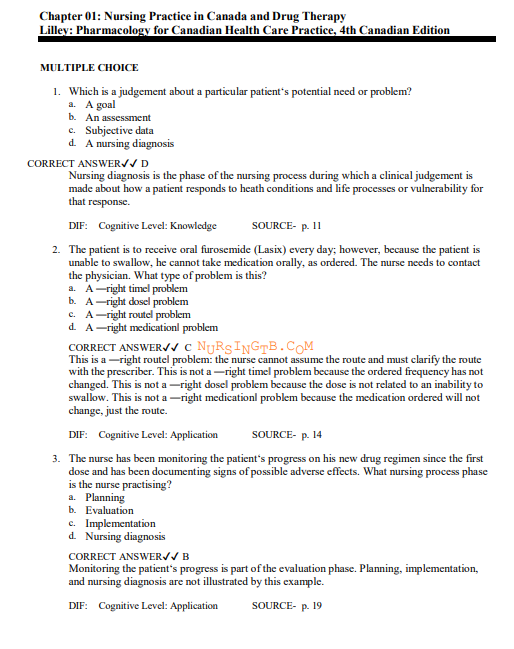
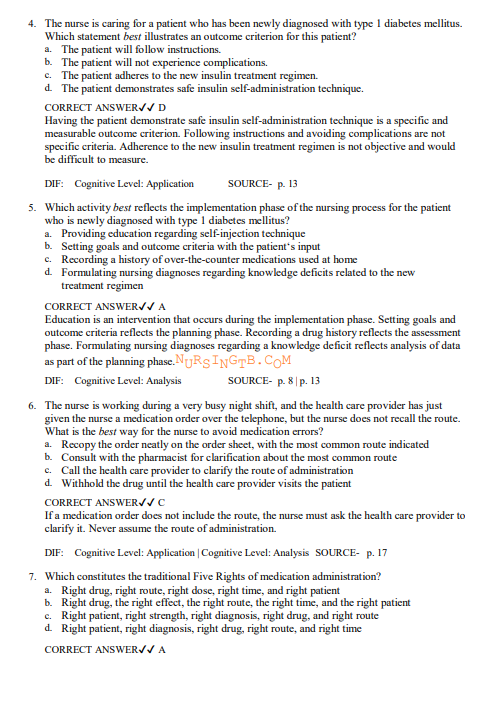
You get over a thousand practice questions covering every major drug class and nursing process application in Sealock’s 4th edition. Questions are written in multiple-choice, select-all-that-apply, and ordered response formats — consistent with what you will face on Canadian nursing school exams and the NCLEX-RN.
Every question has a clearly marked correct answer. Every answer includes a full written rationale. The rationale explains the pharmacological mechanism, the nursing process application, the Canadian regulatory or practice context where relevant, and why each wrong answer reflects an incomplete or incorrect understanding of drug therapy in the Canadian healthcare setting. Reading those rationales consistently is how pharmacology knowledge moves from short-term memorization into long-term clinical understanding.
Drug Classes and Topics Covered
The test bank follows the complete structure of Sealock’s 4th edition across all major pharmacological categories and nursing process applications, including:
Foundations of Canadian Pharmacology — pharmacokinetics including absorption, distribution, metabolism, and excretion, pharmacodynamics and drug receptor interactions, drug interactions and adverse drug reactions, Health Canada drug approval and scheduling process, the Controlled Drugs and Substances Act and its implications for nursing practice, medication safety principles in the Canadian context, the nursing process applied to medication management, patient education for drug therapy, medication reconciliation, and the nurse’s role in adverse drug reaction reporting in Canada including MedEffect Canada
Autonomic Nervous System Pharmacology — adrenergic agonists and their clinical uses, adrenergic antagonists including alpha and beta blockers, cholinergic agonists and clinical applications, anticholinergic drugs and their nursing implications, and neuromuscular blocking agents
Cardiovascular Pharmacology — antihypertensive agents including ACE inhibitors, ARBs, calcium channel blockers, beta blockers, and diuretics, antidysrhythmic drugs across all classes, cardiac glycosides including digoxin and toxicity management, heart failure pharmacotherapy, anticoagulants including heparin, low-molecular-weight heparins, and oral anticoagulants including warfarin and direct oral anticoagulants, antiplatelet agents, thrombolytics, and lipid-lowering agents including statins and other drug classes
Central Nervous System Pharmacology — opioid analgesics including morphine, hydromorphone, and fentanyl with Canadian opioid crisis context, non-opioid analgesics including acetaminophen and NSAIDs, local and general anesthetics, sedative-hypnotics and anxiolytics including benzodiazepines, antiepileptic drugs, antiparkinsonian agents, psychotherapeutic drugs including antidepressants, antipsychotics, mood stabilizers, and drugs for ADHD, and substance use pharmacology including alcohol, opioid use disorder, and smoking cessation
Respiratory Pharmacology — bronchodilators including short-acting and long-acting beta-2 agonists, anticholinergic bronchodilators, inhaled and systemic corticosteroids, leukotriene receptor antagonists, antitussives and expectorants, decongestants, antihistamines, and pulmonary hypertension pharmacotherapy
Gastrointestinal Pharmacology — antacids and H2 receptor antagonists, proton pump inhibitors, drugs for Helicobacter pylori eradication, antiemetics, prokinetic agents, laxatives and cathartics, antidiarrheal agents, drugs for inflammatory bowel disease, and drugs for irritable bowel syndrome
Endocrine and Metabolic Pharmacology — insulin types and regimens with Canadian insulin products, oral and injectable antidiabetic agents, thyroid replacement and antithyroid drugs, corticosteroids and their clinical applications, sex hormones including estrogens, progestins, and androgens, contraceptive pharmacology, and drugs for osteoporosis
Anti-Infective Pharmacology — antibacterials across all major classes including penicillins, cephalosporins, carbapenems, fluoroquinolones, macrolides, tetracyclines, aminoglycosides, and glycopeptides, antiviral agents including antiretrovirals for HIV, antivirals for influenza, and antiherpetics, antifungal agents, antiparasitic drugs, and antimycobacterials including tuberculosis treatment with Canadian epidemiological context
Immune System Pharmacology — immunosuppressants including calcineurin inhibitors and biologics, immunizing agents with Canadian immunization schedule context, biologic response modifiers including monoclonal antibodies and cytokine inhibitors, and drugs used in organ transplantation
Oncology Pharmacology — antineoplastic drug classes including alkylating agents, antimetabolites, antitumor antibiotics, and plant alkaloids, targeted cancer therapies and immunotherapy, nursing management of chemotherapy side effects, oncologic emergency pharmacology, and cancer pain pharmacotherapy
Fluid, Electrolyte, and Nutritional Pharmacology — intravenous fluid types and clinical applications, electrolyte replacement therapy, parenteral and enteral nutrition pharmacology, vitamins and minerals, and iron replacement therapy
Special Population Pharmacology — pediatric pharmacokinetics and weight-based dosing calculations, pharmacology in pregnancy and lactation with Health Canada pregnancy categories, pharmacology in older adults including the Beers Criteria in the Canadian context, and renal and hepatic dose adjustment principles
Who Should Use This
This test bank is the right resource for Canadian nursing students taking a pharmacology course based on Sealock’s 4th edition who need consistent chapter-by-chapter practice that reflects the Canadian healthcare context, nursing students across Canada who want pharmacology practice that uses Canadian drug names, Health Canada regulatory references, and Canadian nursing scope of practice, NCLEX-RN candidates in Canada who want to strengthen pharmacology performance — one of the most heavily tested content areas on the examination, nursing instructors teaching pharmacology in Canadian nursing programs who need a comprehensive, application-level question pool that reflects Canadian practice, and internationally educated nurses preparing to practice in Canada who want to understand how pharmacological principles apply within the Canadian regulatory and clinical environment.
Why the 4th Edition Specifically
Canadian pharmacology is not static. Health Canada approves new drugs and new indications. Opioid prescribing and dispensing guidelines continue to evolve in the context of Canada’s ongoing opioid crisis. New anticoagulants, antidiabetic agents, and biologic therapies have transformed clinical practice. Cannabis regulations in Canada have changed the landscape of substance-related nursing practice. The 4th edition of Sealock’s text reflects all of these developments — with updated drug information, revised clinical guidelines, current Health Canada regulatory content, and expanded coverage of the opioid crisis and its nursing implications within the Canadian context.
This test bank was written to align with the 4th edition specifically. The drug names, regulatory references, nursing management approaches, and clinical scenarios in the questions reflect what is in this edition and what is current in Canadian nursing practice. If your program uses the 4th edition, this is the resource that matches it.
5 Sample Questions
Question 1 A nurse in a Canadian hospital is preparing to administer IV morphine to a patient with severe postoperative pain. Before administering the drug, the nurse assesses the patient’s respiratory rate, which is 8 breaths per minute. The patient appears drowsy but arousable. What is the nurse’s priority action?
A. Administer the morphine at half the prescribed dose since pain management is the priority B. Hold the morphine, notify the physician, and prepare naloxone for administration C. Administer the morphine as prescribed and recheck the respiratory rate in 30 minutes D. Document the respiratory rate and proceed since 8 breaths per minute is within acceptable limits for a postoperative patient
Correct Answer: B A respiratory rate of 8 breaths per minute combined with drowsiness in a patient about to receive an opioid represents a significant safety concern. Opioids cause dose-dependent respiratory depression, and administering morphine to a patient who is already showing signs of CNS depression and reduced respiratory drive risks precipitating respiratory arrest. The nurse must withhold the dose, notify the physician immediately, and have naloxone — the opioid reversal agent — available at the bedside. In Canada, naloxone is widely available in both clinical and community settings due to the ongoing opioid crisis, and nurses must be competent in its use. A respiratory rate of 8 is not acceptable and represents a pre-crisis clinical finding that demands intervention before any further opioid is given.
Question 2 A patient with type 2 diabetes is being discharged from a Canadian community hospital with a new prescription for metformin 500 mg twice daily. Which instruction is most important for the nurse to include in discharge teaching?
A. “Take metformin on an empty stomach to maximize absorption into the bloodstream.” B. “Take metformin with meals to reduce gastrointestinal side effects like nausea and diarrhea.” C. “Metformin can cause low blood sugar, so carry glucose tablets with you at all times.” D. “You will need weekly blood glucose monitoring since metformin acts quickly to lower your levels.”
Correct Answer: B Metformin is best taken with or immediately after meals to reduce the gastrointestinal side effects — nausea, diarrhea, and abdominal discomfort — that are the most common reasons patients discontinue this medication. Unlike sulfonylureas and insulin, metformin does not cause hypoglycemia when used alone because it works by reducing hepatic glucose production and improving insulin sensitivity rather than stimulating insulin secretion. Carrying glucose tablets is not necessary for metformin monotherapy. Metformin acts gradually and blood glucose monitoring frequency should be individualized — weekly monitoring is not a universal standard recommendation.
Question 3 A nurse is caring for a patient admitted with a deep vein thrombosis who is started on a low-molecular-weight heparin — enoxaparin — administered subcutaneously. The patient asks why they cannot just take a pill instead of getting needles every day. Which response by the nurse is most accurate?
A. “Pills are not strong enough to treat a blood clot — only injectable medications work for this condition.” B. “Enoxaparin is more predictable than oral anticoagulants and does not require regular blood test monitoring the way warfarin does.” C. “Injectable medications are always safer than oral ones because they bypass the digestive system where interactions occur.” D. “Your doctor does not think you can manage the dietary restrictions that come with oral anticoagulants.”
Correct Answer: B Low-molecular-weight heparins like enoxaparin have predictable pharmacokinetics that allow for weight-based dosing without routine coagulation monitoring — unlike warfarin, which requires regular INR testing and carries significant dietary and drug interaction considerations. While direct oral anticoagulants such as rivaroxaban and apixaban are now approved and used for DVT treatment in Canada and do not require regular monitoring, LMWH remains commonly used in hospital and bridging contexts. The nurse’s explanation should be accurate and respectful. Options A and C contain clinical inaccuracies. Option D is disrespectful and not a clinical rationale.
Question 4 A nurse working in a Canadian outpatient clinic is reviewing the medication list of a 74-year-old patient who has been prescribed diazepam 5 mg at bedtime for sleep. Using knowledge of pharmacology in older adults and the Beers Criteria, which action is most appropriate?
A. Confirm the dose is appropriate for the patient’s age and continue without intervention B. Consult with the prescribing provider about deprescribing the diazepam and replacing it with a safer non-pharmacologic or pharmacologic alternative for insomnia in older adults C. Increase the dose to 10 mg since older adults often require higher doses due to reduced drug sensitivity D. Advise the patient that diazepam is perfectly safe for long-term use in older adults when taken as prescribed
Correct Answer: B Benzodiazepines including diazepam are explicitly listed on the Beers Criteria as potentially inappropriate medications for older adults. In aging patients, reduced hepatic metabolism and increased brain sensitivity to CNS depressants significantly increase the risk of sedation, cognitive impairment, delirium, fall, and fracture. Long-acting benzodiazepines like diazepam are particularly problematic due to their extended half-life and accumulation in older adults. The nurse’s responsibility is to identify this concern and consult with the prescriber about deprescribing, with a transition to safer alternatives such as cognitive behavioral therapy for insomnia, melatonin, or other evidence-based options. This reflects the Canadian context of medication safety and the growing emphasis on deprescribing in older adult populations across Canadian healthcare settings.
Question 5 A patient taking warfarin for atrial fibrillation tells the nurse during a community health visit that they have started taking St. John’s Wort on the advice of a friend to help with their mood. The patient’s most recent INR was 2.4, within the therapeutic range of 2.0 to 3.0. Which nursing response is most appropriate?
A. Reassure the patient that herbal supplements are natural and do not interact with prescription medications B. Advise the patient that St. John’s Wort is a potent inducer of cytochrome P450 enzymes that can significantly reduce warfarin levels, increasing clot risk, and refer them to their prescriber immediately C. Advise the patient to double their warfarin dose temporarily to compensate for the interaction D. Tell the patient their INR is fine and that St. John’s Wort only becomes problematic if taken in very large amounts
Correct Answer: B St. John’s Wort is one of the most clinically significant herbal-drug interactions in pharmacology. It is a potent inducer of the cytochrome P450 3A4 enzyme and P-glycoprotein, which increases the metabolism and elimination of warfarin, causing a significant and potentially dangerous reduction in anticoagulant effect. A patient whose INR was therapeutic at 2.4 may quickly fall below 2.0 — the lower limit of the therapeutic range for atrial fibrillation — increasing the risk of stroke. The nurse must educate the patient clearly about this interaction, advise them not to continue the supplement without medical guidance, and refer them to their prescriber for INR monitoring and potential dose adjustment. Reassuring the patient or dismissing the interaction is clinically dangerous.
Frequently Asked Questions
Is this the official Elsevier Canada test bank for Sealock’s 4th edition? No. This is an independently developed study resource based on the content of Kara Sealock’s 4th edition. It is not published or endorsed by Elsevier Canada or the original author. It is a supplementary exam preparation tool for Canadian nursing students and faculty.
How many questions are in the test bank? There are over a thousand questions in total, distributed across all major drug classes and nursing process application areas in the 4th edition, with more questions in high-volume areas including cardiovascular pharmacology, CNS pharmacology, anti-infectives, and endocrine pharmacology.
How is this test bank different from an American pharmacology test bank? Several important ways. Questions in this test bank use Canadian drug names and brand names where they differ from American ones, reference Health Canada regulations and the Controlled Drugs and Substances Act rather than FDA frameworks, reflect Canadian nursing scope of practice and documentation standards, include content specific to the Canadian opioid crisis and Canada’s harm reduction approach, and use Canadian immunization schedule references and metric dosing throughout.
Is pharmacology heavily tested on the NCLEX-RN in Canada? Yes. Pharmacological and parenteral therapies is one of the largest content areas on the NCLEX-RN examination. Questions are written at the application level — asking what the nurse would assess before administering a drug, what side effect to monitor for, what patient teaching to provide, and what finding would cause the nurse to hold a dose. Every question in this test bank is written at that same level of clinical application.
I find pharmacology overwhelming. What is the most effective way to use this test bank? Work through it one drug class at a time, aligned with your course schedule. Before each unit exam, complete all the questions for that drug class. Do not skip the rationales — even for questions you get right. Each rationale connects the drug to a nursing process step. Over time, that pattern-based learning makes pharmacology far more manageable than memorizing isolated drug facts. Pay particular attention to the assessment findings that would cause you to hold a drug, because those questions appear consistently on both nursing school exams and the NCLEX-RN.
Does every question include a rationale? Yes. Every question has a correct answer and a full written rationale explaining the pharmacological reasoning behind it and why each wrong option is incorrect. The rationales are written with the Canadian healthcare context in mind — referencing Canadian drug names, Health Canada guidelines, and Canadian nursing practice standards where relevant.
Can nursing faculty in Canadian programs use this to build pharmacology exams? Yes. Questions are organized by drug class and chapter, making it easy to pull items for unit exams, comprehensive finals, or clinical simulation preparation. The questions are written at the application and analysis levels appropriate for Canadian undergraduate nursing pharmacology courses.
What file format is the test bank delivered in? It is delivered as a digital file, typically in Word or PDF format. You can search by drug class or drug name, print specific chapters for focused study sessions, and access it across multiple devices.
Is this test bank specific to the 4th edition only? Yes. It was written to align with the drug information, Health Canada regulatory content, Canadian nursing practice standards, and clinical guidelines in the 4th edition. Drug approvals, opioid guidelines, and prescribing recommendations in Canada change regularly, and earlier editions may not reflect current standards. Always confirm your course edition before purchasing.
Leo Fernandez –
Excellent test bank
Norah Helen –
I like it a lot
Grace W. –
Perfectly organized study guide
Kamara Reid –
Increased my confidence quickly
Rosemary R –
Plenty of questions of all difficulties to keep practicing
Morgan Fraiser –
Easy to use and actually pretty helpful
Lucille Maria –
Excellent resource for reinforcing nursing concepts