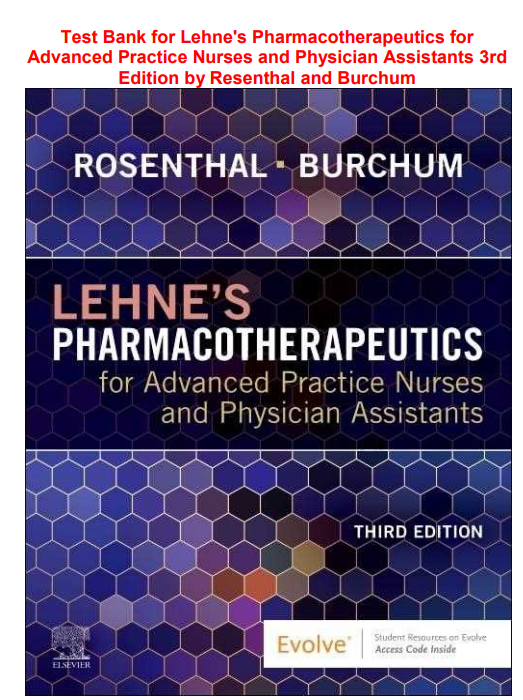
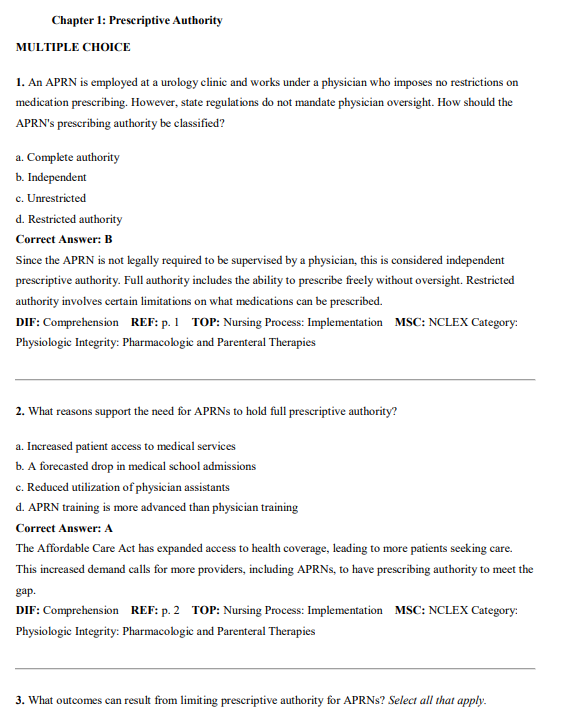
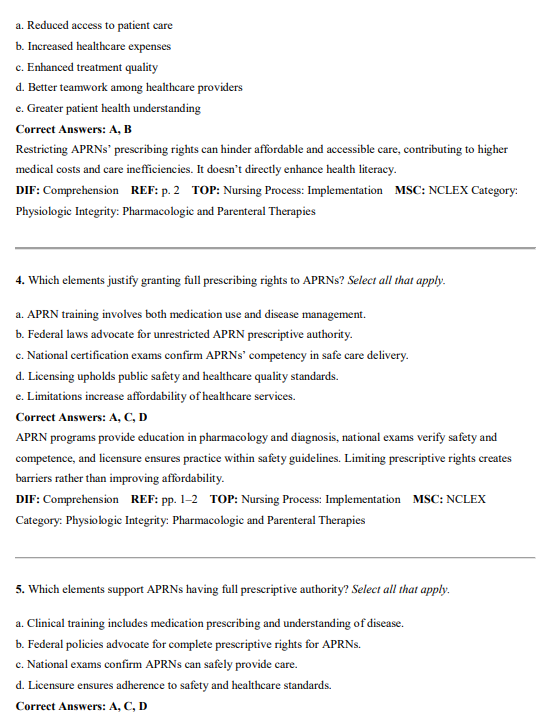
Advanced pharmacology separates basic practice from prescriptive authority. This test bank accompanies the third edition of Lehne’s respected pharmacotherapeutics textbook. It prepares nurse practitioners and physician assistants for prescribing responsibilities.
Comprehensive Question Repository
This test bank contains extensive practice questions covering all chapters. You’ll encounter multiple-choice, case-based scenarios, and clinical application questions. Drug calculation problems test your mathematical competency. Patient counseling scenarios assess your communication abilities.
Complete answer explanations accompany every question thoroughly. Rationales explain pharmacological principles behind correct answers. Mechanism of action details connect drugs to physiology. Incorrect options receive explanations preventing future confusion. This comprehensive approach builds prescribing confidence steadily.
Essential for Prescribers in Training
Prescriptive authority carries enormous professional responsibility. Patient safety depends on your pharmacological knowledge. Drug selection, dosing, and monitoring require precision. This test bank develops the expertise safe prescribing demands.
The questions mirror real clinical decision-making processes. Patients present with symptoms requiring medication therapy. Comorbidities complicate drug selection significantly. Drug interactions need immediate recognition. Practice questions prepare you for these complex situations.
Many advanced practice programs maintain rigorous testing standards. Pharmacology exams often determine program progression. This test bank familiarizes you with graduate-level question complexity. You’ll enter exams prepared and confident.
Drug Classification Mastery
Questions organize by drug classes systematically. Cardiovascular agents including antihypertensives and antiarrhythmics. ACE inhibitors, beta-blockers, and calcium channel blockers. Anticoagulants, antiplatelets, and thrombolytics appear extensively.
Antimicrobial questions address bacterial, viral, and fungal infections. Antibiotic selection based on culture results. Narrow versus broad-spectrum agent choices. Resistance patterns and antibiotic stewardship principles.
Central nervous system drugs receive thorough coverage. Antidepressants across all medication classes. Antipsychotics, mood stabilizers, and anxiolytics. Antiepileptics and Parkinson’s disease medications. Pain management including opioids and adjuvant therapies.
Endocrine medications appear throughout multiple chapters. Diabetes management with insulin and oral agents. Thyroid disorders and replacement therapy. Corticosteroids and adrenal medications. Reproductive hormones and contraceptive options.
Patient-Centered Prescribing
Questions emphasize individualized medication selection. Patient age considerations from pediatrics to geriatrics. Renal and hepatic function impact dosing decisions. Pregnancy and lactation safety categories matter significantly.
Cultural competence questions address diverse patient populations. Religious considerations affecting medication acceptance. Health literacy and medication adherence barriers. Language barriers and interpreter utilization.
Cost and insurance coverage considerations appear realistically. Generic versus brand name medication discussions. Prior authorization requirements and formulary restrictions. Patient assistance programs and medication affordability.
Adverse Effect Recognition
Side effect questions prepare you for monitoring responsibilities. Common predictable adverse effects versus rare reactions. Distinguishing expected effects from dangerous complications. When to continue medications versus immediate discontinuation.
Black box warnings receive appropriate emphasis throughout. Serious adverse reactions requiring careful monitoring. Patient education about warning signs. Documentation and reporting requirements for adverse events.
Drug-drug interaction questions appear extensively. Cytochrome P450 system and metabolism alterations. Additive effects and antagonistic interactions. Herbal supplements and over-the-counter medication interactions.
Pharmacokinetics and Pharmacodynamics
Absorption questions address bioavailability and administration routes. Oral versus parenteral medication considerations. Food interactions affecting drug absorption. First-pass metabolism and its clinical significance.
Distribution questions cover protein binding and volume concepts. Drug distribution to target tissues. Blood-brain barrier penetration considerations. Lipid solubility and tissue distribution patterns.
Metabolism and excretion questions test elimination understanding. Hepatic metabolism and enzyme systems. Renal excretion and clearance calculations. Half-life implications for dosing schedules.
Special Population Considerations
Pediatric pharmacology questions address developmental differences. Weight-based dosing calculations for children. Age-related absorption and metabolism variations. Medication safety in pediatric populations.
Geriatric prescribing receives extensive attention. Beers Criteria and potentially inappropriate medications. Polypharmacy and medication reconciliation importance. Age-related physiological changes affecting pharmacokinetics.
Pregnancy and lactation questions emphasize fetal safety. FDA pregnancy categories and risk assessment. Teratogenic medications requiring contraception. Breastfeeding compatibility and infant exposure risks.
Chronic Disease Management
Hypertension management questions span multiple drug classes. First-line therapy selection based on patient characteristics. Combination therapy rationales and fixed-dose combinations. Blood pressure targets and monitoring frequencies.
Diabetes pharmacotherapy covers comprehensive treatment approaches. Metformin as first-line therapy. GLP-1 agonists and SGLT2 inhibitors. Insulin initiation and titration strategies. Hypoglycemia prevention and management.
Dyslipidemia questions address cardiovascular risk reduction. Statin therapy initiation and intensity levels. Non-statin options for statin-intolerant patients. Monitoring requirements and liver function testing.
Asthma and COPD management questions appear thoroughly. Inhaled corticosteroids and bronchodilators. Long-acting versus short-acting agents. Combination inhalers and step-therapy approaches.
Acute Care Prescribing
Pain management questions address multimodal approaches. Non-opioid analgesics as first-line therapy. Opioid prescribing and addiction risk assessment. Prescription drug monitoring program utilization.
Infection treatment questions require antibiotic stewardship. Empiric therapy selection pending culture results. Duration of therapy for common infections. IV to oral antibiotic conversion criteria.
Mental health crisis management questions appear appropriately. Acute anxiety and panic attack treatment. Agitation and behavioral emergency medications. Suicidal ideation and safety planning considerations.
Prescriptive Authority Regulations
Legal and regulatory questions address scope of practice. DEA registration and controlled substance prescribing. State-specific prescriptive authority variations. Collaborative practice agreements and supervision requirements.
Prescription writing questions test technical competency. Complete prescription components and requirements. Electronic prescribing systems and e-prescribe mandates. Controlled substance prescription special requirements.
Documentation requirements for prescriptive practice. Medical necessity justification for medications. Informed consent and shared decision-making. Prior authorization documentation and appeals processes.
Evidence-Based Practice Integration
Questions incorporate current clinical practice guidelines. Hypertension management following JNC recommendations. Diabetes care aligned with ADA standards. Antibiotic prescribing following infectious disease society guidelines.
Newly approved medications appear in updated questions. Novel drug classes and innovative therapies. Biosimilars and their clinical applications. Medication shortages and alternative therapy selection.
Deprescribing questions address medication discontinuation. Potentially inappropriate medication identification. Tapering schedules for long-term medications. Risk-benefit analysis for medication continuation.
Clinical Reasoning Development
Diagnostic reasoning questions connect symptoms to pharmacotherapy. Which medication likely caused these symptoms? What lab abnormality suggests medication toxicity? These connections develop clinical thinking skills.
Questions present incomplete or evolving clinical pictures. Additional information becomes available progressively. You must modify treatment plans accordingly. This realistic complexity mirrors actual practice situations.
Cost-effectiveness questions balance optimal therapy with affordability. When are expensive medications truly necessary? What alternatives provide similar outcomes? These practical considerations matter in real practice.
Certification Examination Preparation
This test bank supports various certification exams. Family nurse practitioner certification content. Adult-gerontology and psychiatric-mental health specialties. Physician assistant national certification examination.
Question difficulty mirrors certification exam standards. Advanced knowledge and clinical application predominate. Memorization alone proves insufficient for success. Deep understanding becomes absolutely necessary.
Content distribution aligns with certification blueprints. Pharmacological and non-pharmacological interventions balanced appropriately. Health promotion and disease prevention integrate naturally. Clinical assessment and diagnostic reasoning appear proportionally.
Professional Development Investment
Prescriptive authority represents significant professional advancement. This knowledge distinguishes advanced practice clinicians. Whether working in primary care or specialty settings. Hospital-based or ambulatory care environments. These pharmacology principles apply universally.
Many clinicians pursue additional certifications eventually. Specialty certifications require advanced pharmacology knowledge. This solid foundation supports continued professional growth. Lifelong learning begins with thorough initial preparation.
Your patients trust your prescribing decisions completely. That trust demands comprehensive pharmaceutical knowledge. This test bank helps you meet professional responsibilities. Build prescribing confidence through extensive practice.
Efficient Study Methodology
Advanced practice programs demand intense commitment. Clinical rotations, coursework, and examinations compete constantly. Family and work obligations continue simultaneously. Efficient study tools become absolutely essential.
Ready-made practice questions save countless hours. You avoid creating study materials from scratch. Focus energy on learning rather than preparation. Maximize limited study time through targeted practice.
Digital accessibility enables studying during clinical downtime. Review questions between patient appointments. Practice during lunch breaks or commutes. Small consistent study sessions produce excellent results.
Lifelong Reference Resource
This test bank serves beyond initial coursework. Keep it as a reference throughout your career. Review before adding new medications to your formulary. Refresh knowledge when entering new practice settings.
When encountering unfamiliar medications in practice. Return to relevant test bank questions. Review pharmacological principles and prescribing guidelines. This resource continues providing value indefinitely.
Share knowledge with colleagues and students. Mentor new prescribers using these materials. Contribute to professional practice advancement. Excellence in pharmacotherapeutics elevates entire healthcare teams.
Winnie583 –
Life saver for NP school! The practice questions are gold
Alisha M. –
Super helpful for prepping for the midterm. Highly recommend.
Alexei –
Nailed my advanced pharm exam thanks to this bank!
Caytlene J. –
Great resource. Helped me understand the tricky Rosenthal chapters
Henry Wilcox –
Exact same style as my actual class exams. Awesome
Good Joseph –
Total game changer for studying. Worth every penny honestly
Helen Christie –
Perfect for testing yourself before the big final
terryanne234 –
Makes studying way less stressful. Five stars from me!
Thomas M. –
The rationales really help explain the “why” behind answers.
Florence M –
A must-have if you’re struggling with Resenthal and Burchum
Winnie M. –
Perfectly organized study resource.
Theresa M. –
Excellent material for overcoming exam anxiety
Caleb Martins –
Exactly what I wanted
Stephaniemclister –
The searchable PDF format is very convenient since I can easily find exactly what I want at any given moment
Helen Christie –
Perfect!
fred m –
Comprehensive, detailed content
Lucille Maria –
Much better than I expected
Rosemary R –
Excellent!
Kevin May –
Helped me pass my midterms
Norah Helen –
I nailed my finals with the help of this document. i’m really happy.
Chris martin –
Very very helpful
Peterson S. –
Excellent!!
Vmansteain –
What a gem!
Lisa Horton –
Perfect exam guide
Liam Mbogo –
The best resource I got for this course
Leo Fernandez –
Very good it exceeded my expectations
Lucas Gabriel –
Perfect for nursing students
Kevin May –
Improved my confidence before testing