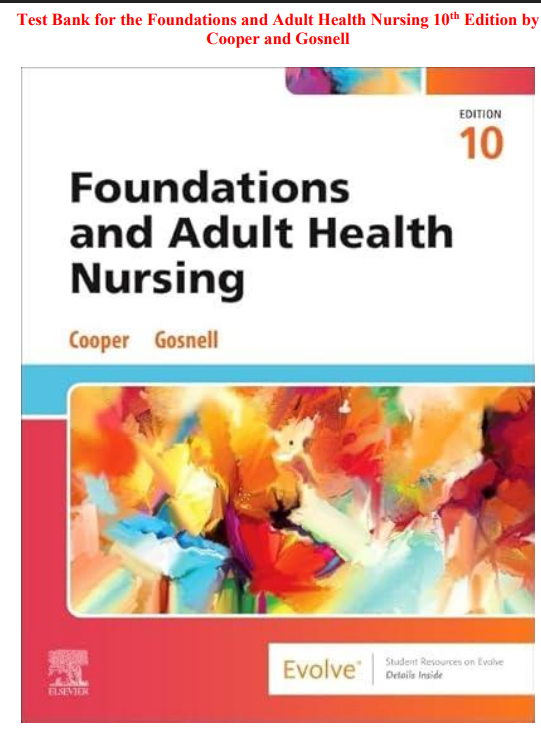
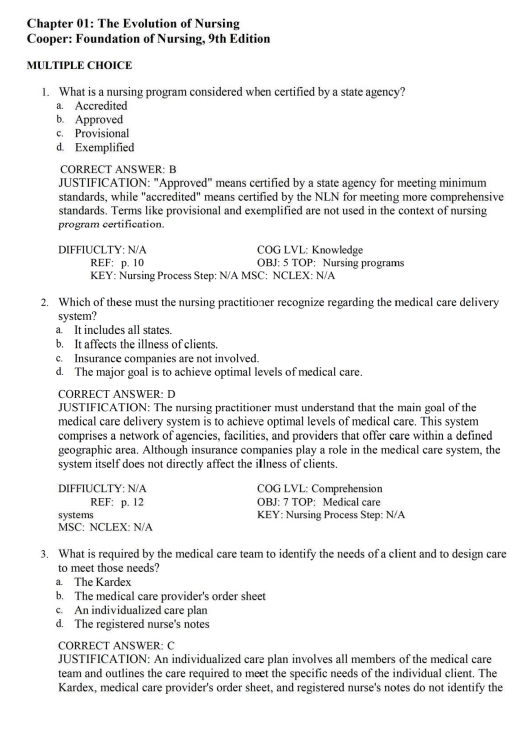
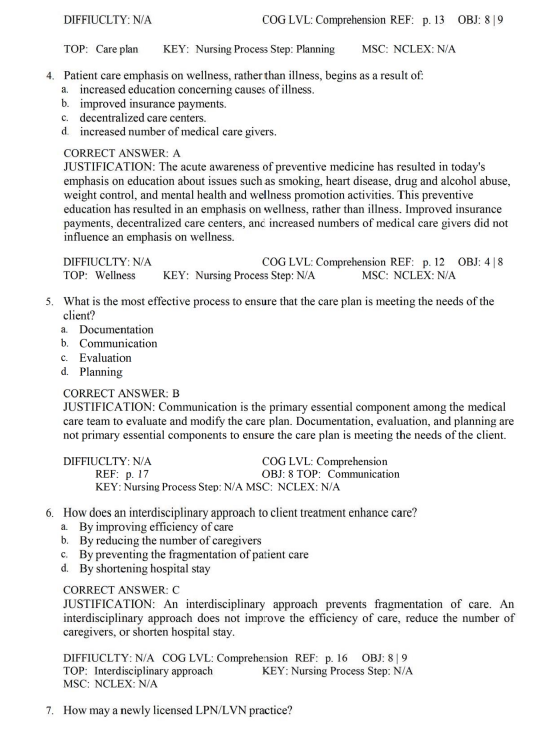
Nursing school covers an enormous amount of ground. In the early semesters, you are building the foundational knowledge and skills that everything else will rest on — communication, safety, infection control, basic assessment, documentation, medication administration, and the nursing process itself. In the later semesters, you are applying all of that to the full spectrum of adult health conditions across every major body system.
Cooper and Gosnell’s Foundations and Adult Health Nursing does something most nursing textbooks do not. It covers both of those phases in a single resource. It builds the foundation and then takes you all the way through adult health nursing without making you start over with a new framework or a new author’s voice. That continuity is one of the reasons it has remained a trusted choice across practical and registered nursing programs for years.
The 10th edition continues that approach with updated clinical content, revised evidence-based practice guidelines, expanded coverage of health equity and culturally responsive care, and stronger integration of the clinical judgment framework that the Next Generation NCLEX demands.
This test bank was built to match it chapter by chapter. Every question is grounded in the content, clinical approach, and nursing process framework of the 10th edition. You do not just practice answering questions. You practice thinking through patient situations the way Cooper and Gosnell teach you to — methodically, safely, and with the patient at the center of every decision.
What Is Inside
You get over a thousand practice questions covering every major foundational topic and adult health clinical area in the 10th edition. Questions are written in multiple-choice, select-all-that-apply, and ordered response formats — consistent with what you will encounter on nursing school exams, the NCLEX-PN, and the NCLEX-RN.
Every question has a clearly marked correct answer. Every answer includes a full written rationale. The rationale explains the nursing reasoning behind the correct choice, connects it to the relevant foundational principle or clinical concept, and addresses why each wrong option is incorrect or unsafe. Over time, reading those rationales builds the clinical thinking that carries you through both examinations and real patient care.
Topics Covered
The test bank follows the complete structure of Cooper and Gosnell’s 10th edition across every major content area, including:
Foundations of Nursing Practice — history and evolution of nursing, nursing theory and conceptual frameworks, the nursing process including assessment, diagnosis, planning, implementation, and evaluation, clinical judgment and critical thinking, evidence-based nursing practice, legal and ethical foundations of nursing, documentation and electronic health records, communication and therapeutic relationships, cultural humility and culturally responsive nursing care, health promotion and disease prevention, and complementary and alternative health practices
Basic Nursing Skills — patient safety and fall prevention, infection control and standard precautions, surgical and medical asepsis, vital signs measurement and interpretation, physical assessment techniques, personal hygiene and skin care, positioning and mobility assistance, safe patient handling and transfer techniques, bedmaking and comfort measures, and oxygen therapy and respiratory care basics
Nutrition and Fluid Management — principles of nutrition and therapeutic diets, nutritional assessment, enteral and parenteral nutrition nursing care, fluid and electrolyte balance, intravenous therapy initiation and maintenance, and fluid imbalance recognition and management
Medication Administration — principles of pharmacology for nursing, medication rights and safety checks, oral, topical, and transdermal medication administration, parenteral medication administration including subcutaneous, intramuscular, and intravenous routes, medication calculations, controlled substance handling, and medication error prevention
Perioperative Nursing — preoperative patient assessment and preparation, informed consent and surgical safety, intraoperative nursing responsibilities, postoperative care and assessment, management of postoperative complications, and surgical wound care
Pain Management — pain physiology and types, comprehensive pain assessment including tools for special populations, pharmacologic pain management including opioid and non-opioid analgesics, non-pharmacologic pain relief strategies, and patient and family pain education
Loss, Grief, and End-of-Life Care — theoretical frameworks for grief and bereavement, nursing care of the dying patient, advance directives and end-of-life decision-making, hospice and palliative care nursing, postmortem care, and supporting families through death and dying
Cardiovascular Nursing — hypertension assessment and management, coronary artery disease and angina, myocardial infarction nursing care, heart failure management, cardiac dysrhythmia recognition, peripheral vascular disease, venous thromboembolism prevention and treatment, and post-cardiac surgery care
Respiratory Nursing — upper respiratory infections, pneumonia nursing care, tuberculosis management, asthma and COPD nursing management, pulmonary embolism recognition and care, thoracic surgery nursing, and care of patients requiring mechanical ventilation and tracheostomy
Neurological Nursing — neurological assessment, stroke recognition and nursing care, traumatic brain injury management, seizure disorders and nursing interventions, Parkinson’s disease nursing care, multiple sclerosis management, meningitis, spinal cord injury care, and care of patients with increased intracranial pressure
Musculoskeletal Nursing — fracture assessment and nursing care, cast and traction care, joint replacement nursing management, osteoporosis prevention and treatment, rheumatoid and osteoarthritis nursing care, amputation care and rehabilitation, and gout management
Gastrointestinal Nursing — mouth and esophageal disorders, peptic ulcer disease and GERD nursing care, inflammatory bowel disease management, intestinal obstruction recognition, ostomy care and education, liver disease and cirrhosis nursing management, cholecystitis and pancreatitis care, and gastrointestinal cancer nursing
Endocrine Nursing — diabetes mellitus type 1 and type 2 nursing management, diabetic emergencies including hypoglycemia, DKA, and HHS, thyroid disorder nursing care, adrenal disorder management, and pituitary conditions
Renal and Urinary Nursing — urinary tract infection management, urinary incontinence assessment and care, renal calculi nursing management, acute and chronic kidney disease care, dialysis nursing including hemodialysis and peritoneal dialysis, and urinary catheter care and prevention of catheter-associated infections
Immune and Lymphatic Nursing — HIV and AIDS nursing care, autoimmune disorder management, anaphylaxis recognition and emergency management, organ transplantation nursing, and lymphoma care
Integumentary Nursing — wound assessment and classification, wound care principles and dressing selection, pressure injury prevention and staging, burn assessment and emergency care, skin infections and infestations, and skin cancer nursing
Oncology Nursing — cancer pathophysiology and staging, chemotherapy administration and side effect management, radiation therapy nursing care, oncologic emergencies, cancer pain management, and palliative and hospice care in oncology
Sensory Nursing — eye disorder nursing care including glaucoma and cataracts, ear disorder management including hearing loss and Ménière’s disease, and care of patients with sensory impairments
Mental Health in Adult Nursing — anxiety and stress management, depression recognition and nursing support, substance use disorder care, and therapeutic communication in mental health contexts within adult health nursing
Who Should Use This
This test bank is well suited for practical nursing students whose program uses Cooper and Gosnell’s 10th edition for foundations and adult health content, registered nursing students in associate or diploma programs who need comprehensive question practice across both foundational and clinical content areas, NCLEX-PN candidates who want structured practice across the full range of content the practical nursing examination covers, NCLEX-RN candidates who want to reinforce foundational nursing concepts alongside adult health clinical content, students who are beginning clinical rotations and want to connect their classroom knowledge to patient care scenarios through application-level practice, and nursing faculty who teach foundations or adult health nursing and need a question bank that spans both content areas within a single resource.
Why the 10th Edition Specifically
Nursing practice standards evolve. Infection control guidelines are updated. Pressure injury staging is revised. Medication safety protocols change. The nursing profession’s approach to cultural humility, health equity, and person-centered care continues to develop. The 10th edition of Cooper and Gosnell reflects all of these changes — with updated clinical guidelines, revised evidence-based nursing interventions, expanded health equity content, and stronger alignment with the clinical judgment framework that the Next Generation NCLEX uses.
This test bank was written to align with the 10th edition specifically. The nursing interventions, clinical scenarios, assessment frameworks, and patient education content in the questions reflect what is in this edition. If your program uses the 10th edition, this is the resource that fits it directly.
5 Sample Questions
Question 1 A nurse is performing a head-to-toe assessment on a newly admitted patient and notices a reddened area over the patient’s sacrum that does not blanch when pressed. The skin is intact. How should the nurse document and respond to this finding?
A. Document as a stage 2 pressure injury since the skin is clearly damaged and apply a moisture barrier B. Document as a stage 1 pressure injury, reposition the patient off the affected area immediately, and initiate a pressure injury prevention plan C. Apply a thick layer of petroleum jelly to the area and recheck in 24 hours before documenting D. Note the finding as a normal variation in skin pigmentation and continue with the assessment
Correct Answer: B Non-blanchable redness over a bony prominence with intact skin is the defining characteristic of a stage 1 pressure injury. Blanchable redness indicates that capillary flow is still intact and the skin can recover with pressure relief. Non-blanchable redness means capillary blood flow has been compromised and the tissue is at significant risk of progressing to deeper injury. The nurse must document the finding accurately, reposition the patient immediately to relieve pressure over the sacrum, and initiate a comprehensive prevention plan including scheduled repositioning, pressure redistribution surfaces, and skin care. Stage 2 injuries involve partial-thickness skin loss — the skin in this case is intact.
Question 2 A nurse is preparing to administer 0.5 mL of a medication intramuscularly to an adult patient. Which site and technique are most appropriate?
A. Dorsal gluteal site using a 1-inch needle inserted at a 45-degree angle B. Ventrogluteal site using a 1 to 1.5-inch needle inserted at a 90-degree angle C. Deltoid site using a 2-inch needle inserted at a 90-degree angle for maximum muscle mass D. Anterior thigh site using a 0.5-inch needle inserted at a 15-degree angle
Correct Answer: B The ventrogluteal site is the preferred intramuscular injection site for adults because it has the largest muscle mass, is free from major nerves and blood vessels, and has a consistently predictable anatomical location. A 1 to 1.5-inch needle inserted at a 90-degree angle delivers the medication into the muscle belly effectively. The dorsal gluteal site is no longer recommended due to proximity to the sciatic nerve and superior gluteal artery. A 2-inch needle is unnecessarily long for most adult deltoid injections, and 0.5 mL is within the acceptable range for deltoid use, but a 90-degree angle and 1-inch needle would be appropriate — a 0.5-inch needle at 15 degrees describes a subcutaneous technique, not intramuscular.
Question 3 A patient with type 2 diabetes is found unresponsive by the nurse. The blood glucose reads 38 mg/dL. The patient has a functioning IV access but cannot swallow safely. What is the nurse’s priority intervention?
A. Place glucose gel inside the patient’s cheek and wait for buccal absorption B. Hold all insulin and monitor the patient until consciousness returns C. Administer IV dextrose 50% as prescribed and notify the provider D. Administer glucagon intramuscularly since IV access is unreliable in unresponsive patients
Correct Answer: C A blood glucose of 38 mg/dL with unresponsiveness is a hypoglycemic emergency. When IV access is available, IV dextrose 50% is the fastest and most reliable intervention to raise blood glucose and restore consciousness. The provider must be notified immediately. Placing gel inside the cheek of an unresponsive patient is unsafe due to aspiration risk. Holding insulin does not address the immediate crisis. Glucagon is the appropriate alternative when IV access is unavailable — but since this patient has a functioning IV, IV dextrose is the priority.
Question 4 A nurse is caring for a patient with cirrhosis who is prescribed lactulose. The patient’s family asks why this medication is being given when the patient does not have constipation. Which explanation is most accurate?
A. Lactulose is prescribed to prevent gastrointestinal bleeding caused by esophageal varices in liver disease B. Lactulose acidifies the colon, trapping ammonia as ammonium which is then excreted in stool, reducing the risk of hepatic encephalopathy C. Lactulose prevents the absorption of bile salts that accumulate in the bloodstream when the liver is damaged D. Lactulose reduces portal hypertension by decreasing the volume of fluid in the gastrointestinal tract
Correct Answer: B In cirrhosis, the damaged liver cannot adequately convert ammonia — produced by gut bacterial breakdown of protein — into urea for excretion. Ammonia accumulates in the bloodstream and crosses into the brain, producing hepatic encephalopathy characterized by confusion and altered consciousness. Lactulose works by lowering the pH of the colon, which converts ammonia into ammonium — a charged particle that cannot cross the gut wall into the bloodstream. It is then eliminated in stool. Lactulose also speeds gut transit, further reducing the time available for ammonia absorption. This mechanism is entirely separate from its use as a laxative.
Question 5 A nurse is preparing discharge teaching for a patient who had a total hip replacement three days ago. Which instruction is most important to include in the teaching related to hip precautions?
A. Avoid crossing the legs at the knee or ankle and do not bend the hip beyond 90 degrees B. Keep both legs pressed together when getting in and out of a chair to protect the joint C. Sleep only on the operative side to prevent dislocation of the prosthesis during rest D. Resume all normal activities including low-impact sports within two weeks of discharge
Correct Answer: A Following total hip replacement, the most critical hip precautions are avoiding hip flexion beyond 90 degrees, avoiding internal rotation of the operative leg, and avoiding crossing the legs — all of which can displace the new prosthetic joint before the surrounding tissue has healed and stabilized. The patient should use an elevated toilet seat, avoid low chairs, not cross legs at the knee or ankle, and maintain an abduction pillow between the legs when lying down. Pressing the legs together during transfers risks adduction and dislocation. Sleeping on the operative side is typically contraindicated. Returning to high-activity levels within two weeks is far too soon for safe recovery.
Frequently Asked Questions
Is this the official Elsevier test bank for Cooper and Gosnell’s 10th edition? No. This is an independently developed study resource based on the content of Cooper and Gosnell’s 10th edition. It is not published or endorsed by Elsevier or the original authors. It is a supplementary exam preparation tool for nursing students and faculty.
How many questions are in the test bank? There are over a thousand questions distributed across all major foundational and adult health nursing content areas in the 10th edition, with representation across every chapter and clinical area from basic nursing skills through advanced adult health conditions.
This textbook covers both foundations and adult health. Is the test bank organized the same way? Yes. Questions are organized to mirror the structure of the 10th edition — foundational content first, adult health clinical content second. This makes it easy to work through the test bank alongside your course, pulling questions for each unit as you progress through the semester.
Can this test bank be used for both NCLEX-PN and NCLEX-RN preparation? Yes. Cooper and Gosnell’s textbook is used in both practical and registered nursing programs, and the test bank is written to reflect that range. Questions addressing basic nursing skills, medication administration, and foundational clinical concepts are appropriate for PN-level preparation, while the adult health clinical questions are written at the application and analysis levels appropriate for RN-level examination preparation.
I am in my first semester of nursing school. Is this test bank too advanced? No. The test bank begins with foundational nursing content — safety, infection control, communication, assessment, and basic skills — which is exactly where first-semester nursing students start. You do not need prior clinical knowledge to use the early chapters of this test bank. It is designed to build alongside your learning, not outpace it.
Does every question include a rationale? Yes, without exception. Every question has a correct answer and a full written rationale explaining the clinical reasoning and nursing process logic behind it. In a textbook that spans from nursing fundamentals to complex adult health conditions, the rationale is essential — it connects each answer back to the underlying principle so you understand not just what is right but why it is right in this specific situation.
Can nursing faculty use this to build course exams? Yes. Questions are organized by chapter and topic area, making it easy to pull items for unit quizzes, skills-based assessments, or comprehensive finals. The questions span both cognitive recall and application levels, giving instructors flexibility to build assessments appropriate for different points in the nursing curriculum.
What file format is the test bank delivered in? It comes as a digital file, typically in Word or PDF format. You can search by topic, body system, or keyword, print specific chapters for focused study sessions, and access it across multiple devices. Many students find it helpful to work through foundational questions before early clinical rotations and then shift to the adult health sections as they progress into their medical-surgical coursework.
Is this test bank specific to the 10th edition only? Yes. It was written to align with the clinical guidelines, nursing interventions, and organizational structure of the 10th edition, including its updated evidence-based practice content, revised pressure injury staging, and expanded health equity coverage. Earlier editions may not reflect these updates. Always confirm your edition before purchasing.
Kevin May –
What a gem!
Rosemary R –
I nailed my final exam with the help of this study guide
Grace W. –
A solid test bank
Lucille Maria –
Perfect!