Maternity and pediatric nursing share something that sets them apart from every other area of nursing practice. You are never caring for just one patient. In maternity, every clinical decision you make affects both mother and baby simultaneously. In pediatrics, every interaction involves not just the child but the entire family system around them. The stakes are high, the patients are vulnerable, and the range of normal is different at every stage of development.
For nursing students, covering both of these specialties in a single course is a serious challenge. The content is wide. The clinical skills are specific. And the exam questions demand more than memorization — they require you to apply developmental knowledge, recognize deterioration quickly, understand family dynamics, and prioritize safety above everything else.
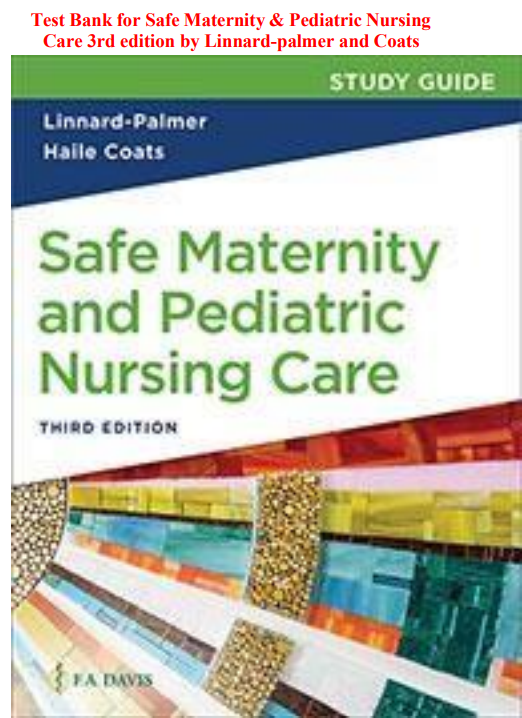
This test bank was built to meet that challenge directly. It follows Safe Maternity & Pediatric Nursing Care, 3rd Edition by Luanne Linnard-Palmer and Gloria Coats — a textbook designed from the ground up around the concept of safety in maternity and pediatric care. Every question in this test bank is written around that same philosophy. You do not just learn what to do. You learn why it matters, what can go wrong if you miss it, and how to keep patients safe in both routine and high-risk situations.
What Is Inside
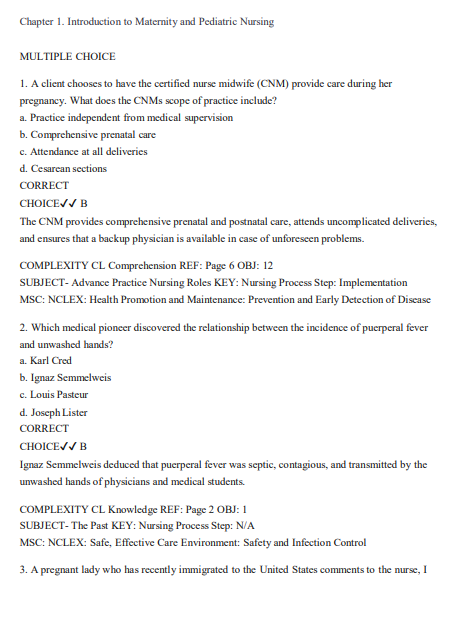
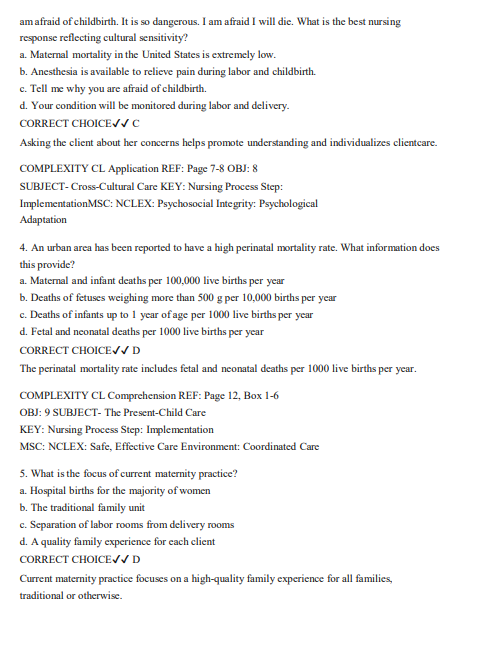
You get over a thousand practice questions covering every major topic in Linnard-Palmer and Coats’ 3rd edition. Questions are written in multiple-choice, select-all-that-apply, and ordered response formats — consistent with what you will encounter on nursing school exams and the NCLEX-RN.
Every question has a clearly marked correct answer. Every answer includes a full written rationale. The rationale explains the clinical reasoning behind the correct choice, connects it to the safety framework the textbook uses, and addresses why each wrong option is incorrect or potentially harmful. In a textbook built around patient safety, those rationales carry extra weight — they reinforce not just what is right but what is safe.
Topics Covered
The test bank follows the complete structure of the 3rd edition across both the maternity and pediatric content areas, including:
Foundations of Safe Maternity and Pediatric Care — family-centered care principles, cultural humility and culturally responsive care, safety frameworks in maternity and pediatric nursing, legal and ethical considerations, communication with families and children across developmental stages, and interprofessional collaboration in maternal and child health
Women’s Health and Antepartum Care — reproductive anatomy and physiology, conception and fetal development, physiological and psychological adaptations to pregnancy, prenatal assessment and care across all trimesters, nutrition and weight gain during pregnancy, prenatal education and birth preparation, and fetal surveillance including non-stress tests and biophysical profiles
Complications of Pregnancy — hyperemesis gravidarum, gestational hypertension and preeclampsia, gestational diabetes mellitus, placenta previa and abruptio placentae, ectopic pregnancy, spontaneous abortion, preterm labor and premature rupture of membranes, multiple gestation, and high-risk pregnancy nursing management
Intrapartum Care — labor mechanisms and stages, fetal presentation and position assessment, pain management in labor including epidural analgesia and non-pharmacologic methods, electronic fetal monitoring and interpretation, nursing care through each stage of labor and delivery, emergency obstetric situations including cord prolapse and shoulder dystocia, and cesarean birth and vaginal birth after cesarean
Postpartum Care — normal physiological changes in the postpartum period, postpartum assessment using the BUBBLE-HE framework, breastfeeding initiation and support, postpartum emotional adaptations, parent-infant bonding, and postpartum complications including hemorrhage, infection, deep vein thrombosis, and postpartum mood disorders
Newborn Care — immediate newborn stabilization and Apgar scoring, newborn physiological transitions, gestational age assessment, routine newborn care, newborn feeding including breastfeeding and formula, newborn screening programs, and newborn safety including safe sleep and abduction prevention
High-Risk Newborn Care — care of the preterm infant in the NICU, respiratory distress syndrome and surfactant therapy, hyperbilirubinemia and phototherapy, neonatal abstinence syndrome, infant of a diabetic mother, and congenital anomalies requiring immediate intervention
Foundations of Pediatric Nursing — growth and development across infancy through adolescence, developmental theories and milestones, pediatric health assessment, vital signs and normal values by age, pediatric pain assessment tools, communicating with children and families, and child safety and injury prevention across developmental stages
Pediatric Health Promotion — immunization schedules and vaccine safety, nutrition across childhood, anticipatory guidance for families, school health and community health nursing for children, and health promotion for children with chronic conditions
Pediatric Illness and Hospitalization — the child’s response to illness and hospitalization, therapeutic play and distraction, preparing children for procedures, family-centered care during hospitalization, and care of the child with a chronic or life-limiting illness
Pediatric Respiratory Conditions — upper respiratory infections, otitis media, croup, epiglottitis, bronchiolitis, asthma, cystic fibrosis, and respiratory syncytial virus
Pediatric Cardiovascular Conditions — congenital heart defects including acyanotic and cyanotic lesions, heart failure in children, rheumatic fever, and Kawasaki disease
Pediatric Neurological Conditions — febrile seizures, epilepsy in children, bacterial meningitis, hydrocephalus, neural tube defects, cerebral palsy, and head trauma in children
Pediatric Gastrointestinal Conditions — dehydration and fluid replacement in children, gastroenteritis, gastroesophageal reflux disease in infants, pyloric stenosis, intussusception, Hirschsprung’s disease, appendicitis, and inflammatory bowel disease in children
Pediatric Musculoskeletal and Integumentary Conditions — developmental dysplasia of the hip, scoliosis, osteomyelitis, juvenile idiopathic arthritis, fractures in children, burn injuries, and common pediatric skin conditions
Pediatric Endocrine and Hematologic Conditions — type 1 diabetes in children, diabetic ketoacidosis in pediatric patients, sickle cell disease, hemophilia, iron deficiency anemia, and leukemia in children
Pediatric Genitourinary Conditions — urinary tract infections in children, vesicoureteral reflux, nephrotic syndrome, Wilms tumor, and enuresis
Pediatric Mental Health — attention-deficit hyperactivity disorder, autism spectrum disorder, anxiety and depression in children and adolescents, eating disorders, substance use in adolescents, and child abuse and neglect recognition and mandatory reporting
Who Should Use This
This test bank is well suited for nursing students enrolled in a combined maternity and pediatric nursing course whose program uses Linnard-Palmer and Coats’ 3rd edition, students who find it challenging to keep up with the volume of content across two clinical specialties in a single semester, NCLEX-RN candidates who want focused practice on maternal-newborn and pediatric nursing content — two areas consistently represented on the exam, nursing instructors teaching combined maternal-child health courses who need a well-organized question pool for building exams and quizzes, and faculty who value a safety-focused pedagogical approach and want their assessments to reflect that framework.
Why the 3rd Edition Specifically
Maternity and pediatric nursing guidelines are updated more frequently than many students realize. Infant safe sleep recommendations evolve. Fetal monitoring interpretation standards are revised. Childhood immunization schedules are updated annually. Pediatric pain assessment tools and sepsis recognition criteria in children continue to develop based on new evidence.
The 3rd edition of Linnard-Palmer and Coats reflects current standards across all of these areas. It also expands its safety framework to address topics including health equity in maternal and child health, trauma-informed care, and culturally responsive nursing practice. This test bank was written to align with the 3rd edition specifically. If your course uses the 3rd edition, this is the resource that matches it directly.
5 Sample Questions
Question 1 A nurse is caring for a laboring patient at 39 weeks gestation. The fetal heart rate baseline is 155 beats per minute with moderate variability. Following a contraction, the monitor shows a gradual deceleration that begins at the peak of the contraction and returns to baseline 30 seconds after the contraction ends. How should the nurse interpret this finding and what is the priority action?
A. This is a variable deceleration caused by cord compression — reposition the patient immediately B. This is an early deceleration caused by head compression — continue monitoring and document C. This is a late deceleration indicating uteroplacental insufficiency — notify the provider and initiate interventions D. This is an acceleration indicating fetal well-being — no action is required at this time
Correct Answer: C Late decelerations are gradual decreases in fetal heart rate that begin after the peak of a contraction and recover after the contraction ends. They indicate uteroplacental insufficiency — the placenta is not delivering adequate oxygen to the fetus during the physiological stress of uterine contractions. Late decelerations are a non-reassuring fetal heart rate pattern requiring immediate intervention. The nurse should reposition the patient to the left lateral position, administer oxygen, discontinue oxytocin if infusing, increase IV fluids, and notify the provider promptly. Repeated late decelerations without improvement may indicate the need for expedited delivery.
Question 2 A nurse is assessing a 3-year-old child who was brought to the emergency department with a fever of 40.1°C, inspiratory stridor, a barking cough, and mild sternal retractions. The child is sitting upright and appears anxious. Which condition does the nurse suspect and what is the safety priority?
A. Epiglottitis — avoid any examination of the throat and prepare for emergency airway management B. Croup — place the child in a cool mist environment and administer nebulized racemic epinephrine as ordered C. Bronchiolitis — administer supplemental oxygen and monitor respiratory status closely D. Asthma — administer a short-acting bronchodilator and reassess in 20 minutes
Correct Answer: B The clinical picture — barking cough, inspiratory stridor, low-grade to moderate fever, and mild retractions in a toddler — is consistent with croup, also called laryngotracheobronchitis. This is the most common cause of upper airway obstruction in children aged 6 months to 3 years. Treatment includes cool mist or humidified air, corticosteroids to reduce airway inflammation, and nebulized racemic epinephrine for moderate to severe cases. Epiglottitis presents differently — with high fever, drooling, a tripod position, and absence of cough — and requires avoiding any throat examination. The safety priority in croup is preventing further agitation that could worsen airway obstruction.
Question 3 A postpartum nurse is assessing a patient 12 hours after vaginal delivery. The patient reports soaking through two perineal pads in the last hour. On assessment, the fundus is firm, midline, and at the umbilicus. Vital signs show a blood pressure of 98/60 mmHg, heart rate of 112 beats per minute, and respiratory rate of 20 breaths per minute. What should the nurse do first?
A. Perform uterine massage to stimulate further contraction B. Reassure the patient that heavy lochia is normal in the first 24 hours C. Notify the provider immediately and prepare for further assessment of bleeding source D. Increase the IV fluid rate and place the patient flat to improve blood pressure
Correct Answer: C This patient is showing signs of significant postpartum hemorrhage with hemodynamic instability — tachycardia and hypotension alongside heavy bleeding. Importantly, the uterus is firm, which means uterine atony is not the cause. The bleeding source must be investigated — likely lacerations, a hematoma, or retained placental fragments. The nurse must notify the provider immediately. Reassuring the patient that this is normal is dangerous and inaccurate. Uterine massage on an already firm uterus is unnecessary. Fluid resuscitation may be part of management but provider notification comes first.
Question 4 A nurse is caring for a 7-year-old child with sickle cell disease who has been admitted with acute chest syndrome. The child’s oxygen saturation has dropped from 97% to 89% over the past two hours. Respirations are 32 breaths per minute and labored. What is the nurse’s priority action?
A. Increase oral fluid intake to promote hydration and reduce sickling B. Apply supplemental oxygen and notify the provider immediately C. Administer the prescribed dose of oral hydroxyurea and monitor for improvement D. Position the child in a high Fowler’s position and obtain a repeat chest X-ray
Correct Answer: B Acute chest syndrome is a life-threatening complication of sickle cell disease characterized by new pulmonary infiltrates, chest pain, fever, and respiratory compromise. A falling oxygen saturation with labored breathing in a child requires immediate supplemental oxygen to prevent further sickling from hypoxia, which creates a dangerous cycle of worsening crisis. The provider must be notified immediately for further management including possible exchange transfusion. Oral hydroxyurea is a preventive medication and not an acute intervention. While positioning helps, oxygen and provider notification are the immediate priorities.
Question 5 A nurse is providing discharge teaching to parents of a 2-month-old infant who was born at 34 weeks gestation. Which statement by the parents indicates a need for additional teaching regarding safe sleep?
A. “We will place our baby on their back every time they sleep.” B. “We will use a firm mattress with a fitted sheet in the crib.” C. “We will put our baby in our bed with us so we can watch them more closely.” D. “We will keep stuffed animals and bumper pads out of the crib.”
Correct Answer: C Bed-sharing, even with the intention of closer supervision, significantly increases the risk of sudden infant death syndrome and sleep-related infant death. This risk is even higher for preterm infants, who have less physiological reserve and greater vulnerability. The American Academy of Pediatrics recommends room-sharing without bed-sharing — the infant should sleep on a firm, flat surface in their own sleep space in the same room as the parents. All other statements reflect correct safe sleep practices.
Frequently Asked Questions
Is this the official publisher test bank for Linnard-Palmer and Coats’ textbook? No. This is an independently developed study resource based on the content of the 3rd edition. It is not published or endorsed by F.A. Davis or the original authors. It is a supplementary exam preparation tool designed for nursing students and faculty.
How many questions are in the test bank? There are over a thousand questions in total. They are distributed across both the maternity and pediatric content areas of the 3rd edition, with representation across all major chapters and clinical topics in each specialty.
My course covers both maternity and pediatrics in one semester. Is this test bank organized to support that? Yes. The questions are organized to mirror the structure of the textbook, which moves sequentially through maternity content and then pediatric content. You can work through questions chapter by chapter alongside your coursework, or pull questions from specific topic areas to prepare for each exam.
How does the safety focus of this textbook affect the style of questions? The safety framework of Linnard-Palmer and Coats’ textbook shows up directly in the questions. Many items ask you to identify the safest intervention, recognize when a situation is becoming unsafe, or choose between actions based on patient safety priorities. This aligns closely with how the NCLEX approaches clinical judgment questions, making the test bank particularly useful for board preparation.
Does this test bank help with NCLEX preparation for both maternity and pediatric content? Yes. Maternal-newborn and pediatric nursing are both consistently represented on the NCLEX-RN. Questions in this test bank are written at the application and analysis levels, matching the cognitive demand of NCLEX items. Students who work through the full test bank report feeling more confident with both content areas on the actual exam.
Does every question include a rationale? Yes, without exception. Every question has a correct answer and a full written rationale. In a content area where safety is the organizing principle, the rationale is especially important — it explains not just what the right answer is but why the wrong answers could lead to patient harm. Reading every rationale, including for questions you answer correctly, is the most effective way to use this resource.
Can nursing instructors use this to build course exams? Yes. Questions are organized by topic and chapter across both maternity and pediatric content areas. Instructors can pull questions for unit exams, midterms, or comprehensive finals, and can easily build assessments that reflect the safety-focused philosophy of the textbook.
What file format is the test bank delivered in? It comes as a digital file, typically in Word or PDF format. You can search by topic or keyword, print chapters for focused study sessions, or access it across multiple devices. Many students divide their study sessions by content area — working through all maternity questions before one exam and all pediatric questions before another.
Is this test bank specific to the 3rd edition only? Yes. It was written to align with the content, safety frameworks, and clinical guidelines in the 3rd edition. Maternity and pediatric nursing guidelines — including safe sleep recommendations, immunization schedules, and fetal monitoring standards — are updated regularly. Earlier editions may not reflect current evidence-based practice. Always confirm your course edition before purchasing.
Winnie M. –
Top quality content for exam prep
Peterson S. –
Perfect!
Grace W. –
Much better than I would have hoped for
Kevin May –
Clear explanations made difficult concepts much easier to understand
Norah Helen –
Excellent questions, closely matched my nursing exam objectives
Liam Mbogo –
Clear explanations made reviewing incorrect answers worthwhile
Alicia Silva –
Convenient study tool for busy nursing students
Craig Bellamy –
A solid study companion for nursing students.