
Prescribing is a different responsibility than administering. As an advanced practice nurse, you are not just giving a drug someone else ordered. You are the one deciding which drug, at what dose, for which patient, weighing the evidence, the comorbidities, the cost, the interactions, and the individual response — and then living with the consequences of that decision through ongoing monitoring and adjustment.
That shift demands a fundamentally different relationship with pharmacology. You need to know not just what a drug does, but how to choose between five drugs that do roughly the same thing. You need to know which guideline applies, which patient factors change the calculus, and when the textbook algorithm needs to bend to the person sitting in front of you.
Arcangelo, Peterson, Wilbur, and Kang’s Pharmacotherapeutics for Advanced Practice: A Practical Approach has built its reputation on teaching exactly that kind of prescribing judgment. It is organized the way a prescriber actually thinks — by disease state and clinical decision point, not just by drug class. The 5th edition continues that practical, decision-focused approach with updated treatment algorithms, current evidence-based guidelines, and expanded clinical case integration.
This test bank was built to match it. Every question puts you in the prescriber’s seat. You are not just identifying a drug’s mechanism. You are choosing first-line therapy, adjusting for renal impairment, recognizing treatment failure, and deciding when to step up, step down, or switch entirely — exactly the reasoning advanced practice certification examinations test.
What Is Inside
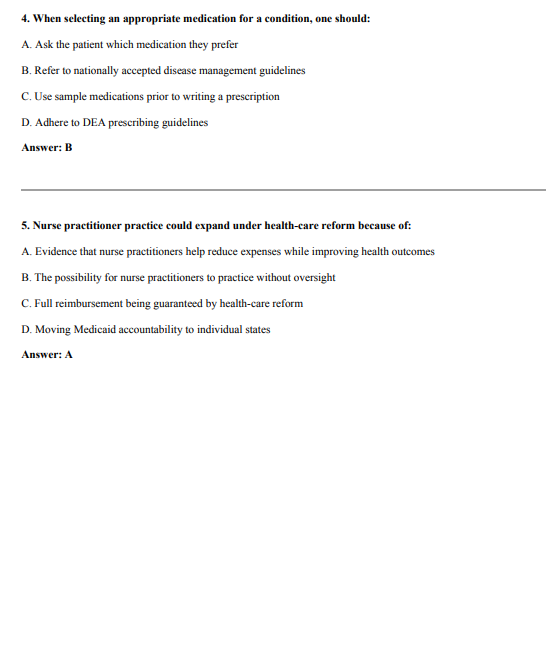
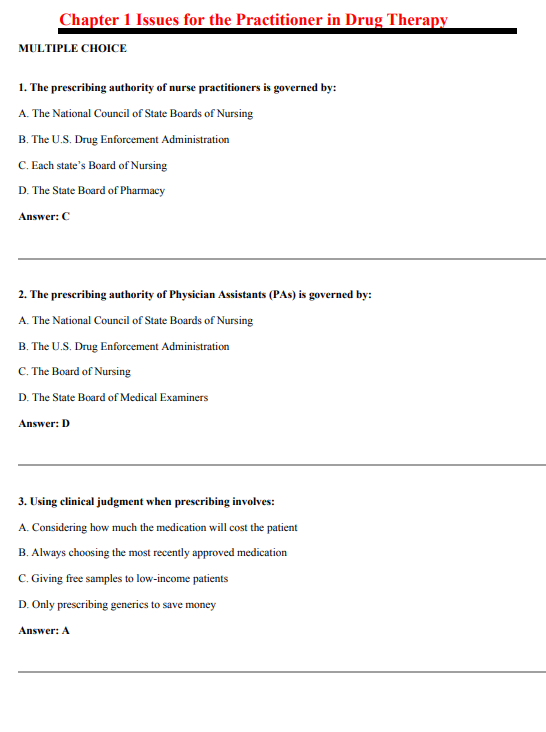
You get over a thousand practice questions covering every major disease state and pharmacotherapeutic decision point in the 5th edition. Questions are written in multiple-choice, select-all-that-apply, and case-based clinical scenario formats — consistent with what you will encounter on advanced practice nursing course exams and the AANPCB and ANCC certification examinations.
Every question has a clearly marked correct answer. Every answer includes a full written rationale. The rationale explains the clinical decision-making process behind the correct prescribing choice — referencing relevant evidence-based guidelines, patient-specific factors, and monitoring parameters — and addresses specifically why each wrong option reflects a less appropriate, less safe, or guideline-discordant choice. At the prescribing level, that depth of reasoning is the entire point of preparation.
Topics Covered
The test bank follows the complete structure of Arcangelo, Peterson, Wilbur, and Kang’s 5th edition across every major therapeutic content domain, including:
Foundations of Advanced Practice Prescribing — the prescriptive authority of advanced practice nurses, principles of rational drug selection, pharmacokinetic and pharmacodynamic principles applied to prescribing decisions, pharmacogenomics and individualized drug therapy, adverse drug reaction recognition and management, drug interaction screening and clinical significance, medication adherence strategies, cost-conscious prescribing, prescribing for special populations including pregnancy, lactation, pediatrics, and older adults, and the regulatory and legal framework of advanced practice prescribing including controlled substance prescribing
Cardiovascular Pharmacotherapeutics — hypertension treatment algorithms and first-line agent selection based on patient comorbidities, dyslipidemia management including statin selection and intensity, heart failure pharmacotherapy including guideline-directed medical therapy, atrial fibrillation rate and rhythm control strategies and anticoagulation decision-making, stable angina and chronic coronary disease management, and antiplatelet and anticoagulant therapy selection across clinical indications
Respiratory Pharmacotherapeutics — asthma stepwise pharmacotherapy and controller versus rescue therapy selection, COPD pharmacotherapy based on GOLD staging, allergic rhinitis treatment selection, upper respiratory infection management and antibiotic stewardship, and cough and congestion pharmacotherapy across patient populations
Endocrine Pharmacotherapeutics — type 2 diabetes pharmacotherapy algorithms including first-line and add-on agent selection based on comorbidities, insulin initiation and titration in type 1 and type 2 diabetes, thyroid disorder pharmacotherapy, osteoporosis treatment selection, and obesity pharmacotherapy
Gastrointestinal Pharmacotherapeutics — GERD and peptic ulcer disease treatment selection, Helicobacter pylori eradication regimens, irritable bowel syndrome pharmacotherapy, inflammatory bowel disease management in primary care, constipation and diarrhea treatment algorithms, and hepatitis management considerations in primary care
Renal and Genitourinary Pharmacotherapeutics — urinary tract infection antibiotic selection and resistance considerations, chronic kidney disease medication dose adjustment, benign prostatic hyperplasia pharmacotherapy, overactive bladder treatment selection, and erectile dysfunction pharmacotherapy
Neurological and Psychiatric Pharmacotherapeutics — migraine and tension headache treatment selection including abortive and prophylactic therapy, seizure disorder pharmacotherapy in primary care collaboration, depression pharmacotherapy including antidepressant selection based on patient factors, anxiety disorder pharmacotherapy, insomnia treatment selection, ADHD pharmacotherapy in children and adults, and substance use disorder pharmacotherapy including medication-assisted treatment for opioid use disorder
Musculoskeletal and Pain Pharmacotherapeutics — osteoarthritis and rheumatoid arthritis pharmacotherapy, gout acute and chronic management, low back pain pharmacotherapy, acute and chronic pain management including opioid stewardship principles, and fibromyalgia pharmacotherapy
Infectious Disease Pharmacotherapeutics — antibiotic selection principles and antimicrobial stewardship, community-acquired pneumonia treatment algorithms, skin and soft tissue infection management, sexually transmitted infection treatment regimens, antiviral therapy for influenza and herpes infections, antifungal therapy selection, and HIV pharmacotherapy considerations in primary care collaboration
Dermatological Pharmacotherapeutics — acne treatment selection by severity, psoriasis pharmacotherapy, eczema and dermatitis treatment, fungal skin infection management, and topical corticosteroid selection principles
Women’s Health Pharmacotherapeutics — contraceptive method selection based on patient risk factors, menopause hormone therapy decision-making, abnormal uterine bleeding pharmacotherapy, and treatment of common gynecologic infections
Eye, Ear, and Allergic Pharmacotherapeutics — conjunctivitis treatment selection, otitis media and otitis externa pharmacotherapy, and allergic disease pharmacotherapy including anaphylaxis emergency management
Pediatric Pharmacotherapeutics — weight-based dosing principles, common pediatric infection treatment, pediatric asthma stepwise therapy, and immunization pharmacology considerations
Geriatric Pharmacotherapeutics — polypharmacy management and deprescribing principles, Beers Criteria application in prescribing decisions, age-related pharmacokinetic changes affecting drug selection, and fall risk medication considerations
Who Should Use This
This test bank is the right resource for nurse practitioner students whose pharmacotherapeutics course uses Arcangelo, Peterson, Wilbur, and Kang’s 5th edition, NP students preparing for the AANPCB or ANCC family nurse practitioner certification examinations who need decision-based prescribing practice rather than simple drug recall, DNP students who need to demonstrate advanced clinical pharmacotherapeutic reasoning, practicing nurse practitioners who want a structured review of evidence-based treatment algorithms across major disease states, and nursing faculty teaching advanced pharmacotherapeutics who need a clinically rigorous, guideline-based question pool for building course assessments.
Why the 5th Edition Specifically
Treatment guidelines shift constantly at the advanced practice level. First-line hypertension and diabetes algorithms are revised. New drug classes enter the market and change established treatment hierarchies. Antibiotic resistance patterns shift antimicrobial stewardship recommendations. The 5th edition of Arcangelo, Peterson, Wilbur, and Kang incorporates these updates — including current ACC/AHA cardiovascular guidelines, updated ADA diabetes standards of care, revised GOLD COPD staging criteria, and current evidence-based pain management and opioid stewardship recommendations.
This test bank was written to align with the 5th edition specifically. The treatment algorithms, drug selection criteria, and monitoring parameters in the questions reflect what is in this edition. If your NP program uses the 5th edition, this is the test bank that fits it.
5 Sample Questions
Question 1
A 58-year-old African American male with newly diagnosed hypertension has a blood pressure of 152/94 mmHg. He has no other comorbidities and his renal function is normal. According to current evidence-based guidelines, which initial pharmacotherapy is most appropriate?
A. A beta blocker such as metoprolol
B. An ACE inhibitor such as lisinopril
C. A thiazide diuretic or calcium channel blocker
D. A central alpha-2 agonist such as clonidine
Correct Answer: C
Current hypertension guidelines recommend thiazide diuretics or calcium channel blockers as first-line therapy for Black patients without compelling comorbid indications, based on evidence showing reduced efficacy of ACE inhibitors and ARBs as monotherapy in this population, likely related to lower renin activity patterns. Beta blockers are not considered first-line for uncomplicated hypertension unless a compelling indication such as heart failure or post-MI status is present. Central alpha-2 agonists are not first-line therapy due to side effect burden and are reserved for resistant cases. This guideline distinction reflects an important pharmacogenomic and population-based consideration in prescribing.
Question 2
A 62-year-old woman with type 2 diabetes and established coronary artery disease has an HbA1c of 8.2% on metformin monotherapy at maximum tolerated dose. Her eGFR is 72 mL/min/1.73m². Which medication addition is most strongly supported by current evidence-based guidelines?
A. A sulfonylurea such as glipizide for additional glucose lowering
B. An SGLT-2 inhibitor with demonstrated cardiovascular benefit
C. A thiazolidinedione such as pioglitazone
D. Basal insulin as the next logical step in the diabetes treatment algorithm
Correct Answer: B
Current evidence-based diabetes guidelines strongly favor SGLT-2 inhibitors as the preferred add-on therapy for patients with type 2 diabetes and established atherosclerotic cardiovascular disease, based on large cardiovascular outcomes trials demonstrating reduced major adverse cardiovascular events, reduced heart failure hospitalization, and renal protective effects. This patient’s preserved renal function supports SGLT-2 inhibitor use. Sulfonylureas lack cardiovascular benefit and carry hypoglycemia risk. Thiazolidinediones are associated with fluid retention and are relatively contraindicated in patients with cardiovascular disease. Insulin is not the preferred next step when a patient has established cardiovascular disease and an agent with proven cardiovascular benefit is appropriate and not yet trialed.
Question 3
A 34-year-old woman presents with symptoms of moderate major depressive disorder. She has a history of significant weight concerns and reports that weight gain on a previous antidepressant led her to discontinue treatment against medical advice. Which antidepressant selection best reflects patient-centered, evidence-based prescribing?
A. Mirtazapine, due to its strong efficacy in treatment-resistant depression
B. Amitriptyline, due to its long history of use in depression treatment
C. Bupropion, due to its weight-neutral or weight-reducing side effect profile compared to many SSRIs
D. Paroxetine, due to its strong sedative properties that may improve sleep
Correct Answer: C
Patient-centered prescribing requires matching medication side effect profiles to individual patient priorities and history. This patient has explicitly identified weight gain as a barrier to treatment adherence in the past. Bupropion is well known for being weight-neutral or associated with modest weight loss, distinguishing it from many SSRIs and especially from mirtazapine and paroxetine, both of which carry significant weight gain risk. Amitriptyline, a tricyclic antidepressant, also carries weight gain risk along with a less favorable side effect and safety profile compared to newer agents. Selecting bupropion directly addresses the patient’s stated treatment barrier and supports long-term adherence — a critical consideration in evidence-based prescribing.
Question 4
A 70-year-old man with chronic kidney disease, eGFR 38 mL/min/1.73m², is being evaluated for a urinary tract infection. Culture results show susceptibility to multiple antibiotics. Which prescribing consideration is most important in selecting his antibiotic regimen?
A. Select the antibiotic with the broadest spectrum of coverage regardless of renal function
B. Adjust the antibiotic dose or selection based on his reduced renal clearance to avoid drug accumulation and toxicity
C. Avoid all antibiotics requiring renal dose adjustment and select only hepatically cleared agents
D. Prescribe the standard adult dose since UTI treatment courses are typically too short to cause renal accumulation concerns
Correct Answer: B
Many commonly used antibiotics, including several beta-lactams, fluoroquinolones, and especially nitrofurantoin, require dose adjustment or are contraindicated in patients with significant renal impairment. An eGFR of 38 mL/min/1.73m² represents stage 3b chronic kidney disease, which meaningfully affects renal drug clearance. Failing to adjust antibiotic dosing in this context risks drug accumulation and toxicity, even with a short treatment course, because peak drug concentrations and elimination half-life are both affected by reduced renal function. Broad-spectrum selection without regard to renal function and blanket avoidance of all renally-cleared antibiotics are both inappropriately rigid approaches. The correct practice is individualized dose adjustment based on the patient’s specific renal function.
Question 5
A 45-year-old woman with chronic low back pain has been using ibuprofen 600 mg three times daily for the past four months with inadequate pain relief. She has no history of gastrointestinal bleeding, cardiovascular disease, or renal impairment. Which next step in pharmacotherapy reflects current evidence-based pain management and opioid stewardship principles?
A. Initiate a short-acting opioid such as oxycodone as the next step in her pain management plan
B. Discontinue the NSAID and trial a different pharmacologic class such as duloxetine, alongside reinforcement of non-pharmacologic interventions including physical therapy
C. Increase the ibuprofen dose to 800 mg three times daily to achieve better pain control
D. Add acetaminophen 1000 mg four times daily to the existing NSAID regimen without further evaluation
Correct Answer: B
Current evidence-based guidelines for chronic low back pain emphasize a multimodal approach and explicitly discourage early escalation to opioid therapy due to limited long-term efficacy evidence and significant risk of dependence and adverse effects. When an NSAID provides inadequate relief after an adequate trial, evidence supports considering alternative pharmacologic classes such as duloxetine, which has demonstrated efficacy in chronic musculoskeletal pain, particularly alongside continued emphasis on non-pharmacologic interventions including physical therapy and exercise. Increasing the NSAID dose beyond recommended limits increases gastrointestinal and cardiovascular risk without proportional benefit. Opioid initiation for chronic non-cancer pain is reserved for cases where alternative approaches have been exhausted and the risk-benefit analysis clearly favors their use, reflecting current opioid stewardship principles.
Frequently Asked Questions
Is this the official Wolters Kluwer test bank for Arcangelo’s 5th edition?
No. This is an independently developed study resource based on the content of Arcangelo, Peterson, Wilbur, and Kang’s 5th edition. It is not published or endorsed by Wolters Kluwer or the original authors. It is a supplementary exam and certification preparation tool for advanced practice nursing students and practicing NPs.
How many questions are in the test bank?
There are over a thousand questions distributed across all major disease states and therapeutic content areas in the 5th edition, with the greatest concentration in the highest-yield primary care prescribing domains including cardiovascular, endocrine, infectious disease, and psychiatric pharmacotherapeutics.
How is this different from a general pharmacology test bank?
General pharmacology test banks typically test what a drug does and its nursing implications for administration. This test bank tests prescribing decisions — which drug to choose first, how to adjust for patient-specific factors, when to switch therapy, and how to weigh competing guideline recommendations. It is written for the advanced practice scope of independent prescribing, not the RN scope of medication administration.
Will this help me pass the FNP certification examination?
Yes. The certification examinations test the kind of decision-based pharmacotherapeutic reasoning this test bank is built around — selecting first-line therapy, recognizing when to escalate or change treatment, and applying current evidence-based guidelines to patient scenarios. It is most effective when used alongside a comprehensive certification review program rather than as a standalone resource.
I am a practicing NP, not a student. Is this test bank still useful for me?
Yes. Treatment guidelines change regularly, and many practicing NPs use resources like this to stay current on first-line therapy recommendations across major disease states, especially when those guidelines have shifted since their initial certification or graduate education. It also works well for recertification preparation.
Does every question include a rationale?
Yes, without exception. Every question has a correct answer and a full written rationale that explains the evidence-based reasoning behind the correct prescribing decision and addresses why each wrong option reflects a less appropriate, less current, or guideline-discordant choice. At the advanced practice level, the rationale is where the actual learning happens — understanding why one first-line agent is preferred over another is the core skill being tested.
Can nursing faculty use this to build pharmacotherapeutics course exams?
Yes. Questions are organized by disease state and therapeutic category, making it straightforward to build unit exams, case-based assessments, or comprehensive final examinations appropriate for graduate-level advanced practice nursing programs.
What file format is the test bank delivered in?
It comes as a digital file, typically in Word or PDF format. You can search by disease state, drug class, or clinical scenario, print specific sections for focused study sessions, and access it across multiple devices.
Is this test bank specific to the 5th edition only?
Yes. It was written to align with the treatment algorithms, drug selection guidelines, and clinical content of the 5th edition specifically. Prescribing guidelines change frequently, and earlier editions may not reflect current first-line therapy recommendations across the disease states covered. Always confirm your edition before purchasing.
Peterson S. –
Perfect!
Caleb Martins –
A very good study guide
Rosemary R –
Clear, concise, and informative
Vmansteain –
Great for self-assessment.
Norah Helen –
Made studying way more interactive
Morgan Fraiser –
Plenty of questions to keep practicing
Lisa Horton –
Excellent resource for reinforcing important concepts
Winnie M. –
Much better than I expected