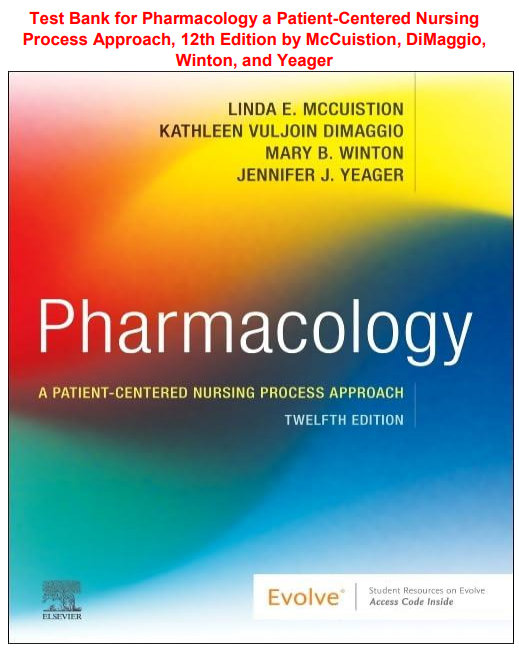
Pharmacology taught well does not feel like memorization. It feels like understanding. When you understand why a loop diuretic causes hypokalemia, you do not need to memorize it — you can reason it out. When you understand how opioid receptors work, you can predict the clinical consequences of any opioid at any dose in any patient. When you understand the pharmacokinetic changes of aging, you can anticipate why a standard adult dose is dangerous in a 78-year-old.
McCuistion, DiMaggio, Winton, and Yeager’s Pharmacology: A Patient-Centered Nursing Process Approach has always taught pharmacology through that lens. The patient-centered nursing process framework means that every drug class is presented not just as a list of mechanisms and side effects but as a clinical responsibility — what does the nurse assess before giving this drug, what does the nurse monitor for afterward, and what does the patient need to understand to use this medication safely at home. The 12th edition deepens that approach with updated drug information, revised clinical guidelines, expanded content on emerging drug classes, and stronger integration of the clinical judgment framework the Next Generation NCLEX demands.
This test bank was built to match it. Every question connects pharmacological knowledge to patient-centered nursing action. You do not just identify a mechanism. You apply it — through assessment, through monitoring, through education, and through the clinical judgment that decides whether to give the drug, hold it, or call the provider.
What Is Inside
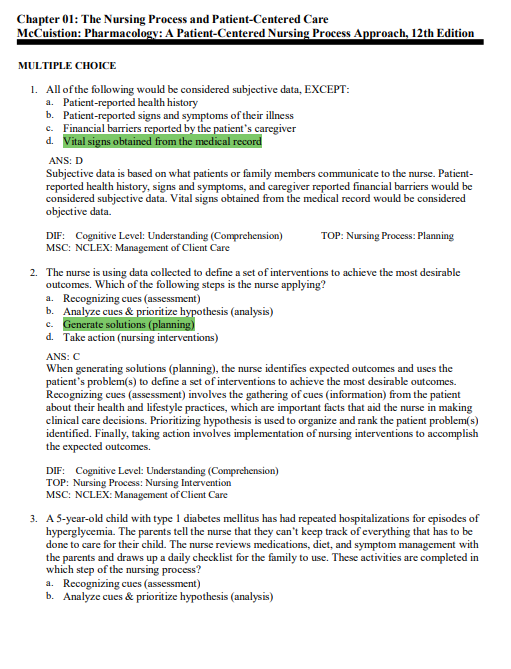
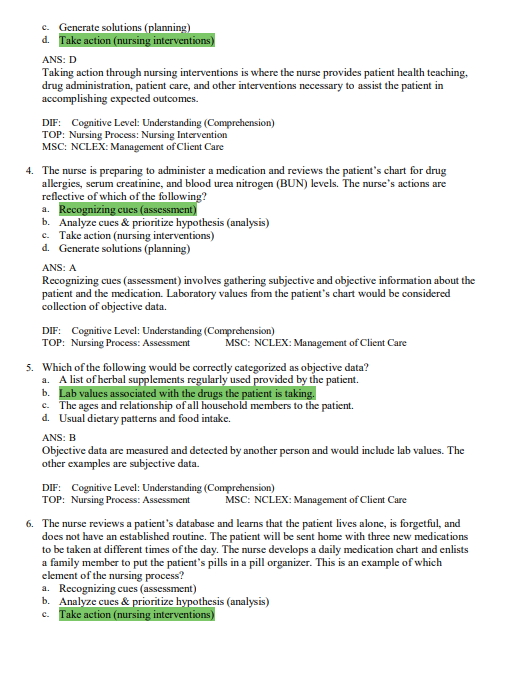
You get over a thousand practice questions covering every major drug class and nursing process application in the 12th edition. Questions are written in multiple-choice, select-all-that-apply, and ordered response formats — consistent with what you will encounter on nursing school exams and the NCLEX-RN.
Every question has a clearly marked correct answer. Every answer includes a full written rationale. The rationale explains the pharmacological mechanism, the nursing process step being tested, the patient-centered reasoning behind the correct choice, and why each wrong option reflects an error in drug knowledge, nursing assessment, or clinical application. In a textbook organized around patient-centered care, the rationale consistently connects the drug back to the person taking it — which is exactly how pharmacology needs to be understood to be used safely.
Drug Classes and Topics Covered
The test bank follows the complete structure of McCuistion, DiMaggio, Winton, and Yeager’s 12th edition across all major pharmacological categories, including:
Foundations of Patient-Centered Pharmacology — pharmacokinetic principles including absorption, distribution, metabolism, and excretion with patient-centered implications at each stage, pharmacodynamic principles including receptor theory, agonists, antagonists, and dose-response relationships, drug interactions including additive, synergistic, and antagonistic effects, adverse drug reactions and toxicity classification, medication safety and the rights of medication administration, the nurse’s role in preventing medication errors, medication reconciliation across care transitions, drug development and regulatory processes, and the nursing process applied systematically to medication management
Pharmacology Across the Lifespan — pharmacokinetic differences in neonates, infants, and children and their clinical implications, weight-based dosing calculations and safety checks in pediatric patients, pregnancy drug categories and the nurse’s role in counseling pregnant patients, lactation risk and medication counseling for breastfeeding patients, and age-related pharmacokinetic and pharmacodynamic changes in older adults with Beers Criteria application
Nutritional Supplements and Herbal Pharmacology — principles of dietary supplement regulation and safety evidence, clinically significant herb-drug interactions including St. John’s Wort, ginkgo, garlic, and ginseng, patient teaching about herbal supplement safety, and the nurse’s role in eliciting complete medication histories including supplements
Fluid and Electrolyte Pharmacology — intravenous fluid types and their clinical indications including isotonic, hypotonic, and hypertonic solutions, electrolyte replacement therapy including potassium, sodium, calcium, and magnesium, albumin and colloid therapy, blood and blood product administration nursing responsibilities, and fluid and electrolyte imbalance pharmacological management
Autonomic Nervous System Pharmacology — adrenergic agonists including catecholamines and non-catecholamines with clinical applications, adrenergic antagonists including alpha and beta blockers with nursing monitoring requirements, cholinergic agonists and their nursing implications, anticholinergic drugs including atropine and scopolamine with clinical uses and patient teaching, and neuromuscular blocking agents
Central Nervous System Pharmacology — sedative-hypnotics and anxiolytics including benzodiazepines and Z-drugs with safety considerations, antiepileptic drugs organized by mechanism with nursing monitoring, drugs for Parkinson’s disease with nursing implications across drug classes, antipsychotic medications including first and second generation with extrapyramidal side effect monitoring, antidepressants including SSRIs, SNRIs, TCAs, and MAOIs with safety profiles and onset of action patient teaching, mood stabilizers including lithium with toxicity monitoring and narrow therapeutic index nursing implications, stimulant medications for ADHD with monitoring considerations, and central nervous system stimulants and depressants in substance use context
Pain Management Pharmacology — opioid analgesics including morphine, oxycodone, hydromorphone, fentanyl, and methadone with patient-centered monitoring and safety, opioid antagonists including naloxone with clinical use in overdose reversal, non-opioid analgesics including acetaminophen with hepatotoxicity risk and dosing limits, NSAIDs including aspirin and ibuprofen with cardiovascular and gastrointestinal safety considerations, adjuvant analgesics including anticonvulsants and antidepressants in pain management, and patient-controlled analgesia nursing responsibilities
Cardiovascular Pharmacology — antihypertensive agents across all major classes with patient-specific selection considerations, diuretics including thiazide, loop, and potassium-sparing agents with electrolyte monitoring, cardiac glycosides including digoxin with toxicity recognition and narrow therapeutic index management, heart failure pharmacotherapy including ACE inhibitors, ARBs, beta blockers, and sacubitril-valsartan, antidysrhythmic drugs across Vaughan-Williams classes with ECG monitoring, antianginal drugs including nitrates and their hemodynamic effects, anticoagulants including heparin, low-molecular-weight heparins, warfarin, and direct oral anticoagulants with monitoring and reversal, antiplatelet agents and their clinical applications, thrombolytics with hemorrhage risk nursing management, and lipid-lowering agents including statins and PCSK9 inhibitors
Respiratory Pharmacology — bronchodilators including short and long-acting beta-2 agonists with inhaler technique patient teaching, anticholinergic bronchodilators, inhaled and systemic corticosteroids in respiratory conditions, leukotriene receptor antagonists, methylxanthines, drugs for allergic rhinitis, antitussives and expectorants, decongestants and antihistamines with drowsiness and cardiovascular safety considerations, and drugs for pulmonary arterial hypertension
Gastrointestinal Pharmacology — antacids and their drug interaction implications, H2 receptor antagonists and proton pump inhibitors with long-term safety considerations, antiemetics including ondansetron, promethazine, and prochlorperazine, drugs for chemotherapy-induced nausea and vomiting, laxatives organized by mechanism with appropriate patient selection, antidiarrheal agents, drugs for inflammatory bowel disease, drugs for irritable bowel syndrome, and drugs for peptic ulcer disease including H. pylori eradication regimens
Endocrine Pharmacology — insulin pharmacokinetics including onset, peak, and duration across insulin types with injection site and rotation patient teaching, oral antidiabetic agents across all classes including metformin, sulfonylureas, SGLT-2 inhibitors, GLP-1 receptor agonists, DPP-4 inhibitors, and thiazolidinediones with mechanism-based nursing monitoring, thyroid replacement therapy and antithyroid drugs, glucocorticoids with adrenal suppression nursing implications, sex hormones including estrogens and progestins in contraceptive and menopausal contexts, and drugs for osteoporosis
Anti-Infective Pharmacology — antibacterial drug classes including penicillins, cephalosporins, carbapenems, vancomycin, aminoglycosides, tetracyclines, macrolides, fluoroquinolones, and sulfonamides with resistance considerations and nursing monitoring specific to each class, antiviral agents including antiretrovirals for HIV and antivirals for herpes, influenza, and hepatitis, antifungal agents including azoles and amphotericin B with toxicity monitoring, antimycobacterial drugs with tuberculosis treatment nursing implications, and antiparasitic agents
Immune System and Biologic Pharmacology — immunosuppressant medications with infection risk monitoring, vaccines and immunoglobulins with nursing administration responsibilities, cytokines and biologic response modifiers including monoclonal antibodies and their nursing implications, and drugs used in organ transplantation
Cancer Pharmacology — antineoplastic drug classes with mechanism-based nursing considerations, targeted cancer therapies including tyrosine kinase inhibitors and checkpoint inhibitors, hematopoietic growth factors, nursing management of chemotherapy toxicities including myelosuppression and mucositis, and hormonal cancer therapy
Reproductive and Women’s Health Pharmacology — hormonal contraceptives with contraindication assessment, emergency contraception, drugs used in labor and delivery including oxytocin and tocolytics, pharmacology of postpartum hemorrhage management, and drugs for menopausal symptom management
Ophthalmic and Otic Pharmacology — topical ophthalmic medications including glaucoma drugs, anti-infectives, and anti-inflammatory agents with administration technique, otic medications with proper instillation technique, and patient teaching for self-administration
Dermatological Pharmacology — topical corticosteroid potency and application principles, topical anti-infective and antifungal agents, acne pharmacotherapy, and wound care pharmacology
Who Should Use This
This test bank is the right resource for nursing students whose pharmacology course uses McCuistion, DiMaggio, Winton, and Yeager’s 12th edition and who need consistent chapter-by-chapter application-level practice, students who recognize that memorizing drug facts is not producing the clinical understanding they need and want a resource that builds reasoning rather than recall, NCLEX-RN candidates who want to strengthen the pharmacological and parenteral therapies content area through patient-centered clinical scenarios rather than isolated drug facts, nursing instructors teaching pharmacology who need a comprehensive, patient-centered, and clinically grounded question pool for building unit exams and comprehensive assessments, and students in accelerated or second-degree nursing programs who need to build pharmacology competency efficiently within a compressed timeline.
Why the 12th Edition Specifically
The 12th edition of McCuistion, DiMaggio, Winton, and Yeager incorporates updated drug information across every major class, revised clinical guidelines including current ACC/AHA cardiovascular guidelines and ADA diabetes standards, expanded coverage of SGLT-2 inhibitors and GLP-1 receptor agonists and their cardiovascular and renal benefits, updated direct oral anticoagulant content, revised opioid stewardship content reflecting current prescribing guidelines, expanded biologic and targeted therapy pharmacology, and stronger integration of the clinical judgment framework aligned with the Next Generation NCLEX.
This test bank was written to align with the 12th edition specifically. The drug information, nursing process applications, patient-centered frameworks, and clinical scenarios in the questions reflect what is in this edition. If your program uses the 12th edition, this is the test bank that matches it.
5 Sample Questions
Question 1
A nurse is preparing to administer furosemide 40 mg intravenously to a patient with acute decompensated heart failure. Before administering the drug, the nurse reviews the morning laboratory results and notes a serum potassium of 3.1 mEq/L. The patient also takes digoxin 0.125 mg daily. Which nursing action best reflects patient-centered pharmacological safety?
A. Administer the furosemide as ordered since the primary clinical priority is relieving the fluid overload
B. Hold the furosemide, notify the provider of the hypokalemia, and recognize that administering a loop diuretic in a patient with low potassium who is also taking digoxin creates a significant risk of digoxin toxicity and life-threatening dysrhythmia
C. Administer the furosemide and give an oral potassium supplement simultaneously to prevent further potassium loss
D. Reduce the furosemide dose to 20 mg to minimize potassium loss and administer without notifying the provider
Correct Answer: B
This question requires integration of three pharmacological concepts simultaneously — the mechanism of loop diuretics, the role of potassium in digoxin toxicity, and the clinical judgment to hold a medication and escalate. Furosemide causes potassium excretion through its action on the ascending loop of Henle. In a patient whose potassium is already 3.1 mEq/L, administering furosemide will likely drive it lower. Digoxin and potassium compete for the same binding site on the Na-K-ATPase pump — hypokalemia enhances digoxin binding and significantly increases the risk of digoxin toxicity even at therapeutic serum levels. The resulting dysrhythmias can be life-threatening. The nurse must hold the furosemide and notify the provider before proceeding. Administering a potassium supplement simultaneously does not guarantee safe potassium levels before the furosemide acts, and changing the dose without an order is outside nursing scope.
Question 2
A 68-year-old patient with rheumatoid arthritis is being discharged with a new prescription for methotrexate 15 mg orally once weekly and folic acid 1 mg daily. The patient asks why they need to take a vitamin when the main drug is the methotrexate. Which patient-centered teaching response is most accurate?
A. “Folic acid helps the methotrexate work better by improving absorption in your digestive tract.”
B. “Methotrexate works by blocking an enzyme that your body needs to process folate, which can cause mouth sores, nausea, and hair thinning. Taking folic acid daily replaces the folate that methotrexate depletes and significantly reduces these side effects without reducing the drug’s effect on your joints.”
C. “Folic acid protects your kidneys from the toxic effects of methotrexate since the drug is cleared renally.”
D. “The folic acid is just a precaution — most patients do not actually need it, but it is prescribed routinely.”
Correct Answer: B
Methotrexate works in rheumatoid arthritis by inhibiting dihydrofolate reductase, an enzyme essential for folate metabolism. This mechanism, which also underlies its use in cancer treatment, depletes available folate and causes folate-deficiency-related side effects including mucositis, nausea, alopecia, and in high doses hepatotoxicity and bone marrow suppression. Folic acid supplementation replenishes depleted folate and has strong evidence for reducing methotrexate side effects without meaningfully reducing its anti-inflammatory efficacy in rheumatoid arthritis. This teaching response reflects the patient-centered approach of the textbook — connecting the pharmacological mechanism directly to the patient’s experience and addressing their specific question with clinical accuracy rather than vague reassurance.
Question 3
A patient with type 2 diabetes, heart failure with reduced ejection fraction, and an eGFR of 55 mL/min/1.73m² is being seen in a clinic. The provider has added empagliflozin to the patient’s current regimen of metformin and lisinopril. The patient asks what this new medication does. Which response best reflects patient-centered pharmacological teaching for this drug?
A. “Empagliflozin lowers your blood sugar by stimulating your pancreas to release more insulin throughout the day.”
B. “Empagliflozin works by blocking a transporter in your kidneys that normally reabsorbs sugar, so excess glucose is excreted in your urine. But it was also added for your heart — studies have shown it significantly reduces hospitalizations for heart failure and protects kidney function.”
C. “Empagliflozin replaces metformin since your kidneys are not working at full capacity and metformin is no longer safe for you.”
D. “Empagliflozin is a newer insulin that you inject once weekly instead of daily.”
Correct Answer: B
Empagliflozin is an SGLT-2 inhibitor that works by blocking the sodium-glucose cotransporter 2 in the proximal tubule of the kidney, reducing glucose reabsorption and increasing urinary glucose excretion. Beyond glucose lowering, landmark cardiovascular outcome trials have demonstrated significant reductions in heart failure hospitalizations and cardiovascular mortality, making SGLT-2 inhibitors a guideline-directed therapy for heart failure with reduced ejection fraction. This patient’s eGFR of 55 is above the threshold for initiating empagliflozin, though the glucose-lowering effect diminishes as eGFR declines, while the cardiorenal benefits persist to lower eGFR thresholds. Metformin is not necessarily contraindicated at this eGFR and is not being replaced. Patient-centered teaching explains not just the mechanism but the full clinical rationale — which for this patient includes both glycemic and cardiovascular goals.
Question 4
A nurse is caring for a patient receiving IV amphotericin B deoxycholate for a systemic fungal infection. During the infusion, the patient develops rigors, fever, and headache approximately 45 minutes into the infusion. The nurse notes that premedications including acetaminophen, diphenhydramine, and hydrocortisone were administered 30 minutes before the infusion as ordered. Which nursing interpretation and action is most appropriate?
A. Stop the infusion immediately and document a severe allergic reaction requiring permanent discontinuation of amphotericin B
B. Recognize these as common infusion-related reactions to amphotericin B, slow the infusion rate, notify the provider, and administer ordered rescue medications such as meperidine for rigors if prescribed
C. Continue the infusion at the current rate since the premedications were supposed to prevent all infusion reactions and their occurrence means they were ineffective
D. Discontinue the amphotericin B and request that the provider switch to a different antifungal since any infusion reaction indicates the patient cannot tolerate this drug
Correct Answer: B
Amphotericin B deoxycholate, the conventional formulation, is well known for causing infusion-related reactions including fever, rigors, chills, headache, and nausea — not as an allergic response but as a direct pharmacological effect related to cytokine release. Premedication reduces but does not eliminate these reactions. When they occur, the appropriate nursing response is to slow the infusion rate, provide symptomatic management with ordered rescue medications — meperidine is commonly used for rigors specifically — and notify the provider. Stopping the infusion permanently would deprive the patient of treatment for a potentially life-threatening fungal infection. These reactions are expected and manageable rather than indicative of drug incompatibility or allergy. This reflects the patient-centered pharmacology principle that nursing management of adverse effects is a distinct and important clinical skill.
Question 5
A nurse is preparing discharge teaching for a patient who has been prescribed warfarin 5 mg daily for atrial fibrillation. During the teaching session, the patient mentions they drink two glasses of cranberry juice daily, take ibuprofen several times a week for back pain, and recently started taking a fish oil supplement. Which combination of factors presents the greatest pharmacological safety concern requiring provider notification before discharge?
A. The cranberry juice alone is sufficient concern to warrant discharge delay
B. The regular ibuprofen use and fish oil supplementation in a patient on warfarin create a compounding bleeding risk that the provider must address before discharge — ibuprofen inhibits platelet aggregation and causes GI mucosal injury, while fish oil also has antiplatelet properties, and both potentiate warfarin’s anticoagulant effect
C. The fish oil is the only significant interaction since it is a supplement that most patients do not report to their providers
D. None of these interactions are clinically significant and the patient can be safely discharged with standard warfarin teaching
Correct Answer: B
This question requires integrating multiple drug-drug and drug-supplement interactions simultaneously — a core skill in patient-centered pharmacology. Ibuprofen, an NSAID, presents a dual concern in this patient: it inhibits platelet aggregation, adding antiplatelet effect to warfarin’s anticoagulant action, and it causes gastrointestinal mucosal injury, dramatically increasing the risk of GI bleeding. Fish oil in higher doses also has antiplatelet properties that compound the bleeding risk. Cranberry juice has been associated with modest CYP2C9 inhibition that may raise warfarin levels, but the combination of regular ibuprofen use and fish oil supplementation in a patient on warfarin represents the most significant and immediate safety concern. The provider must be notified before discharge so that alternative pain management for the back pain and a review of the supplement use can be addressed as part of the patient’s anticoagulation management plan.
Frequently Asked Questions
Is this the official Elsevier test bank for McCuistion’s 12th edition?
No. This is an independently developed study resource based on the content of McCuistion, DiMaggio, Winton, and Yeager’s 12th edition. It is not published or endorsed by Elsevier or the original authors. It is a supplementary exam preparation tool for nursing students and faculty.
How many questions are in the test bank?
There are over a thousand questions distributed across all major drug classes and nursing process application areas in the 12th edition, with the greatest concentration in the highest-yield areas for nursing school exams and the NCLEX — cardiovascular pharmacology, CNS pharmacology including analgesics and antidepressants, anti-infective agents, and endocrine pharmacology.
How does the patient-centered nursing process approach of this textbook show up in the test bank questions?
Every question is framed around a clinical scenario involving a patient — not an isolated drug fact. Questions consistently test the nursing process steps that the textbook emphasizes — what to assess before giving the drug, what to monitor for after, what to teach the patient, and what finding would cause the nurse to hold the dose. This mirrors how pharmacology actually functions in nursing practice and how the NCLEX tests it.
Is pharmacology tested at the application level on the NCLEX?
Yes. The NCLEX does not ask what a drug’s mechanism of action is in isolation. It asks what the nurse would do in a clinical scenario involving that drug — which assessment finding is most important, what patient teaching is essential, what laboratory value would cause the nurse to hold the medication, or what adverse effect requires immediate provider notification. Every question in this test bank is written at that same applied level.
I find pharmacology overwhelming and have trouble keeping drug classes organized. What is the most effective way to use this test bank?
Work through it one drug class at a time, in parallel with your course schedule. For each class, the four questions that matter most are: What does this drug do? What do I assess before giving it? What do I monitor after giving it? What do I teach the patient about it? Those four anchors drive the majority of pharmacology exam and NCLEX questions. Read every rationale regardless of whether you answered correctly — the rationale builds mechanistic understanding that generalizes to drugs you have never seen before.
Does every question include a rationale?
Yes, without exception. Every question has a correct answer and a full written rationale explaining the pharmacological mechanism, the patient-centered nursing process reasoning behind the correct choice, and why each wrong option reflects a clinical error or a misunderstanding of the drug’s pharmacology. In the patient-centered approach of McCuistion’s textbook, the rationale always connects the drug back to the person taking it.
Can nursing faculty use this to build pharmacology course exams?
Yes. Questions are organized by drug class and chapter, making it easy to build unit exams, comprehensive finals, or drug safety and clinical application assessments appropriate for undergraduate nursing pharmacology courses that use the 12th edition.
What file format is the test bank delivered in?
It comes as a digital file, typically in Word or PDF format. You can search by drug class, drug name, or nursing process step, print specific chapters for focused study sessions, and access it across multiple devices.
Is this test bank specific to the 12th edition only?
Yes. It was written to align with the drug information, clinical guidelines, patient-centered nursing process framework, and updated content of the 12th edition — including its expanded SGLT-2 inhibitor and GLP-1 agonist content, revised anticoagulation pharmacology, and updated opioid stewardship content. Drug information and guidelines change between editions. Always confirm your edition before purchasing.
Lucille Maria –
A perfect study guide for nursing pharmacology
SHoustone –
Exactly what I needed to build exam confidence
Aurora Hezel –
The class has been tough but I am confident thanks to these practice exam questions
Theresa M. –
Good quality
Leo Fernandez –
I like that the resource is full of relevant questions of all levels of difficulty
Peterson S. –
Convenient tool for focused study
Ruth W –
Helpful explanations support better comprehension.
Joyce Burns –
Good practice questions for regular review.
Alexander Savic –
Handy material for checking progress during studying.
Betty Morgot –
Good resource for breaking large topics into practice sessions
Sarah Willock –
Helpful questions for refreshing previously covered material.
Terence V. –
Good questions for reinforcing recently learned concepts.
Karen Njiru –
Useful resource for keeping review sessions organized.
Zakariah K. –
Helpful practice for building familiarity with course topics
Alan Kuqi –
Useful questions for checking nursing knowledge.
Lucas Gabriel –
Makes independent study sessions more productive
Peris Hart –
Helpful material for revisiting challenging course concepts
Thomas K. –
Helpful supplement for reviewing complex course material.
Alexander Evans –
Makes knowledge checks simple and accessible.
Zipporah Shaw –
Useful exercises for improving familiarity with exam questions.