Leadership is not a title. It is not a corner office or a charge nurse badge. Leadership is what happens every time a practical nurse walks into a patient’s room, advocates for a family member who does not know how to speak up, delegates a task with clear instructions, or raises a concern through the right chain of command even when it feels uncomfortable.
Practical and vocational nurses lead every single shift. They lead through their clinical judgment, their communication, their professionalism, and their commitment to safe patient care. The challenge is that most LPN and LVN students do not think of themselves as leaders — because they have not yet been taught to see leadership as something that belongs to them.
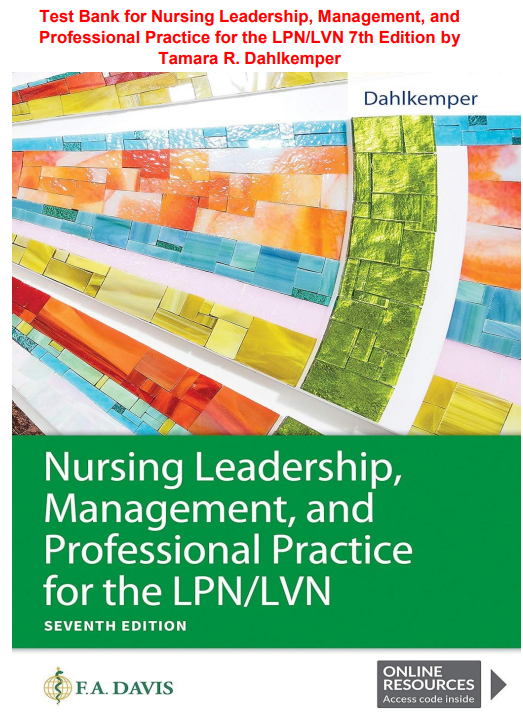
Tamara Dahlkemper’s Nursing Leadership, Management, and Professional Practice for the LPN/LVN changes that. The 7th edition gives practical nursing students the theoretical grounding, the clinical frameworks, and the professional identity to step into their role not just as bedside caregivers but as active, accountable members of the healthcare team. It covers management principles, delegation, communication, legal and ethical practice, quality improvement, and the evolving scope of LPN/LVN practice in a healthcare system that is changing faster than ever.
This test bank was built to match it. Every question is grounded in the content, frameworks, and professional development philosophy of the 7th edition. You do not just learn about leadership. You practice applying it — to realistic clinical scenarios, ethical dilemmas, delegation decisions, and professional practice situations that reflect what LPN and LVN practice actually looks like on the unit, in long-term care, in home health, and in every other setting where practical nurses work.
What Is Inside
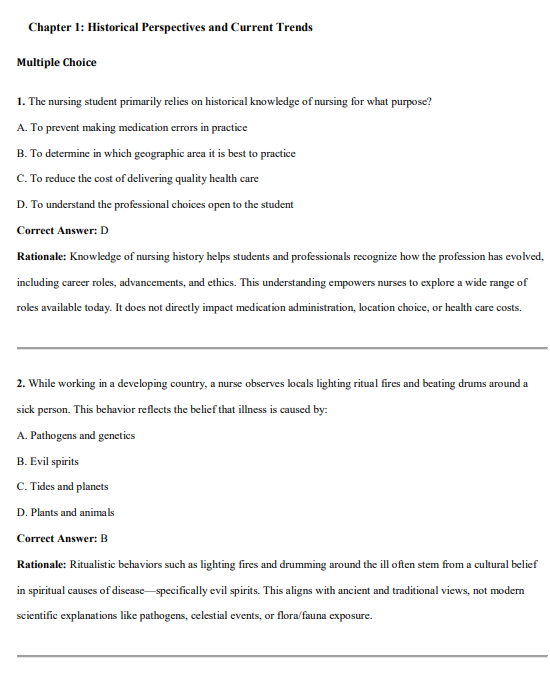
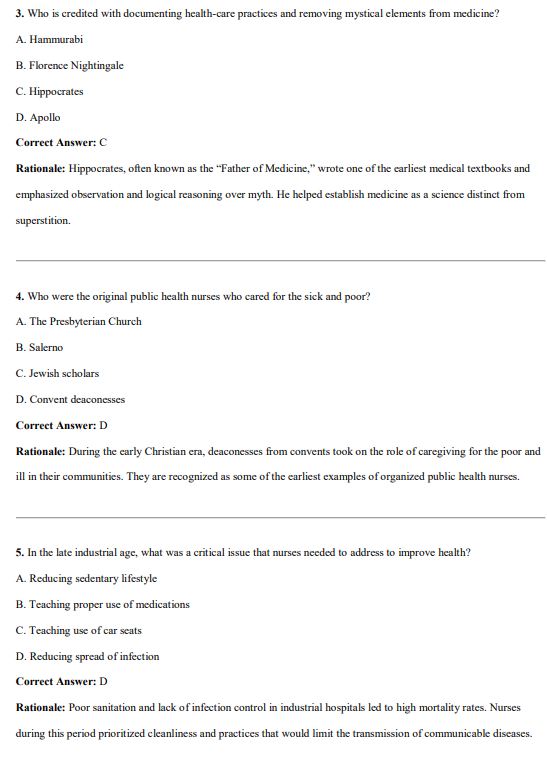
You get over a thousand practice questions covering every major leadership, management, and professional practice topic in Dahlkemper’s 7th edition. Questions are written in multiple-choice, select-all-that-apply, and ordered response formats — consistent with what you will encounter on practical nursing school exams and the NCLEX-PN.
Every question has a clearly marked correct answer. Every answer includes a full written rationale. The rationale explains the leadership principle, management concept, legal standard, or professional practice guideline behind the correct choice and addresses why each wrong option reflects an error in judgment, a misunderstanding of scope, or an inappropriate professional response. Leadership decisions have real consequences — and the rationales in this test bank treat them that way.
Topics Covered
The test bank follows the complete structure of Dahlkemper’s 7th edition across every major content area, including:
Foundations of LPN/LVN Professional Practice — history and evolution of practical nursing, the LPN/LVN role within the healthcare team, differences between LPN/LVN and RN scope of practice, the practical nurse’s role in leadership and management, professional nursing organizations for LPNs and LVNs, standards of practice and their clinical implications, and the importance of lifelong learning and professional development in practical nursing
Legal Foundations of Nursing Practice — sources of nursing law including statutory and common law, the nurse practice act and its role in defining LPN/LVN scope, licensure requirements and the consequences of practicing outside scope, types of liability including negligence and malpractice, elements of malpractice and how nurses avoid liability, documentation as a legal record, informed consent and the nurse’s role, patient rights including the right to refuse treatment, mandatory reporting obligations, and legal considerations in special situations including restraints, medication errors, and sentinel events
Ethical Foundations of Nursing Practice — ethical theories and principles including autonomy, beneficence, nonmaleficence, and justice, the ANA Code of Ethics and its application to LPN/LVN practice, ethical decision-making frameworks, common ethical dilemmas in practical nursing including end-of-life care, resource allocation, and patient confidentiality, the nurse’s role as patient advocate, and navigating ethical conflict within the healthcare team
Communication in Nursing Leadership — therapeutic communication principles and techniques, assertive communication in professional nursing contexts, SBAR communication for handoffs and provider notifications, conflict resolution strategies for nurses, written communication and professional documentation standards, communicating across cultures and with patients with communication barriers, and communicating effectively within interprofessional teams
Leadership Theories and Styles — classic leadership theories including trait, behavioral, and situational approaches, transformational and transactional leadership in nursing, servant leadership and its application to practical nursing, autocratic, democratic, and laissez-faire leadership styles and when each is appropriate, followership as a professional skill, and developing personal leadership identity as an LPN/LVN
Management Principles for the LPN/LVN — the management process including planning, organizing, directing, and controlling, time management strategies for busy clinical environments, priority setting in nursing practice, resource management on the unit, charge nurse responsibilities within LPN/LVN scope, staffing and scheduling considerations, and managing conflict between staff members
Delegation in LPN/LVN Practice — the five rights of delegation, what LPN/LVNs can delegate to unlicensed assistive personnel, what tasks LPN/LVNs cannot delegate, supervision responsibilities after delegation, accountability and responsibility in the delegation process, common delegation errors and how to avoid them, and delegation decision-making in specific clinical scenarios across care settings
Supervision and Working with Unlicensed Assistive Personnel — the LPN/LVN’s supervisory role over UAPs, giving clear and complete directions to UAPs, monitoring and evaluating UAP performance, addressing UAP errors and unsafe behavior, and supporting UAP professional development within the team
Workplace Communication and Professional Relationships — building therapeutic nurse-patient relationships, working effectively with physicians and advanced practice providers, lateral communication with RN colleagues, navigating the chain of command, managing difficult patients and families, professional boundaries in nursing practice, and preventing and responding to workplace incivility and bullying
Quality Improvement and Patient Safety — principles of quality improvement in healthcare, the LPN/LVN’s role in quality and safety initiatives, incident reporting and root cause analysis, The Joint Commission standards relevant to LPN/LVN practice, National Patient Safety Goals and their nursing implications, medication safety principles and error prevention, fall prevention programs, pressure injury prevention and monitoring, and infection control quality measures
Change Management in Nursing — theories of change including Lewin’s Change Theory, the LPN/LVN’s role in implementing and adapting to change, resistance to change and strategies to address it, evidence-based practice as a driver of change, and participating constructively in unit and organizational improvement initiatives
Stress, Burnout, and Self-Care in Nursing — sources of stress in practical nursing practice, recognizing signs of burnout and compassion fatigue, self-care strategies for nurses, healthy workplace culture and its role in nurse retention, substance use and impaired practice reporting, and building resilience for a sustainable nursing career
Nursing in a Changing Healthcare System — the structure of the U.S. healthcare system, healthcare financing basics including insurance and reimbursement, the LPN/LVN’s role in value-based care, telehealth and technology in practical nursing practice, the impact of staffing ratios and workforce shortages on LPN/LVN practice, and the future of practical nursing in an evolving healthcare landscape
LPN/LVN Practice Across Care Settings — acute care nursing for LPN/LVNs, long-term care and skilled nursing facility practice, home health nursing for LPN/LVNs, rehabilitation and subacute care settings, correctional nursing, school health and community clinic settings, and the unique leadership and management challenges of each practice environment
NCLEX-PN Preparation and Professional Transitions — the NCLEX-PN examination framework and test plan, strategies for NCLEX-PN success, managing test anxiety, the transition from student to practicing LPN/LVN, mentorship and preceptorship in early practice, career advancement pathways including LPN-to-RN bridge programs, and professional portfolio development
Who Should Use This
This test bank is the right resource for practical and vocational nursing students whose leadership and management course uses Dahlkemper’s 7th edition, LPN/LVN students preparing for the NCLEX-PN who want focused practice on management of care content — one of the most heavily weighted categories on the practical nursing examination, practicing LPNs and LVNs who are returning to school or pursuing professional development and need a structured review of leadership and management principles, nursing faculty teaching leadership and management courses in practical nursing programs who need a clinically grounded and professionally relevant question bank for building course assessments, and program directors and faculty who want to assess students’ readiness to practice as accountable, professional, and leadership-oriented LPN/LVNs.
Why the 7th Edition Specifically
The practical nursing profession continues to evolve. Scope of practice varies by state and continues to expand in some jurisdictions. The healthcare system places increasing demands on LPN/LVNs in long-term care, home health, and community settings. Quality and safety expectations have risen. Technology is changing how nurses document, communicate, and deliver care. And the NCLEX-PN continues to raise the bar on the management of care content it tests.
The 7th edition of Dahlkemper’s textbook reflects all of these changes — with updated scope of practice content, revised quality and safety frameworks, expanded coverage of telehealth and technology in LPN/LVN practice, updated legal and ethical content, and stronger alignment with current NCLEX-PN testing priorities.
This test bank was written to align with the 7th edition specifically. If your program uses the 7th edition, this is the resource that matches it.
5 Sample Questions
Question 1 An LPN is working in a long-term care facility and is assigned to care for eight residents. At the beginning of the shift, the LPN identifies the following situations: a resident with a blood glucose of 52 mg/dL who is awake and complaining of feeling shaky, a resident whose family is waiting to speak with the nurse about discharge planning, a resident due for a scheduled insulin injection in 30 minutes, and a resident who needs a dressing change before breakfast. Which task should the LPN prioritize first?
A. Speak with the family about discharge planning since they have been waiting B. Administer the scheduled insulin injection to prevent it from being late C. Treat the resident with a blood glucose of 52 mg/dL for hypoglycemia immediately D. Perform the dressing change so the wound is cared for before the shift gets busy
Correct Answer: C Hypoglycemia is an acute, potentially life-threatening condition that must be addressed immediately. A blood glucose of 52 mg/dL in a symptomatic resident — shakiness indicates the body is responding to low glucose — requires intervention before any other task. The resident is awake and able to take oral glucose, which makes this manageable at the bedside right now. Scheduled insulin can wait and should actually be withheld until the hypoglycemia is resolved and glucose is reassessed. Family communication and dressing changes are important but not urgent in comparison to an acute metabolic emergency. Priority setting based on physiological urgency is a foundational management skill for LPN/LVN practice.
Question 2 An LPN working in a skilled nursing facility is supervising a UAP. The UAP reports to the LPN that a resident’s breakfast tray is untouched and that the resident seems “different today — just staring at the wall.” The LPN delegates the task of repositioning the resident to the UAP and goes to assess the situation. On assessment, the resident has left-sided facial drooping, slurred speech, and cannot raise their left arm. What should the LPN do next?
A. Document the findings and notify the charge RN at the end of the shift during routine report B. Call the resident’s family to inform them of the change before contacting any other member of the healthcare team C. Notify the charge RN immediately using SBAR communication and activate the facility’s stroke response protocol D. Administer aspirin from the resident’s medication administration record since stroke treatment requires immediate antiplatelet therapy
Correct Answer: C The resident is showing classic signs of acute stroke — facial drooping, arm weakness, and slurred speech — which correspond to the FAST acronym used in stroke recognition. This is a time-sensitive neurological emergency where every minute without intervention increases the risk of permanent brain damage. The LPN must notify the charge RN immediately using clear SBAR communication and activate the facility’s emergency stroke response. Waiting until end-of-shift report is a dangerous delay. Calling the family before the clinical team is out of order — the medical response comes first. Administering aspirin independently without an acute order and without ruling out hemorrhagic stroke could cause serious harm.
Question 3 An LPN overhears a colleague making demeaning comments about a patient’s weight while talking to another staff member in the hallway. No patient is present during the exchange. Which response by the LPN best reflects professional practice and ethical standards?
A. Ignore the comment since the patient did not hear it and no direct harm was done B. Join the conversation to redirect it and later address the behavior privately and professionally with the colleague C. Immediately report the colleague to administration for termination D. Post about the unprofessional behavior on social media to raise awareness of workplace culture problems
Correct Answer: B Professional nursing practice includes accountability not just for one’s own behavior but for the culture of the workplace. Demeaning comments about patients — even when the patient is absent — reflect a violation of dignity, respect, and the ethical obligation to treat all patients with unconditional positive regard. The LPN’s appropriate response is to redirect the conversation in the moment and then address the behavior privately with the colleague using assertive, non-punitive communication. Ignoring the behavior normalizes it. Immediately escalating to administration for termination bypasses the direct communication step that professional accountability requires. Posting on social media violates confidentiality standards and professional conduct expectations.
Question 4 An LPN is preparing to delegate the task of measuring and recording vital signs to a UAP at the start of the morning shift. Which instruction best reflects appropriate delegation practice?
A. “Take vital signs on all the residents and let me know if anything seems off.” B. “Measure and record vital signs on residents in rooms 101 through 106. Report to me immediately if any resident has a systolic blood pressure above 160 or below 90, a heart rate above 110 or below 50, a temperature above 38.5°C, or an oxygen saturation below 94%.” C. “Handle the vitals however you usually do — you know the routine.” D. “Take the vitals and use your judgment about which ones I need to know about right away.”
Correct Answer: B Effective delegation requires clear, specific, and complete communication — including exactly what task is to be performed, on which patients, and what findings must be reported immediately and to whom. Option B meets all of these criteria. It eliminates ambiguity, sets measurable reporting parameters, and ensures the LPN will receive timely notification of clinically significant changes. Vague instructions like “if anything seems off” or “use your judgment” place clinical decision-making responsibility on the UAP — which exceeds the UAP’s scope and creates a patient safety risk. The LPN remains accountable for the outcomes of delegated tasks and must give instructions that support safe performance.
Question 5 An LPN working in a home health setting discovers during a visit that an elderly patient has multiple unexplained bruises in various stages of healing, appears fearful when her adult son enters the room, and has lost significant weight since the previous visit. When the nurse asks about the bruises privately, the patient says “please don’t say anything — he’s all I have.” What is the LPN’s most appropriate action?
A. Respect the patient’s wishes and document only that the patient declined to discuss the bruises B. Reassure the patient and schedule a follow-up visit in two weeks to monitor the situation C. Recognize the indicators of elder abuse, report the findings to the supervising RN and follow mandatory reporting requirements to the appropriate adult protective services agency D. Confront the son directly about the bruises during the visit to give him an opportunity to explain
Correct Answer: C The clinical picture — unexplained bruises in various stages of healing, fearfulness in the presence of a family member, and functional decline — represents a constellation of elder abuse indicators that triggers mandatory reporting obligations. LPN/LVNs are mandated reporters in every state. A patient’s request for silence does not override the legal and ethical obligation to report suspected abuse. The nurse must notify the supervising RN, document objective findings thoroughly, and report to adult protective services per state law and agency protocol. Confronting the alleged abuser directly during the visit could escalate danger for the patient. Monitoring and waiting allows ongoing harm to continue.
Frequently Asked Questions
Is this the official F.A. Davis test bank for Dahlkemper’s 7th edition? No. This is an independently developed study resource based on the content of Tamara Dahlkemper’s 7th edition. It is not published or endorsed by F.A. Davis or the original author. It is a supplementary exam preparation tool for practical and vocational nursing students and faculty.
How many questions are in the test bank? There are over a thousand questions distributed across all major leadership, management, legal, ethical, and professional practice content areas in the 7th edition, with strong representation in the highest-yield topics including delegation, scope of practice, priority setting, legal liability, and ethical decision-making.
Is management of care heavily tested on the NCLEX-PN? Yes. Management of care is one of the largest client needs categories on the NCLEX-PN examination. It encompasses delegation, supervision, priority setting, legal and ethical practice, advance directives, informed consent, and continuity of care — all of which are covered extensively in this test bank. Students who practice management of care questions consistently perform significantly better in this category on the actual examination.
I am a student in an LPN-to-RN bridge program. Is this test bank useful for me? Yes. Bridge students often need to revisit and formalize the leadership and management knowledge they have accumulated through LPN practice. This test bank reinforces those foundations at a level of rigor appropriate for the transition to RN-level thinking — particularly around delegation, scope of practice differences, and quality improvement principles.
Can this test bank help me understand the difference between LPN/LVN and RN scope of practice? Yes. Scope of practice distinctions are woven throughout the questions — particularly in delegation, supervision, assessment, and independent judgment scenarios. Understanding where LPN/LVN scope ends and RN scope begins is one of the most clinically important and most frequently tested competencies in practical nursing leadership and management content.
Does every question include a rationale? Yes, without exception. Every question has a correct answer and a full written rationale that explains the leadership principle, legal standard, ethical framework, or management concept behind the correct choice and addresses why each wrong option reflects a professional, legal, or clinical error. In leadership and management content, understanding why a decision is wrong is often just as important as knowing why the right decision is right — because the consequences of poor leadership decisions fall on patients.
Can nursing faculty use this to build leadership and management course exams? Yes. Questions are organized by chapter and content area, making it straightforward to build unit quizzes, case-based assessments, or comprehensive final examinations. The questions span foundational knowledge recall through complex scenario-based clinical judgment, giving instructors the flexibility to build assessments appropriate for different points in the practical nursing curriculum.
What file format is the test bank delivered in? It comes as a digital file, typically in Word or PDF format. You can search by topic, legal concept, or clinical scenario type, print specific chapters for focused study sessions, and access it across multiple devices. Many students find it especially useful to work through delegation and priority-setting questions repeatedly in the weeks before the NCLEX-PN, as these question types require pattern recognition that develops with consistent practice.
Is this test bank specific to the 7th edition only? Yes. It was written to align with the scope of practice content, legal and ethical frameworks, quality and safety standards, and professional practice guidelines of the 7th edition, including its updated NCLEX-PN alignment and expanded telehealth and technology content. Earlier editions do not reflect these updates. Always confirm your course edition before purchasing.


Caleb Martins –
Excellent test bank
Norah Helen –
Well worth the money
Winnie M. –
I like it
Peterson S. –
Covered important exam topics.
Liam Mbogo –
Made exam prep feel more manageable
Mary Lincoln –
Great questions that closely match nursing exams