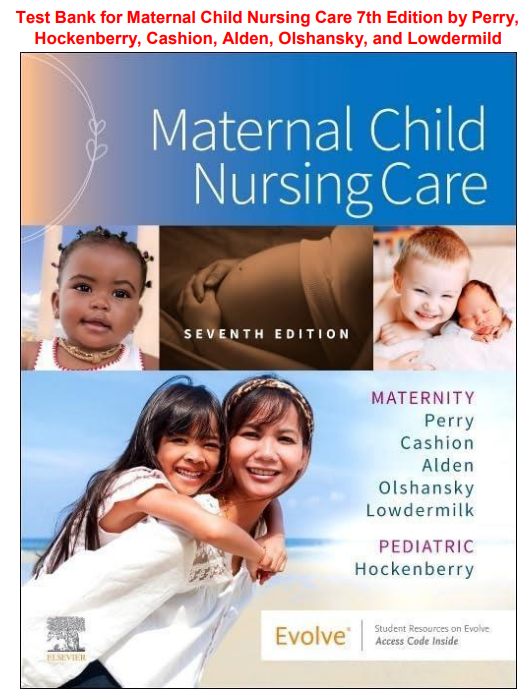
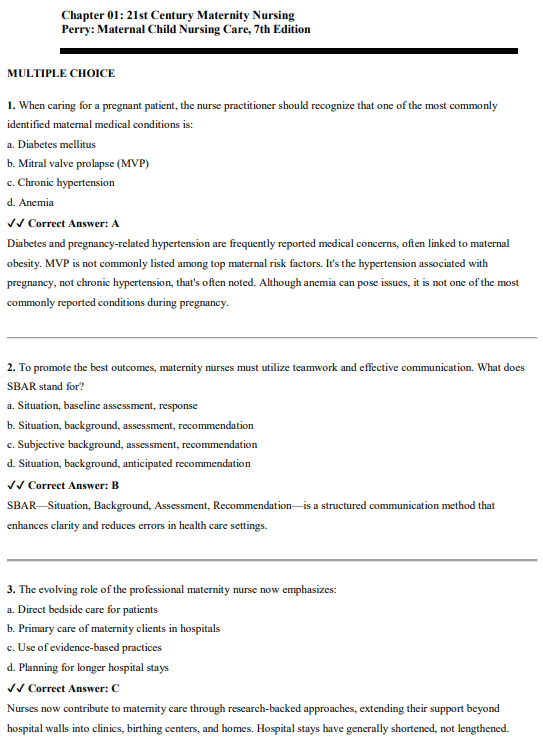
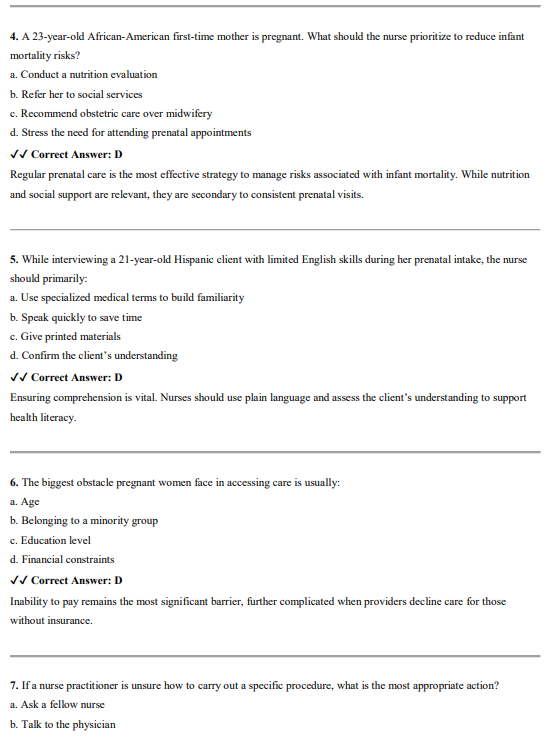
Maternal-child nursing covers more clinical ground than almost any other course in nursing education. In a single semester, you move from the physiology of conception through fetal development, labor and delivery, postpartum recovery, newborn care, and then across the entire spectrum of pediatric nursing from infancy through adolescence. Every stage brings new normal values, new developmental expectations, new pharmacological considerations, and new clinical priorities.
What makes it even more demanding is the nature of the patients themselves. In maternity nursing, every decision affects at least two people simultaneously — mother and baby. In pediatric nursing, you are interpreting subtle signs in patients who cannot always tell you what is wrong, factoring in developmental stage with every assessment, and working with families who are frightened, exhausted, and looking to you for reassurance and guidance.
Perry and Hockenberry’s Maternal-Child Nursing Care has long been the gold standard combined resource for this content. The 7th edition brings together the maternity expertise of Perry, Cashion, Alden, Olshansky, and Lowdermilk with the pediatric nursing authority of Hockenberry — the same team behind Wong’s Nursing Care of Infants and Children — into a single, cohesive textbook that covers the full scope of maternal-child nursing with the depth and clinical precision that nursing students need.
This test bank was built to match it. Every question reflects the clinical approach, developmental framework, and evidence-based standards of the 7th edition. You do not just practice answering questions. You practice thinking like a maternal-child nurse — attentive to two patients at once in maternity, attentive to family and developmental context in pediatrics, and always alert to the subtle early signs that signal a patient moving from stable to at-risk.
What Is Inside
You get over a thousand practice questions covering every major maternity and pediatric nursing topic in the 7th edition. Questions are written in multiple-choice, select-all-that-apply, and ordered response formats — consistent with what you will face on nursing school exams and the NCLEX-RN.
Every question has a clearly marked correct answer. Every answer includes a full written rationale. The rationale explains the clinical reasoning behind the correct choice, connects it to the relevant physiological, developmental, or evidence-based concept, and addresses why each wrong option is incorrect or potentially harmful. In maternal-child nursing especially, the consequences of a wrong clinical decision can be immediate and serious — and the rationales reflect that urgency.
Topics Covered
The test bank follows the complete structure of the 7th edition across both the maternity and pediatric content areas, including:
Foundations of Maternal-Child Nursing — family-centered maternity and pediatric care philosophy, cultural humility and culturally responsive care in maternal-child nursing, social determinants of health in maternal-child populations, legal and ethical considerations across maternity and pediatric practice, evidence-based practice in maternal-child nursing, and the nurse’s role in advocacy for women, children, and families
Women’s Health and Reproductive Care — health promotion and preventive care for women across the lifespan, contraception counseling and methods, sexually transmitted infection screening and management, health screening recommendations for women, menstrual disorders, menopause and perimenopause management, infertility assessment and nursing support, and gynecologic conditions including endometriosis and polycystic ovary syndrome
Antepartum Care — reproductive anatomy and physiology, conception, implantation, and fetal development by trimester, physiological adaptations of pregnancy by body system, psychological adaptations and family responses to pregnancy, prenatal care across all trimesters, nutritional needs during pregnancy, fetal surveillance techniques including non-stress testing, contraction stress testing, and biophysical profile, prenatal education, and cultural practices surrounding pregnancy and birth
Complications of Pregnancy — hyperemesis gravidarum, gestational diabetes mellitus screening and management, hypertensive disorders of pregnancy including gestational hypertension, preeclampsia, and eclampsia, placenta previa and abruptio placentae, ectopic pregnancy, spontaneous abortion, preterm labor and premature rupture of membranes, incompetent cervix, multiple gestation, Rh incompatibility and isoimmunization, and care of the high-risk pregnant patient
Intrapartum Care — process and stages of labor, fetal presentation, position, and station, mechanisms of labor and delivery, pain management in labor including epidural analgesia, spinal anesthesia, nitrous oxide, and non-pharmacologic methods, electronic fetal monitoring interpretation including baseline rate, variability, accelerations, and decelerations, nursing care through each stage of labor, induction and augmentation of labor, cesarean birth and vaginal birth after cesarean, and obstetric emergencies including shoulder dystocia, umbilical cord prolapse, uterine rupture, and amniotic fluid embolism
Postpartum Care — physiological changes of the postpartum period by body system, postpartum assessment using systematic frameworks, breastfeeding physiology and lactation support, formula feeding education, postpartum psychological adaptations and family adjustment, parent-infant attachment and bonding, postpartum complications including hemorrhage, infection, venous thromboembolism, and postpartum mood disorders, and discharge planning and home care after birth
Newborn Care — physiological adaptations of the newborn by body system, immediate newborn assessment and stabilization, Apgar scoring and interpretation, gestational age assessment, routine newborn care including thermoregulation, feeding, and cord care, newborn screening programs, safe sleep education, and normal newborn variations and their differentiation from pathological findings
High-Risk Newborn Care — classification of newborns by gestational age and birth weight, care of the preterm infant in the NICU, respiratory distress syndrome and surfactant therapy, bronchopulmonary dysplasia, hyperbilirubinemia and phototherapy, neonatal hypoglycemia, necrotizing enterocolitis, neonatal abstinence syndrome, infant of a diabetic mother, congenital anomalies requiring immediate intervention, and parent support in the NICU
Foundations of Pediatric Nursing — growth and development theories across infancy through adolescence, developmental milestones and anticipatory guidance at each stage, pediatric health assessment including age-appropriate communication and examination techniques, normal vital signs and laboratory values by age, pediatric pain assessment tools including FLACC and Wong-Baker FACES, atraumatic care principles, child safety and injury prevention across developmental stages, and immunization schedules and vaccine safety counseling
Pediatric Health Promotion and Illness Prevention — well-child care across developmental stages, nutritional needs from infancy through adolescence, dental health promotion, sleep and rest requirements by age, physical activity recommendations, school health nursing, and health promotion for children with special healthcare needs
The Child and Family in Healthcare — the child’s response to illness and hospitalization, preparation of children for procedures and surgery, therapeutic play and distraction techniques, family-centered care during hospitalization, care of the child with a chronic or life-limiting illness, and palliative and end-of-life care in pediatric nursing
Pediatric Respiratory Conditions — upper respiratory infections, otitis media, croup syndromes, epiglottitis, bronchiolitis and respiratory syncytial virus, asthma diagnosis and stepwise management, cystic fibrosis nursing care, pneumonia in children, and foreign body aspiration
Pediatric Cardiovascular Conditions — congenital heart defects including acyanotic lesions such as VSD, ASD, and PDA, and cyanotic lesions such as tetralogy of Fallot and transposition of the great arteries, heart failure in children, rheumatic fever, Kawasaki disease, and hypertension in children and adolescents
Pediatric Neurological Conditions — neurological assessment in children, febrile seizures, epilepsy management in children, bacterial and viral meningitis, encephalitis, hydrocephalus, neural tube defects including spina bifida, cerebral palsy, traumatic brain injury in children, and headache disorders in pediatric patients
Pediatric Hematologic and Oncologic Conditions — iron deficiency anemia, sickle cell disease nursing management and crisis care, hemophilia, immune thrombocytopenia, leukemia in children, brain tumors, Wilms tumor, neuroblastoma, and nursing care during chemotherapy and radiation in pediatric patients
Pediatric Gastrointestinal Conditions — dehydration assessment and oral rehydration in children, gastroenteritis, gastroesophageal reflux disease in infants and children, pyloric stenosis, intussusception, Hirschsprung’s disease, appendicitis in children, inflammatory bowel disease in pediatric patients, and celiac disease
Pediatric Genitourinary Conditions — urinary tract infections in children, vesicoureteral reflux, nephrotic syndrome, glomerulonephritis, Wilms tumor, and enuresis management
Pediatric Musculoskeletal and Integumentary Conditions — developmental dysplasia of the hip, scoliosis assessment and management, Legg-Calvé-Perthes disease, osteomyelitis, juvenile idiopathic arthritis, fractures in children including child abuse-associated patterns, burn injuries in children, and common pediatric dermatological conditions
Pediatric Endocrine and Metabolic Conditions — type 1 diabetes mellitus in children including insulin management and diabetic ketoacidosis, type 2 diabetes in adolescents, congenital hypothyroidism, growth hormone deficiency, and phenylketonuria
Pediatric Mental and Behavioral Health — attention-deficit hyperactivity disorder, autism spectrum disorder nursing care, anxiety and depression in children and adolescents, eating disorders in adolescents, substance use in adolescents, suicide risk assessment in pediatric patients, and child maltreatment recognition and mandatory reporting
Who Should Use This
This test bank is well suited for nursing students enrolled in a combined maternal-child nursing course whose program uses Perry and Hockenberry’s 7th edition, students who find the breadth of maternal-child content challenging to organize and need structured chapter-by-chapter practice to stay on top of both content areas simultaneously, NCLEX-RN candidates who want focused practice on maternal-newborn and pediatric nursing — two consistently tested areas on the examination, nursing instructors teaching maternal-child nursing who need a clinically rigorous, evidence-based question pool for building course exams and quizzes, and faculty in programs that separate maternity and pediatric nursing into distinct courses who need a resource that provides depth in both areas within a single test bank.
Why the 7th Edition Specifically
Maternal-child nursing guidelines are among the most frequently updated in all of nursing practice. Fetal monitoring interpretation standards evolve. Postpartum hemorrhage management protocols are revised. Childhood immunization schedules are updated annually. Neonatal resuscitation guidelines change. The 7th edition reflects current evidence across all of these areas — including updated AWHONN fetal monitoring standards, revised AAP newborn care recommendations, current ADA guidelines for gestational diabetes, updated ACOG guidelines for labor management, and expanded content on health equity in maternal and child health outcomes.
This test bank was written to align with the 7th edition specifically. The clinical scenarios, pharmacological content, assessment standards, and nursing management approaches in the questions reflect what is in this edition. If your course uses the 7th edition, this is the resource that fits it.
5 Sample Questions
Question 1 A nurse is monitoring a laboring patient at 39 weeks gestation on continuous electronic fetal monitoring. The baseline fetal heart rate is 142 beats per minute with moderate variability. Following each contraction, the monitor shows a gradual decrease in fetal heart rate that begins after the peak of the contraction and returns to baseline more than 30 seconds after the contraction ends. The pattern is consistent across the last six contractions. How should the nurse interpret this finding and what is the priority action?
A. This is an early deceleration caused by fetal head compression — continue routine monitoring and document B. This is a variable deceleration caused by umbilical cord compression — reposition the patient to the left lateral position C. This is a late deceleration indicating uteroplacental insufficiency — reposition to the left lateral position, apply oxygen, discontinue oxytocin if infusing, increase IV fluids, and notify the provider immediately D. This is a prolonged deceleration from maternal hypotension — elevate the patient’s legs and administer ephedrine as ordered
Correct Answer: C Late decelerations are gradual decreases in fetal heart rate that begin after the contractile peak and recover after the contraction ends — a pattern that distinguishes them from early decelerations, which mirror contractions, and variable decelerations, which are abrupt. Late decelerations indicate that the uteroplacental unit is not delivering adequate oxygen to the fetus during the stress of contractions. This is a non-reassuring fetal heart rate pattern requiring immediate action. The nursing response follows a standardized sequence — lateral positioning to improve uteroplacental blood flow, supplemental oxygen, discontinuation of uterotonic agents, IV fluid bolus, and immediate provider notification. Recurrent late decelerations without improvement may necessitate expedited delivery.
Question 2 A nurse is assessing a 6-week-old infant who is brought to the clinic by parents reporting that the baby vomits forcefully immediately after every feeding. The parents describe the vomit as shooting across the room. The infant appears hungry after vomiting and has had fewer wet diapers over the past three days. On physical examination, the nurse palpates a small, firm, olive-shaped mass in the right upper quadrant. Which condition does the nurse suspect and what is the priority nursing concern?
A. Gastroesophageal reflux disease — advise parents to thicken formula and keep the infant upright after feedings B. Pyloric stenosis — the priority concern is dehydration and electrolyte imbalance requiring immediate medical evaluation C. Intussusception — prepare for immediate barium enema reduction as the first-line treatment D. Normal newborn feeding behavior — reassure parents that projectile vomiting is common in the first two months of life
Correct Answer: B Projectile vomiting immediately after feedings in a 4 to 8-week-old infant, combined with persistent hunger after vomiting, decreased urine output, and a palpable olive-shaped mass in the right upper quadrant, is the classic presentation of pyloric stenosis — hypertrophic obstruction of the pyloric canal that prevents gastric emptying. The priority nursing concern is the resulting dehydration and hypochloremic metabolic alkalosis from the loss of hydrochloric acid through repeated vomiting. The infant requires urgent IV fluid resuscitation and electrolyte correction before surgical pyloromyotomy can safely proceed. GERD does not produce a palpable mass or this degree of forceful vomiting. Intussusception presents with colicky pain and currant jelly stools, not projectile vomiting.
Question 3 A postpartum nurse is assessing a patient 8 hours after a vaginal delivery of a 4,200-gram infant. The nurse notes that the fundus is firm and midline at the umbilicus, lochia rubra is moderate, vital signs are stable, but the patient rates perineal pain as 9 out of 10 and reports a feeling of intense rectal pressure. On inspection, the nurse notes significant swelling and a dark purple, tense bulging mass lateral to the vaginal opening. What does the nurse suspect and what is the priority action?
A. Normal postpartum perineal edema — apply an ice pack and reassure the patient B. A vaginal hematoma — notify the provider immediately as surgical evaluation may be required C. A large hemorrhoid — apply witch hazel compresses and a topical analgesic D. Wound dehiscence of a perineal laceration repair — prepare the patient for laceration re-suturing
Correct Answer: B A dark purple, tense, bulging perineal mass with severe pain and rectal pressure in the early postpartum period is the classic presentation of a vaginal or vulvar hematoma — a collection of blood in the connective tissue caused by damaged blood vessels during delivery. Hematomas can expand rapidly and cause significant blood loss even when external bleeding is absent, making them a potentially serious postpartum complication. The nurse must notify the provider immediately. Small hematomas may be managed conservatively with ice and monitoring, but a large, expanding, or symptomatic hematoma typically requires surgical evacuation. Mistaking this for normal edema or a hemorrhoid delays potentially critical intervention.
Question 4 A nurse is caring for an 8-year-old child admitted with sickle cell disease in vaso-occlusive crisis. The child rates pain as 10 out of 10, is crying, and refuses to let the nurse touch the affected extremities. The child has IV access in place. Which nursing action is the highest priority?
A. Obtain a complete blood count and reticulocyte count before administering any pain medication B. Administer prescribed IV opioid analgesia promptly and reassess pain within 30 minutes C. Apply warm compresses to the affected extremities and encourage oral hydration before escalating to opioid analgesia D. Contact the child life specialist to provide distraction before attempting any pharmacologic intervention
Correct Answer: B Vaso-occlusive crisis produces some of the most severe pain a person can experience — comparable to long bone fractures and trauma. Pain of 10 out of 10 in a child who is crying and guarding affected extremities demands immediate pharmacologic intervention. Current evidence-based guidelines for sickle cell crisis management prioritize rapid opioid analgesia — ideally within 30 minutes of presentation — as the foundation of treatment. Delays in pain management cause unnecessary suffering, increase stress hormone release that can worsen sickling, and violate the fundamental nursing obligation to relieve pain. IV hydration is important alongside analgesia but does not replace it. Lab work and distraction are supportive measures that do not take precedence over immediate pain relief.
Question 5 A nurse is conducting a well-child visit with a 15-month-old toddler. The parents express concern that their child has stopped using several words they were saying at 12 months and no longer makes eye contact during play. The child does not respond to their name consistently and engages in repetitive lining up of toys. Which nursing response is most appropriate?
A. Reassure the parents that language regression is common in toddlers and usually resolves on its own by age 2 B. Advise the parents to limit screen time and increase verbal interaction at home before the next scheduled visit C. Take the parents’ concerns seriously, administer a validated developmental screening tool such as the M-CHAT-R, and refer the child for comprehensive developmental evaluation without delay D. Explain that boys often develop language more slowly than girls and schedule a routine follow-up in six months
Correct Answer: C The combination of language regression — losing previously acquired words — with decreased eye contact, inconsistent response to name, and repetitive play behaviors are significant developmental red flags that warrant immediate evaluation. Loss of previously acquired skills is never a normal developmental variation and should always prompt urgent assessment. The M-CHAT-R is a validated screening tool specifically designed for autism spectrum disorder detection in toddlers aged 16 to 30 months, but given the regression of skills at 15 months, referral for comprehensive developmental evaluation should not be delayed for the next routine screening interval. Early identification and intervention for developmental disorders, including autism spectrum disorder, significantly improves long-term outcomes. Reassuring the parents without acting on these findings delays potentially critical early intervention.
Frequently Asked Questions
Is this the official Elsevier test bank for Perry and Hockenberry’s 7th edition? No. This is an independently developed study resource based on the content of Perry, Hockenberry, Cashion, Alden, Olshansky, and Lowdermilk’s 7th edition. It is not published or endorsed by Elsevier or the original authors. It is a supplementary exam preparation tool for nursing students and faculty.
How many questions are in the test bank? There are over a thousand questions distributed across both the maternity and pediatric content areas of the 7th edition, with strong representation in the highest-yield topics including intrapartum care and fetal monitoring, postpartum complications, newborn assessment, pediatric respiratory and cardiovascular conditions, and pediatric developmental nursing.
My course covers both maternity and pediatrics in one semester. How is the test bank organized? The test bank mirrors the structure of the 7th edition, which moves sequentially through women’s health, antepartum, intrapartum, and postpartum care, then newborn nursing, and then pediatric nursing from foundations through each body system. You can work through the test bank chapter by chapter alongside your coursework or pull questions from specific topic areas to prepare for each exam.
How does this test bank differ from the one for Wong’s Nursing Care of Infants and Children? The pediatric nursing content in this test bank is drawn from Perry and Hockenberry’s 7th edition, which covers pediatric nursing within the combined maternal-child framework. Wong’s is a stand-alone pediatric nursing textbook with greater depth in pediatric-only content. While there is significant overlap in clinical content, the questions in each test bank are written specifically around the textbook they accompany.
Does this test bank prepare me for both the maternity and pediatric content on the NCLEX-RN? Yes. Both maternal-newborn nursing and pediatric nursing are consistently represented on the NCLEX-RN across client needs categories including health promotion, physiological integrity, and safe and effective care environment. The questions in this test bank are written at the application and analysis levels that match NCLEX difficulty across both content areas.
Does every question include a rationale? Yes, without exception. Every question has a correct answer and a full written rationale that explains the clinical reasoning, developmental context, or physiological mechanism behind the correct choice and addresses why each wrong option is incorrect or potentially unsafe. In maternal-child nursing where patients are among the most vulnerable — pregnant women, laboring patients, newborns, and sick children — understanding the reasoning behind every clinical decision is essential.
Can nursing instructors use this to build maternal-child course exams? Yes. Questions are organized by topic and chapter across both the maternity and pediatric content areas. Instructors can pull questions for unit exams covering specific content areas — such as intrapartum care, postpartum complications, or pediatric respiratory conditions — or build comprehensive final examinations spanning the full scope of maternal-child nursing.
What file format is the test bank delivered in? It comes as a digital file, typically in Word or PDF format. You can search by topic, condition, or developmental stage, print specific chapters for focused study sessions, and access it across multiple devices. Many students organize their study sessions by the structure of their course — working through all maternity content before the midterm and all pediatric content before the final.
Is this test bank specific to the 7th edition only? Yes. It was written to align with the clinical guidelines, developmental frameworks, evidence-based standards, and organizational structure of the 7th edition — including updated fetal monitoring standards, revised AAP newborn care recommendations, current ADA gestational diabetes guidelines, and expanded health equity content. Earlier editions do not reflect these updates. Always confirm your edition before purchasing.
Carol Kay –
A very good test bank. I recommend.
Lucille Maria –
The course has been tough, but this material has really made things simpler for me.
Mary Lincoln –
Practical and well-structured questions
Bruno Molino –
Fantastic learning tool
Helen Christie –
Helped me understand where I was struggling
Caleb Martins –
Clear questions with useful answer explanations.