The hardest transition in advanced practice nursing is not learning new facts. It is learning a new way of thinking. As an RN, you assess and report. As an advanced practice nurse, you assess and decide. You take a cluster of symptoms, a set of physical findings, and a handful of lab values, and you have to generate a ranked list of what could be going on — then narrow it down with more questions, more exam maneuvers, and more targeted testing until you land on the most likely answer.
That skill — differential diagnosis — is not something most nursing education spends much time building. It is, however, the single most heavily tested skill on advanced practice certification examinations, and the one new NPs report feeling least prepared for on day one of clinical practice.
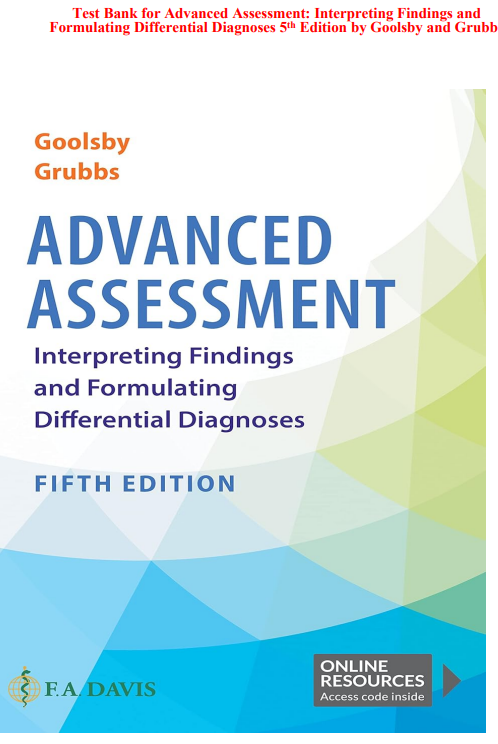
Goolsby and Grubbs’ Advanced Assessment: Interpreting Findings and Formulating Differential Diagnoses was built specifically to close that gap. Rather than organizing content by body system the way a basic assessment textbook does, it organizes content the way a clinician’s brain actually works in the exam room — starting from a presenting symptom or finding and walking through the systematic process of narrowing down what it could mean. The 5th edition sharpens that approach further with updated diagnostic algorithms, current evidence-based testing recommendations, and expanded clinical reasoning frameworks.
This test bank was built to match it exactly. Every question hands you a presentation — a symptom, a finding, a lab result — and asks you to reason through it the way Goolsby and Grubbs teach. You are not identifying conditions. You are building and narrowing a differential, which is precisely what advanced practice certification exams and real clinical practice demand.
What Is Inside
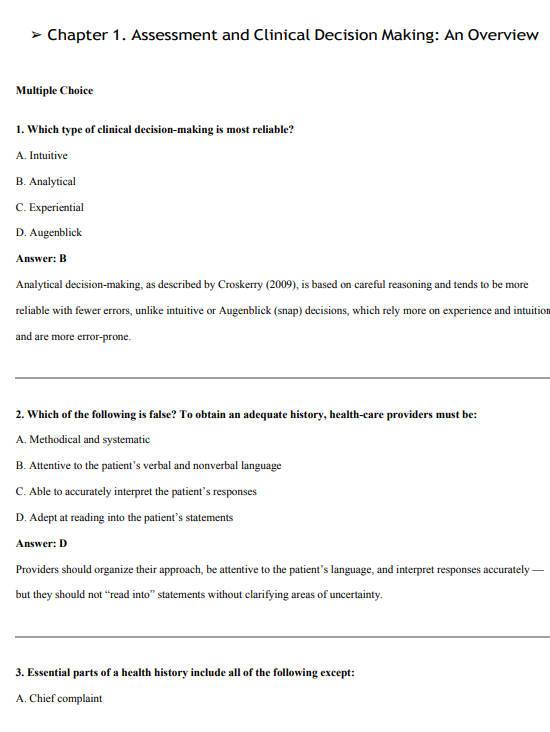
You get over a thousand practice questions covering every major presenting complaint and differential diagnosis framework in the 5th edition. Questions are written in multiple-choice, select-all-that-apply, and case-based clinical scenario formats — consistent with what you will encounter on advanced practice nursing course exams and the AANPCB and ANCC certification examinations.
Every question has a clearly marked correct answer. Every answer includes a full written rationale. The rationale walks through the clinical reasoning process — what findings support the correct diagnosis, what findings argue against the other options, and what additional information would further narrow or confirm the differential. This is reasoning practice, not recall practice, and the rationales are written to reflect that.
Topics Covered
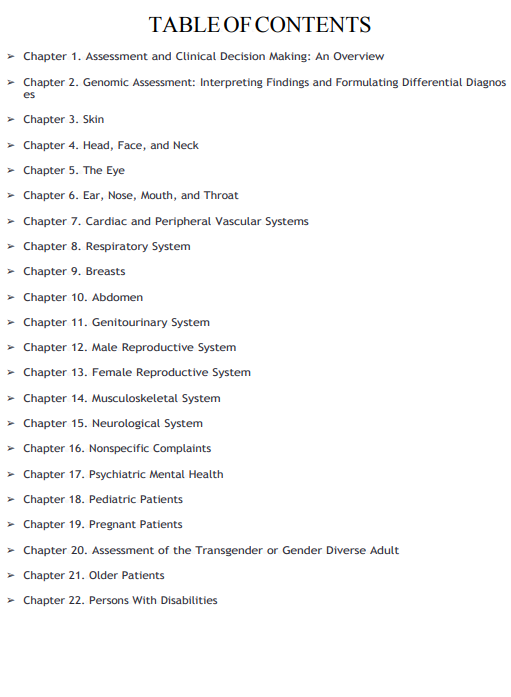
The test bank follows the complete structure of Goolsby and Grubbs’ 5th edition, organized around presenting symptoms and the systematic diagnostic reasoning process, including:
Foundations of Differential Diagnosis — the clinical reasoning process in advanced practice, hypothesis-driven history taking, pattern recognition versus systematic differential generation, pretest probability and its role in diagnostic reasoning, the role of epidemiology and prevalence in differential diagnosis, diagnostic test selection and interpretation including sensitivity, specificity, and likelihood ratios, and avoiding common cognitive errors and biases in clinical diagnosis
General and Constitutional Presentations — fatigue differential diagnosis, unintentional weight loss workup, fever of unknown origin, generalized weakness, and lymphadenopathy evaluation
Skin Presentations — differential diagnosis of rash by morphology including macular, papular, vesicular, and purpuric lesions, pruritus without rash, skin lesion evaluation and red flags for malignancy, and hair and nail abnormalities
Head, Eye, Ear, Nose, and Throat Presentations — headache differential diagnosis including red flags for secondary headache, dizziness and vertigo differentiation, hearing loss evaluation, red eye differential diagnosis, visual disturbance evaluation, sore throat and hoarseness differential diagnosis, and nasal congestion and epistaxis evaluation
Cardiovascular Presentations — chest pain differential diagnosis and risk stratification, palpitations evaluation, syncope differential diagnosis and red flags, edema differential diagnosis, hypertension workup including secondary causes, and murmur evaluation and differentiation
Respiratory Presentations — cough differential diagnosis by duration and characteristics, dyspnea evaluation and differential diagnosis, hemoptysis workup, and abnormal breath sounds and their diagnostic significance
Gastrointestinal Presentations — abdominal pain differential diagnosis by location and characteristics, nausea and vomiting evaluation, diarrhea differential diagnosis including acute versus chronic, constipation evaluation, gastrointestinal bleeding differential diagnosis, jaundice workup, and dysphagia evaluation
Genitourinary and Renal Presentations — dysuria and urinary symptoms differential diagnosis, hematuria evaluation, urinary incontinence differential diagnosis, scrotal pain and masses evaluation, and vaginal discharge and pelvic pain differential diagnosis
Musculoskeletal Presentations — joint pain differential diagnosis including monoarticular versus polyarticular patterns, back pain evaluation and red flags, extremity pain and swelling differential diagnosis, and gait abnormality evaluation
Neurological Presentations — altered mental status differential diagnosis, focal neurological deficit evaluation, seizure differential diagnosis, tremor evaluation, numbness and tingling differential diagnosis, and memory loss and cognitive decline evaluation
Psychiatric and Behavioral Presentations — depression and anxiety differential diagnosis, differentiating primary psychiatric disorders from medical mimics, substance use presentation evaluation, and behavioral change evaluation in different age groups
Endocrine and Metabolic Presentations — polyuria and polydipsia differential diagnosis, heat and cold intolerance evaluation, hirsutism and virilization differential diagnosis, and abnormal growth and development evaluation
Hematologic Presentations — anemia differential diagnosis by mechanism, bleeding and bruising evaluation, and lymphadenopathy and splenomegaly workup
Presentations Across the Lifespan — pediatric-specific presentations and differential considerations, presentations unique to pregnancy, and geriatric-specific presentations including atypical disease manifestation in older adults
Who Should Use This
This test bank is the right resource for nurse practitioner students whose advanced assessment course uses Goolsby and Grubbs’ 5th edition, NP students preparing for the AANPCB or ANCC certification examinations who want focused practice on differential diagnosis reasoning rather than simple disease recall, new graduate NPs who want to build clinical reasoning confidence before or during their first months of independent practice, DNP students who need to demonstrate advanced diagnostic reasoning competency, and nursing faculty teaching advanced health assessment or differential diagnosis courses who need a reasoning-based question pool for building course assessments.
Why the 5th Edition Specifically
Diagnostic algorithms and evidence-based testing recommendations evolve. Red flag criteria for serious conditions like headache, chest pain, and back pain are periodically updated based on new research. Diagnostic imaging and laboratory testing guidelines change as new evidence emerges about test accuracy and clinical utility. The 5th edition of Goolsby and Grubbs reflects these updates, with revised diagnostic algorithms, current evidence-based red flag criteria, and updated testing recommendations across every presenting symptom category covered in the text.
This test bank was written to align with the 5th edition specifically. The diagnostic frameworks, red flag criteria, and clinical reasoning pathways in the questions reflect what is in this edition. If your NP program uses the 5th edition, this is the resource that fits it.
5 Sample Questions
Question 1
A 45-year-old woman presents with a sudden, severe headache that she describes as “the worst headache of my life,” reaching peak intensity within seconds. She has mild neck stiffness and no fever. Which differential diagnosis should be prioritized first and why?
A. Migraine with aura — this presentation is typical for a severe migraine episode
B. Subarachnoid hemorrhage — the thunderclap onset and neck stiffness are classic red flags requiring immediate evaluation
C. Tension headache — stress-related headaches commonly present with sudden onset
D. Cluster headache — the severity described is consistent with this diagnosis
Correct Answer: B
A thunderclap headache — one that reaches maximal intensity within seconds to minutes — combined with neck stiffness is a hallmark presentation of subarachnoid hemorrhage until proven otherwise. This presentation represents one of the most important “red flag” patterns in headache differential diagnosis, distinguishing a potentially life-threatening secondary headache from primary headache disorders. Migraine, tension headache, and cluster headache typically have a more gradual onset, even when severe, and do not classically present with this explosive, instantaneous peak intensity. This patient requires emergent neuroimaging, and if negative, lumbar puncture to rule out subarachnoid hemorrhage before any other diagnosis is seriously entertained.
Question 2
A 28-year-old man presents with acute monoarticular pain and swelling of the right first metatarsophalangeal joint that began overnight. The joint is warm, erythematous, and exquisitely tender. He reports a similar episode one year ago that resolved without treatment. Which differential diagnosis is most likely, and what additional history would most help confirm it?
A. Septic arthritis — ask about recent fever, chills, or skin breaks near the joint
B. Gout — ask about alcohol intake, purine-rich food consumption, and diuretic use
C. Reactive arthritis — ask about recent gastrointestinal or genitourinary infection
D. Osteoarthritis — ask about activity-related pain patterns and morning stiffness duration
Correct Answer: B
Acute monoarticular pain affecting the first metatarsophalangeal joint — classically called podagra — with a pattern of recurrent, self-limited episodes is highly characteristic of gout. Asking about alcohol intake, purine-rich foods such as red meat and shellfish, and diuretic use helps identify common precipitating factors and supports the diagnosis while also guiding future prevention counseling. Septic arthritis remains an important differential to exclude, especially given the warmth and erythema, but the recurrent self-limited pattern and classic joint location make gout more likely as the leading diagnosis, while septic arthritis should still be ruled out given its emergent nature if clinical suspicion remains. Reactive arthritis typically involves an asymmetric oligoarthritis with a preceding infection history, and osteoarthritis does not present acutely or with this degree of inflammation.
Question 3
A 67-year-old man with a 40-pack-year smoking history presents with progressive dyspnea on exertion over six months, a chronic cough productive of clear sputum, and unintentional weight loss of 15 pounds over three months. On examination, breath sounds are diminished bilaterally with a prolonged expiratory phase. Which differential diagnosis should be at the top of the list, and what finding would most increase concern for a more serious underlying process?
A. Asthma — the diminished breath sounds and prolonged expiration are consistent with bronchospasm
B. COPD as the primary diagnosis, but the unintentional weight loss raises concern for an underlying malignancy that requires further evaluation
C. Heart failure — the dyspnea and weight loss are consistent with cardiac cachexia
D. Pneumonia — the productive cough and weight loss suggest an unresolved infectious process
Correct Answer: B
This patient’s smoking history, chronic productive cough, and progressive dyspnea with diminished breath sounds and prolonged expiration are classic for COPD. However, unintentional weight loss of this magnitude over a relatively short period is not a typical feature of stable COPD and should raise significant concern for an underlying malignancy, particularly lung cancer, given his substantial smoking history. This is an example of how a differential diagnosis must be revised when a finding does not fit the expected pattern for the leading diagnosis. The appropriate next step is further evaluation including chest imaging to assess for malignancy, rather than attributing all findings to COPD alone. Asthma typically presents with episodic rather than progressive symptoms. Heart failure and pneumonia do not fully account for this combination of chronic symptoms and risk factors.
Question 4
A 52-year-old woman presents with fatigue, cold intolerance, and unintentional weight gain over the past four months. She also reports constipation and dry skin. On examination, her reflexes show delayed relaxation phase. Which laboratory finding would most strongly support the leading differential diagnosis?
A. Elevated TSH with low free T4
B. Suppressed TSH with elevated free T4
C. Elevated fasting blood glucose
D. Low hemoglobin and hematocrit
Correct Answer: A
This patient’s presentation — fatigue, cold intolerance, weight gain, constipation, dry skin, and delayed deep tendon reflex relaxation — is classic for hypothyroidism. The laboratory finding that confirms primary hypothyroidism is an elevated TSH combined with a low free T4, reflecting the pituitary’s appropriate compensatory response to inadequate thyroid hormone production. A suppressed TSH with elevated free T4 would indicate hyperthyroidism, which presents with the opposite symptom cluster. While anemia can cause fatigue and should be considered in a broader differential, it does not explain the full constellation of findings, particularly the delayed reflex relaxation, which is a specific physical exam finding strongly associated with hypothyroidism.
Question 5
A 3-year-old child is brought to the clinic with a two-day history of fever, drooling, and refusal to swallow. The child is sitting forward with the neck extended and appears anxious. The parent reports the child’s voice sounds muffled. Which differential diagnosis must be considered first, and what action should the provider avoid?
A. Streptococcal pharyngitis — avoid prescribing antibiotics until a rapid strep test is performed
B. Epiglottitis — avoid examining the throat with a tongue depressor or attempting to visualize the airway directly
C. Viral croup — avoid administering corticosteroids without confirming the diagnosis with imaging
D. Peritonsillar abscess — avoid delaying antibiotic therapy while awaiting imaging results
Correct Answer: B
The combination of drooling, muffled “hot potato” voice, refusal to swallow, fever, and the characteristic tripod positioning with neck extension are the classic presentation of epiglottitis — a potentially life-threatening airway emergency caused by inflammation and swelling of the epiglottis. The single most important action to avoid in suspected epiglottitis is direct examination of the throat with a tongue depressor or any attempt to visualize the airway outside of a controlled setting with anesthesia and airway management readily available, because this can trigger complete airway obstruction. This child requires emergent transfer to a setting equipped for airway management. Streptococcal pharyngitis, viral croup, and peritonsillar abscess do not present with this specific combination of findings, and none carry the same absolute contraindication against direct throat examination.
Frequently Asked Questions
Is this the official F.A. Davis test bank for Goolsby and Grubbs’ 5th edition?
No. This is an independently developed study resource based on the content of Mary Jo Goolsby and Laurie Grubbs’ 5th edition. It is not published or endorsed by F.A. Davis or the original authors. It is a supplementary exam and certification preparation tool for advanced practice nursing students and faculty.
How is this test bank different from a regular health assessment test bank?
Most health assessment test banks ask you to identify a finding or describe how to perform an exam technique. This test bank asks you to interpret a cluster of findings, generate a ranked differential diagnosis, and identify what additional information would confirm or rule out each possibility. It tests clinical reasoning, not just assessment skill — which is exactly what Goolsby and Grubbs’ textbook is built to teach.
How many questions are in the test bank?
There are over a thousand questions distributed across all major presenting symptom categories in the 5th edition, with strong representation in the highest-yield differential diagnosis areas including chest pain, headache, abdominal pain, joint pain, and altered mental status.
Will this help me on the FNP certification examination?
Yes, significantly. Differential diagnosis reasoning is one of the most heavily weighted skill areas on both the AANPCB and ANCC certification examinations. These exams frequently present a clinical scenario and ask what the most likely diagnosis is or what the next best diagnostic step would be — exactly the skill this test bank is built to develop.
I am a new graduate NP. Is this test bank useful even after I have already passed my boards?
Yes, and many new graduate NPs find it especially useful during this period. The transition from passing an exam to confidently generating a differential diagnosis in a live clinical encounter is significant. Working through these scenarios systematically helps build the pattern recognition and red-flag awareness that takes most new NPs months or years to develop through clinical experience alone — this test bank accelerates that process through deliberate practice.
Does every question include a rationale?
Yes, without exception. Every question has a correct answer and a full written rationale that walks through the clinical reasoning — explaining what findings support the correct diagnosis, why the other options are less likely, and what additional information would further clarify the differential. This reasoning-focused rationale style is what distinguishes this test bank from simple recall-based question banks.
Can nursing faculty use this to build advanced assessment course exams?
Yes. Questions are organized by presenting symptom and body system, making it straightforward to build unit exams, OSCE preparation materials, or comprehensive final assessments that test diagnostic reasoning rather than rote recall. The case-based format also works well for class discussion and simulation debriefing.
What file format is the test bank delivered in?
It comes as a digital file, typically in Word or PDF format. You can search by presenting symptom or differential diagnosis category, print specific sections for focused study sessions, and access it across multiple devices. Many NP students organize their study sessions around high-yield presenting symptoms — such as chest pain or abdominal pain — working through every related question before moving to the next category.
Is this test bank specific to the 5th edition only?
Yes. It was written to align with the diagnostic algorithms, red flag criteria, and clinical reasoning frameworks of the 5th edition specifically. Diagnostic guidelines and evidence-based red flag criteria are updated periodically, and earlier editions may not reflect the most current recommendations. Always confirm your edition before purchasing.
Peterson S. –
Very helpful
Lucille Maria –
A solid test bank
Leo Fernandez –
Exactly what I needed to build confidence to face my finals
Mary Kesh –
Helped reinforce key nursing concepts.
Yunice M –
Excellent review before exams
Theresa M. –
Very helpful alongside my regular nursing coursework
Rosemary R –
Super handy for reviewing key concepts
Warren Brent –
Useful resource for reviewing important concepts
Melania Angel –
Made studying for exams much more manageable