Caring for older adults is one of the most nuanced and demanding areas of nursing practice. It requires more than clinical knowledge. It requires a fundamental shift in how you think about health, function, and what it means to live well at every stage of life.
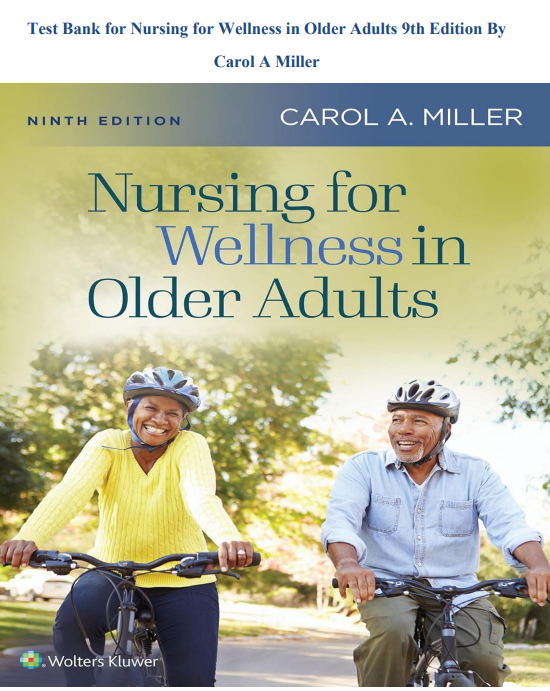
Most nursing textbooks treat older adults as a subgroup — a special population tacked on at the end of a chapter. Carol Miller’s Nursing for Wellness in Older Adults takes a different position entirely. It places the older adult at the center of care and builds everything around a wellness-oriented framework that challenges nurses to look beyond disease management and toward quality of life, functional independence, and holistic well-being.
The 9th edition continues that tradition with updated evidence-based content, expanded coverage of health equity in aging populations, stronger integration of the Age-Friendly Health Systems framework, and deeper exploration of the psychosocial, cultural, and environmental factors that shape health in older adults. This test bank was built to match it. Every question is grounded in the wellness philosophy Miller uses, the clinical realities of caring for older adults, and the critical thinking skills that gerontological nursing demands.
Whether you are preparing for a gerontological nursing course exam, studying for the NCLEX-RN, or working toward RN-BC certification in gerontological nursing, this test bank gives you the focused, clinically meaningful practice you need.
What Is Inside
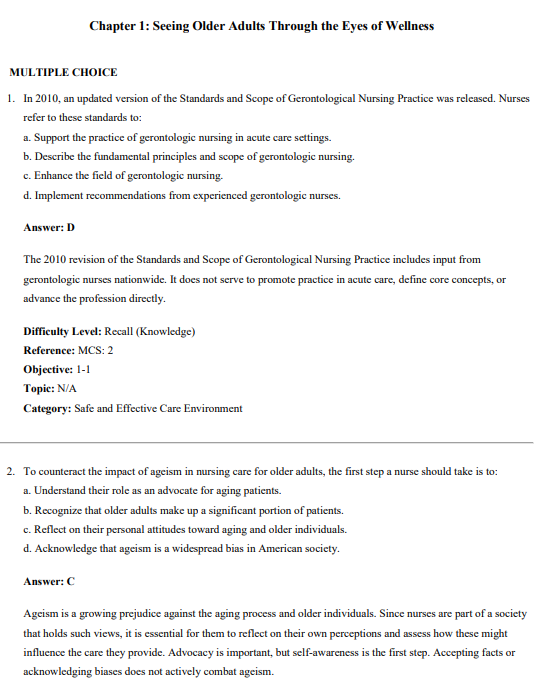
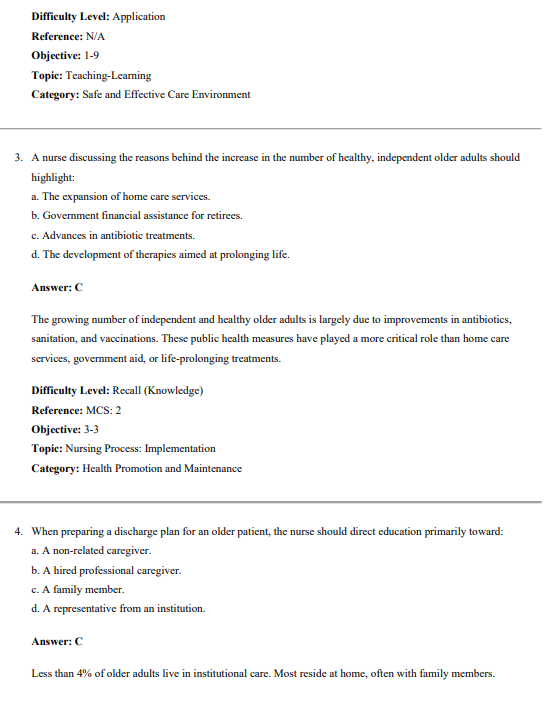
You get over a thousand practice questions covering every major topic in Miller’s 9th edition. Questions are written in multiple-choice, select-all-that-apply, and ordered response formats — consistent with what you will encounter on nursing school exams and the NCLEX-RN.
Every question has a clearly marked correct answer. Every answer includes a full written rationale. The rationale connects the correct choice to the wellness framework, the underlying pathophysiology or psychosocial concept, and the specific nursing considerations that apply to older adults. Because aging changes everything — pharmacokinetics, symptom presentation, risk profiles, and recovery trajectories — those rationales carry real clinical weight. They do not just explain the answer. They explain why older adults are different, and what that means for nursing practice.
Topics Covered
The test bank follows the complete structure of Miller’s 9th edition across every major content area, including:
Foundations of Gerontological Nursing — theoretical frameworks for aging including biological, psychological, and sociological theories, the wellness framework in gerontological nursing, demographics and diversity of the aging population, ageism and its impact on health and nursing practice, the Age-Friendly Health Systems 4Ms framework including what matters, medication, mentation, and mobility, cultural humility and culturally responsive care for older adults, and the nurse’s role in promoting wellness across care settings
Physiological Changes of Aging — age-related changes in every major body system including integumentary, musculoskeletal, cardiovascular, respiratory, neurological, sensory, gastrointestinal, renal, endocrine, and reproductive systems, distinguishing normal aging changes from pathological processes, and the clinical implications of physiological aging for nursing assessment and care
Functional Assessment in Older Adults — comprehensive geriatric assessment, activities of daily living and instrumental activities of daily living assessment, functional decline recognition and prevention, frailty assessment and management, and use of validated assessment tools in gerontological nursing practice
Pharmacology and Medication Management in Older Adults — age-related pharmacokinetic and pharmacodynamic changes, polypharmacy risks and management, the Beers Criteria for potentially inappropriate medications in older adults, medication reconciliation, medication adherence challenges, and safe medication administration in older adult populations
Cognitive Health and Delirium — normal cognitive aging versus pathological cognitive decline, mild cognitive impairment, Alzheimer’s disease and other dementias including vascular dementia and Lewy body dementia, delirium recognition and differentiation from dementia, evidence-based delirium prevention and management, and supporting cognitive function and quality of life in older adults with dementia
Mental Health in Older Adults — depression in older adults including atypical presentations, anxiety disorders, late-life psychosis, alcohol and substance use in older adults, suicide risk assessment in older populations, grief and bereavement, and therapeutic communication with older adults experiencing mental health challenges
Mobility, Safety, and Fall Prevention — age-related changes affecting mobility and balance, fall risk assessment using validated tools, evidence-based fall prevention interventions, restraint-free care philosophy and alternatives to restraints, pressure injury prevention and management, safe patient handling, and environmental safety modifications for older adults
Nutrition and Hydration in Older Adults — age-related nutritional changes and requirements, malnutrition screening and assessment in older adults, dysphagia assessment and safe feeding, dehydration recognition and prevention in older adults, nutritional support considerations, and oral health and its relationship to nutritional status
Sleep and Rest in Older Adults — normal sleep changes with aging, sleep disorder assessment in older adults, insomnia and sleep apnea in aging populations, non-pharmacologic sleep promotion strategies, and risks of sedative-hypnotic medications in older adults
Sensory Changes and Communication — age-related vision changes and common eye disorders including cataracts, glaucoma, macular degeneration, and diabetic retinopathy, hearing loss types and assessment, communication strategies for older adults with sensory impairments, assistive devices for vision and hearing, and the impact of sensory loss on quality of life and safety
Pain Assessment and Management in Older Adults — barriers to pain assessment in older adults, pain assessment tools for cognitively impaired older adults, undertreatment of pain in aging populations, pharmacologic and non-pharmacologic pain management, opioid safety considerations in older adults, and chronic pain management principles
Cardiovascular Conditions in Older Adults — hypertension in older adults including treatment targets and medication considerations, heart failure management in aging populations, atrial fibrillation, coronary artery disease, peripheral vascular disease, and orthostatic hypotension assessment and management
Respiratory Conditions in Older Adults — pneumonia risk and prevention in older adults, influenza and COVID-19 in aging populations, COPD management in older adults, and the clinical presentation differences of respiratory illness in older patients
Neurological Conditions in Older Adults — stroke recognition and management in older adults, Parkinson’s disease nursing care, peripheral neuropathy, and the nursing management of older adults with chronic neurological conditions
Musculoskeletal Conditions in Older Adults — osteoporosis prevention and management, osteoarthritis and rheumatoid arthritis in older adults, gout, fracture prevention and post-fracture care including hip fracture rehabilitation, and assistive device use and mobility support
Endocrine and Metabolic Conditions in Older Adults — diabetes mellitus management in older adults including glycemic targets and medication safety, thyroid disorders, and metabolic syndrome in aging populations
Genitourinary Conditions in Older Adults — urinary incontinence types and evidence-based management, urinary tract infections in older adults including atypical presentations, benign prostatic hyperplasia, sexual health and aging, and kidney function changes and their clinical implications
Gastrointestinal Conditions in Older Adults — constipation assessment and management, fecal incontinence, GERD in older adults, peptic ulcer disease, and nutritional implications of gastrointestinal conditions in aging
Cancer in Older Adults — cancer screening considerations in older adults, cancer treatment modifications for aging patients, cancer pain management, and palliative and end-of-life care considerations in older adults with cancer
Palliative Care and End-of-Life Nursing — palliative care principles and their application to older adults, advance care planning and advance directives, hospice care philosophy and eligibility, symptom management in dying older adults, nursing care at the time of death, and supporting families through the dying process
Care Settings and Transitions for Older Adults — acute care nursing for older adults, long-term care nursing, assisted living and home health nursing, care transitions and discharge planning, preventing hospital readmission, and the NICHE and PACE programs for older adult care
Who Should Use This
This test bank is well suited for nursing students enrolled in a gerontological nursing course whose program uses Miller’s 9th edition, undergraduate nursing students who want to strengthen their understanding of older adult care before clinical rotations in long-term care, acute care, or community settings, NCLEX-RN candidates who want focused practice on older adult nursing content — an area that appears across nearly every clinical category on the exam, registered nurses pursuing RN-BC certification in gerontological nursing who need comprehensive content-area question practice, and nursing faculty teaching gerontological nursing who need a wellness-oriented, clinically grounded question pool for building exams and assessments.
Why the 9th Edition Specifically
The landscape of aging and gerontological nursing continues to evolve. The 9th edition of Miller’s textbook reflects significant updates including expanded integration of the Age-Friendly Health Systems 4Ms framework, updated evidence on delirium prevention and management, revised Beers Criteria content on medications to avoid in older adults, expanded coverage of health disparities in aging populations, updated palliative care and advance care planning content, and stronger emphasis on equity, diversity, and cultural humility in gerontological practice.
This test bank was written to align with the 9th edition specifically. The clinical frameworks, assessment tools, evidence-based interventions, and nursing management approaches in the questions reflect what is in this edition. If your course uses the 9th edition, this is the resource that fits it directly.
5 Sample Questions
Question 1 A nurse is assessing an 82-year-old patient who was admitted from a long-term care facility with a urinary tract infection. The patient’s family reports that the patient has been “acting strange” for two days — more confused than usual, refusing to eat, and sleeping most of the day. The patient’s temperature is 37.4°C, blood pressure is 118/72 mmHg, and urinalysis shows positive nitrites and pyuria. Which nursing interpretation is most accurate?
A. The behavioral changes are likely caused by worsening dementia and are unrelated to the UTI B. The patient is experiencing delirium superimposed on possible baseline cognitive impairment, triggered by the urinary tract infection C. The near-normal temperature rules out a significant infection as the cause of the behavioral changes D. The confusion is an expected side effect of antibiotic therapy and will resolve once treatment begins
Correct Answer: B Older adults frequently present with atypical symptoms of infection. Classic signs like high fever and dysuria may be absent or subtle. Instead, UTIs in older adults commonly manifest as acute behavioral changes, increased confusion, functional decline, and reduced appetite — all of which this patient is showing. This presentation is consistent with delirium superimposed on baseline cognitive status, triggered by the infection. A near-normal temperature does not rule out serious infection in older adults, whose febrile response is often blunted. Recognizing atypical infection presentations is a foundational competency in gerontological nursing.
Question 2 A nurse is completing a medication review for a 78-year-old patient with insomnia who is currently prescribed diphenhydramine 50 mg at bedtime. Using the Beers Criteria, what is the nurse’s most appropriate action?
A. Confirm the dose is within the recommended range and continue the medication as prescribed B. Administer the medication as ordered since antihistamines are considered safe for short-term use in older adults C. Consult with the provider about discontinuing diphenhydramine and exploring non-pharmacologic sleep interventions D. Increase the dose if the patient reports the current dose is not effective
Correct Answer: C Diphenhydramine is explicitly listed on the Beers Criteria as a potentially inappropriate medication for older adults. Its strong anticholinergic properties increase the risk of confusion, delirium, urinary retention, constipation, and falls in this population. It should be avoided in older adults regardless of the duration of use. The nurse’s responsibility is to consult with the provider and advocate for safer alternatives, beginning with evidence-based non-pharmacologic sleep interventions such as sleep hygiene education, stimulus control therapy, and relaxation techniques.
Question 3 A nurse is conducting a fall risk assessment on a 76-year-old patient newly admitted to a medical unit. The patient uses a cane, reports two falls in the past six months, takes furosemide and lisinopril for heart failure, and has a history of orthostatic hypotension. Which intervention is the highest priority?
A. Place a fall risk armband on the patient and document the assessment in the chart B. Apply bilateral wrist restraints at night to prevent the patient from getting up unsupervised C. Implement a comprehensive individualized fall prevention plan including bed alarm, call light within reach, hourly rounding, and orthostatic vital sign monitoring D. Instruct the patient to call for help before getting up and consider the fall prevention done
Correct Answer: C This patient has multiple significant fall risk factors — history of recent falls, use of a mobility aid, orthostatic hypotension, and diuretic therapy that increases urgency and nocturia. A comprehensive individualized fall prevention plan is the priority. This includes environmental safety measures, orthostatic vital sign monitoring, medication review for fall-risk contributors, mobility assistance, and consistent nursing rounds. Restraints are contraindicated as a fall prevention strategy — they increase agitation, deconditioning, and injury risk. Documentation and verbal instruction alone are insufficient responses to this level of fall risk.
Question 4 A nurse is caring for an 88-year-old patient with moderate Alzheimer’s dementia who is refusing to take their morning medications. The patient is pushing the nurse’s hand away and saying “no, leave me alone.” Which approach best reflects person-centered, wellness-oriented care?
A. Crush the medications and hide them in the patient’s food without telling them B. Firmly explain that the medications are necessary and that the patient must take them C. Step back, allow the patient to calm down, return in 15 minutes, and try a different approach using simple language and a calm tone D. Document the refusal and withhold all medications for the rest of the day
Correct Answer: C Forcing or deceiving a patient with dementia into taking medications violates autonomy and dignity and can cause distress and trauma. A person-centered approach recognizes that patients with dementia may be more receptive to medication administration at different times or with different approaches — a calmer moment, a familiar caregiver, a preferred beverage, or a simple reframing. Stepping back and returning is not abandonment. It is a therapeutic strategy. Hiding medications in food without disclosure is a covert medication administration practice that raises serious ethical and legal concerns and should never be done without explicit ethical and clinical justification and documentation.
Question 5 A home health nurse is visiting a 91-year-old patient who lives alone. During the visit, the nurse notices the refrigerator contains mostly expired food, the patient has lost 8 pounds since the last visit, mail is piling up unopened, and the patient appears unkempt and tearful. When asked how things are going, the patient says “I just cannot manage anymore.” Which priority concern should the nurse address first?
A. Document the findings and schedule a follow-up visit in two weeks B. Call the patient’s family to report the observations without involving the patient in the discussion C. Conduct a comprehensive assessment for depression, nutritional status, safety, and self-care capacity, and initiate appropriate referrals D. Advise the patient to consider moving to a nursing home immediately
Correct Answer: C This patient is showing multiple overlapping warning signs — weight loss, functional decline, self-neglect indicators, social withdrawal, and an explicit statement of inability to cope. These findings point to potential depression, malnutrition, and safety risk in a vulnerable older adult living alone. The nurse’s priority is a thorough comprehensive assessment across all these domains, followed by coordinated referrals — which may include social work, a nutritionist, a primary care provider for depression screening, and community support services. Immediately suggesting nursing home placement without assessment is premature and potentially harmful to the therapeutic relationship. Excluding the patient from discussions about their own care violates autonomy.
Frequently Asked Questions
Is this the official publisher test bank for Miller’s 9th edition? No. This is an independently developed study resource based on the content of Carol A. Miller’s 9th edition. It is not published or endorsed by Wolters Kluwer or the original author. It is a supplementary exam preparation tool for nursing students and faculty.
How many questions are in the test bank? There are over a thousand questions in total. They are distributed across all major content areas in the 9th edition, with strong representation across the highest-yield gerontological nursing topics including cognitive changes, pharmacology in older adults, fall prevention, atypical disease presentation, and end-of-life care.
Is gerontological nursing content tested on the NCLEX-RN? Yes, extensively. Older adults make up the majority of patients in most healthcare settings, and the NCLEX consistently tests nursing knowledge and judgment related to aging physiology, atypical symptom presentation, medication safety in older adults, fall prevention, and care of patients with dementia and delirium. This test bank builds competency across all of those areas.
How does the wellness framework in Miller’s textbook affect the style of the questions? The wellness orientation shows up directly in how questions are framed. Rather than asking only about disease management, many questions ask about promoting function, preserving independence, supporting quality of life, and recognizing what matters most to the individual older adult. This aligns closely with the person-centered, holistic approach that the NCLEX and clinical practice both value.
Can this test bank help me prepare for the RN-BC gerontological nursing certification? Yes. The content in Miller’s 9th edition covers the major domains tested on the ANCC gerontological nursing certification examination, and the questions in this test bank are written at the application and analysis levels the certification demands. It works well as a supplementary resource alongside a dedicated certification review program.
Does every question include a rationale? Yes, without exception. Every question has a correct answer and a full written rationale that explains the clinical reasoning, connects it to the wellness framework where applicable, and addresses why each wrong option is incorrect. In gerontological nursing especially, understanding the reasoning behind each answer is essential because older adult care is filled with nuance that simple rules cannot capture.
Can nursing instructors use this to build course exams? Yes. Questions are organized by topic and chapter, making it straightforward to build unit exams, case-based assessments, or comprehensive finals. The questions reflect the wellness-oriented, evidence-based philosophy of Miller’s textbook and are appropriate for undergraduate and continuing education gerontological nursing courses.
What file format is the test bank delivered in? It comes as a digital file, typically in Word or PDF format. You can search by topic or keyword, print specific chapters for focused study sessions, or access it across multiple devices. Many students find it helpful to organize study sessions around clinical settings — acute care, long-term care, and home health — which mirrors the structure of Miller’s content.
Is this test bank specific to the 9th edition only? Yes. It was written to align with the clinical frameworks, evidence-based content, and organizational structure of the 9th edition, including its updated 4Ms framework integration, revised Beers Criteria content, and expanded health equity coverage. Earlier editions do not reflect these updates. Always confirm your course edition before purchasing.
Norah Helen –
Excellent study guide
Carol Kay –
Exactly what I needed to pass my finals