Diagnostic microbiology sits at the intersection of science and clinical consequence. Every culture result, every Gram stain, every sensitivity report that leaves the laboratory influences a clinical decision somewhere in the building — a decision about which antibiotic to start, which to stop, whether to isolate a patient, whether to escalate care. The microbiologist and the laboratory scientist are clinical partners in every case of sepsis, every surgical site infection, every outbreak investigation, even if they never set foot on the patient care unit.
What makes diagnostic microbiology demanding is the same thing that makes it intellectually extraordinary — the organisms themselves. Bacteria, fungi, parasites, and viruses are not abstractions. They have structure, behavior, metabolic preferences, evolutionary adaptations, and clinical patterns that make each one recognizable and distinguishable from the others if you know what to look for. Learning to read a Gram stain, interpret colony morphology, understand the logic of selective and differential media, and reason through an antibiogram requires a different kind of scientific thinking than most healthcare education demands.
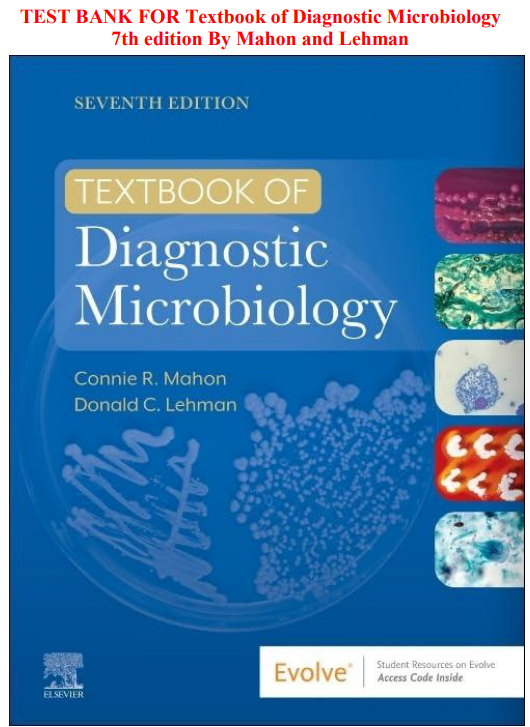
Mahon and Lehman’s Textbook of Diagnostic Microbiology has been the definitive resource for this discipline in clinical laboratory science, medical laboratory technology, and allied health education for years. The 7th edition continues that tradition with updated organism coverage, revised antimicrobial resistance content reflecting current clinical patterns, expanded coverage of molecular diagnostic methods, updated biosafety protocols, and stronger integration of the clinical significance of laboratory findings that connects bench science to patient care.
This test bank was built to match it. Every question is grounded in the scientific reasoning, laboratory technique, and clinical application of the 7th edition. You do not just memorize organism characteristics. You practice the diagnostic reasoning that laboratory scientists use to identify pathogens, interpret results, troubleshoot problems, and communicate clinically meaningful information to the healthcare team.
What Is Inside
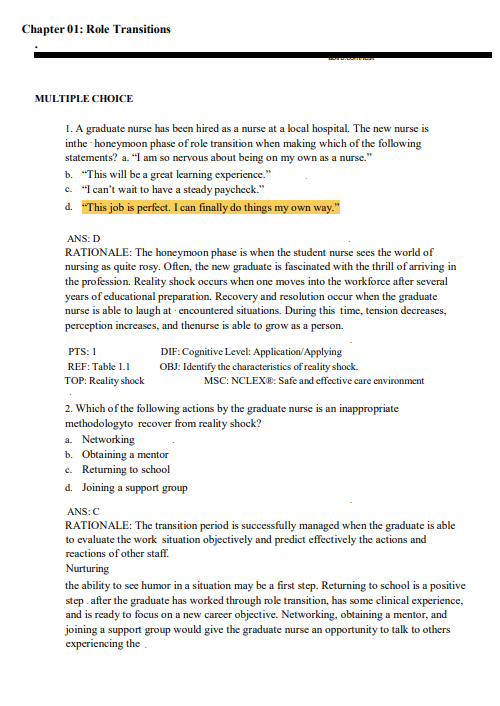
You get over a thousand practice questions covering every major organism group, laboratory technique, and clinical correlation in Mahon and Lehman’s 7th edition. Questions are written in multiple-choice, select-all-that-apply, and case-based laboratory scenario formats — consistent with what you will encounter on clinical laboratory science course exams and the ASCP Board of Certification and AMT examinations.
Every question has a clearly marked correct answer. Every answer includes a full written rationale. The rationale explains the microbiological principle, laboratory diagnostic logic, or clinical significance behind the correct choice and addresses specifically why each wrong option reflects a misidentification, a procedural error, or a misunderstanding of organism biology. In diagnostic microbiology, accurate identification matters — and the rationales in this test bank treat that accuracy with the clinical seriousness it deserves.
Topics Covered
The test bank follows the complete structure of Mahon and Lehman’s 7th edition across every major content area, including:
Foundations of Diagnostic Microbiology — the history and scope of clinical microbiology, the clinical microbiology laboratory structure and workflow, laboratory safety including biosafety levels 1 through 4, standard precautions and exposure control in the microbiology laboratory, regulatory standards including OSHA and CLIA requirements, specimen collection and transport requirements for different specimen types, specimen rejection criteria and their rationale, laboratory information systems and quality assurance, point-of-care testing versus central laboratory testing, and the laboratory’s role in the clinical care team
Microbial Genetics and Antimicrobial Resistance — bacterial cell structure and function, bacterial genetics including transformation, transduction, and conjugation, mechanisms of antimicrobial resistance including beta-lactamase production, efflux pumps, target modification, and reduced permeability, extended-spectrum beta-lactamases and carbapenem-resistant organisms, antimicrobial susceptibility testing methods including disk diffusion, broth microdilution, and Etest, interpretation of minimum inhibitory concentrations, breakpoint interpretation, and the clinical laboratory’s role in antimicrobial stewardship
Bacteriology — Gram-Positive Cocci — Staphylococcus aureus including MRSA identification and clinical significance, coagulase-negative staphylococci, Streptococcus pyogenes and Group A Streptococcus including beta-hemolysis patterns, Streptococcus agalactiae and Group B Streptococcus clinical significance, Streptococcus pneumoniae identification and clinical relevance, viridans group streptococci, Enterococcus species including VRE, and other gram-positive cocci of clinical significance
Bacteriology — Gram-Positive Bacilli — Listeria monocytogenes identification and clinical significance, Bacillus anthracis and Bacillus cereus, Clostridium species including C. difficile and its toxin detection, C. perfringens and C. botulinum, Corynebacterium diphtheriae and non-diphtheria corynebacteria, Actinomyces species, Nocardia species, and other clinically relevant gram-positive bacilli
Bacteriology — Gram-Negative Cocci — Neisseria gonorrhoeae identification, culture requirements, and clinical significance, Neisseria meningitidis and its laboratory handling requirements, Moraxella catarrhalis and its clinical role, and differentiation of Neisseria species from similar organisms
Bacteriology — Gram-Negative Enteric Bacilli and Enterobacteriaceae — Escherichia coli including STEC O157:H7, Klebsiella species, Proteus species, Enterobacter species, Serratia marcescens, Salmonella species and their differentiation, Shigella species, Yersinia species, and the use of selective and differential media including MacConkey, Hektoen enteric, and XLD agar in enteric pathogen isolation
Bacteriology — Non-Enteric Gram-Negative Bacilli — Pseudomonas aeruginosa and its characteristic laboratory features, Burkholderia species, Acinetobacter baumannii and its clinical significance in healthcare-associated infections, Stenotrophomonas maltophilia, Haemophilus influenzae culture requirements and clinical significance, Haemophilus ducreyi, Bordetella pertussis and whooping cough laboratory diagnosis, Legionella pneumophila and its growth requirements, Brucella species and laboratory safety considerations, Francisella tularensis and its biosafety level classification, and Pasteurella multocida
Bacteriology — Anaerobes — anaerobic bacteriology principles and specimen requirements, Bacteroides fragilis group and their clinical significance, Fusobacterium species, Peptostreptococcus and anaerobic cocci, Prevotella and Porphyromonas species, anaerobic laboratory techniques including transport systems, anaerobic chambers, and jar systems, and identification methods for clinically significant anaerobes
Bacteriology — Fastidious and Unusual Organisms — Campylobacter jejuni and its special culture requirements, Helicobacter pylori and its laboratory detection methods, Vibrio cholerae and other Vibrio species, Aeromonas and Plesiomonas species, Bartonella species, Ehrlichia and Anaplasma species, and other organisms requiring special laboratory consideration
Mycobacteriology — Mycobacterium tuberculosis complex identification and laboratory safety requirements, atypical mycobacteria including rapidly growing and slowly growing species, non-tuberculosis mycobacteria of clinical significance including M. avium complex and M. kansasii, specimen processing and decontamination methods, acid-fast staining including Ziehl-Neelsen and Kinyoun methods, mycobacterial culture media including Lowenstein-Jensen and BACTEC systems, molecular methods for mycobacterial identification, and laboratory safety for mycobacteriology
Mycology — classification of clinically relevant fungi, laboratory safety in mycology, specimen processing for fungal culture, Candida species identification and clinical significance, Cryptococcus neoformans identification and India ink preparation, Aspergillus species and their clinical patterns, dimorphic fungi including Histoplasma capsulatum, Blastomyces dermatitidis, Coccidioides immitis, and Sporothrix schenckii, dermatophytes including Trichophyton, Microsporum, and Epidermophyton species, antifungal susceptibility testing principles, and laboratory methods for fungal identification including microscopy and culture
Parasitology — intestinal protozoa identification including Giardia lamblia, Cryptosporidium species, Entamoeba histolytica, and Balantidium coli, blood and tissue protozoa including Plasmodium species and malaria blood film interpretation, Trypanosoma species, Leishmania species, Toxoplasma gondii, intestinal helminths including nematodes, cestodes, and trematodes, tissue helminths, arthropods of medical significance, specimen processing and concentration methods, staining techniques for parasitological examination, and interpretation of ova and parasite examination results
Virology — structure and classification of clinically significant viruses, viral replication cycles and their diagnostic implications, specimen collection and transport for viral diagnosis, cell culture methods and cytopathic effect identification, respiratory viruses including influenza, respiratory syncytial virus, and SARS-CoV-2, herpesvirus group including HSV, VZV, CMV, and EBV, enteroviruses including poliovirus and coxsackievirus, hepatitis viruses including HAV, HBV, HCV, and HDV with diagnostic marker interpretation, human immunodeficiency virus laboratory diagnosis and monitoring, rabies virus laboratory diagnosis, arboviral infections, and molecular diagnostic methods in clinical virology
Immunology and Serology in Microbiology — principles of the immune response and their diagnostic applications, antigen-antibody reactions and their clinical use, agglutination and precipitation reactions, enzyme-linked immunosorbent assay principles and interpretation, fluorescent antibody techniques, complement fixation, Western blot interpretation, serological diagnosis of specific infections, and interpretation of paired acute and convalescent serology results
Molecular Diagnostics in Clinical Microbiology — principles of nucleic acid amplification testing including PCR, RT-PCR, and real-time PCR, nucleic acid hybridization methods, next-generation sequencing and its clinical applications, MALDI-TOF mass spectrometry for organism identification, molecular methods for antimicrobial resistance gene detection, syndromic panel testing, and the clinical laboratory’s role in emerging infectious disease response
Laboratory Diagnosis by Specimen Type — blood culture methods and interpretation including contaminant versus pathogen differentiation, cerebrospinal fluid processing and interpretation, urine culture processing and colony count interpretation, respiratory specimen processing including sputum and BAL, wound and tissue specimen processing, genital specimen processing including STI diagnosis, stool culture processing and interpretation, and sterile body fluid processing
Infection Control and Public Health Microbiology — healthcare-associated infection epidemiology and the laboratory’s role, outbreak investigation and molecular typing methods, reportable diseases and laboratory reporting requirements, biosafety levels and select agent regulations, and the clinical microbiology laboratory’s role in public health surveillance
Who Should Use This
This test bank is the right resource for clinical laboratory science and medical laboratory technology students whose diagnostic microbiology course uses Mahon and Lehman’s 7th edition, students preparing for the ASCP Board of Certification examination in medical laboratory science who want high-volume microbiology question practice across all organism groups and laboratory techniques, AMT examination candidates who need comprehensive diagnostic microbiology content review, allied health students in programs that include clinical microbiology coursework as part of their curriculum, microbiology laboratory professionals pursuing continuing education or recertification who want a structured content review, and faculty teaching diagnostic microbiology who need a clinically relevant, technically rigorous question pool for building course examinations and competency assessments.
Why the 7th Edition Specifically
The field of diagnostic microbiology evolves rapidly. New resistance mechanisms emerge. Molecular diagnostic methods have transformed pathogen detection. MALDI-TOF mass spectrometry has changed identification workflows in clinical laboratories. New organisms of clinical significance are described. Biosafety protocols are updated. The 7th edition of Mahon and Lehman reflects all of these developments — with updated antimicrobial resistance content including current carbapenem-resistant organism epidemiology, expanded molecular diagnostics coverage, updated MALDI-TOF content, revised biosafety and select agent content, and current clinical significance information for emerging pathogens.
This test bank was written to align with the 7th edition specifically. The organism characteristics, laboratory methods, antimicrobial resistance mechanisms, and clinical correlations in the questions reflect what is in this edition. If your program uses the 7th edition, this is the resource that matches it.
5 Sample Questions
Question 1
A clinical laboratory scientist receives a blood culture flagged positive at 14 hours of incubation. A Gram stain of the broth shows gram-positive cocci in clusters. The organism is subsequently plated to blood agar and mannitol salt agar. After 24 hours of incubation, colonies on blood agar are golden-yellow with beta-hemolysis. The organism is coagulase-positive. Sensitivity testing reveals resistance to oxacillin. Which organism has been identified and what is its clinical significance?
A. Staphylococcus epidermidis — a common contaminant that rarely causes true bacteremia
B. Methicillin-resistant Staphylococcus aureus — a serious healthcare-associated or community-acquired pathogen requiring vancomycin or alternative therapy
C. Streptococcus pyogenes — a gram-positive organism that is beta-hemolytic and requires penicillin treatment
D. Enterococcus faecalis — a gram-positive organism resistant to many beta-lactam antibiotics
Correct Answer: B
The combination of gram-positive cocci in clusters, golden-yellow colony pigmentation, beta-hemolysis on blood agar, positive coagulase test, and oxacillin resistance defines methicillin-resistant Staphylococcus aureus. Coagulase positivity is the key differential between S. aureus and coagulase-negative staphylococci such as S. epidermidis, which lacks this virulence factor and is far more likely to represent contamination rather than true infection. Oxacillin resistance is the clinical definition of MRSA and indicates that all beta-lactam antibiotics are ineffective — vancomycin, daptomycin, or linezolid are the agents of choice depending on the clinical presentation. This organism in blood culture represents a serious infection requiring urgent clinical communication and appropriate antimicrobial therapy.
Question 2
A laboratory receives a stool specimen from a 4-year-old child with bloody diarrhea. The specimen is plated to MacConkey agar, Hektoen enteric agar, and sorbitol-MacConkey agar. After 24 hours, the laboratory scientist observes colorless colonies on sorbitol-MacConkey agar that are non-sorbitol fermenting. Biochemical testing identifies the organism as Escherichia coli. Which additional testing is most critical to perform next, and why?
A. Perform antibiotic susceptibility testing immediately since this strain requires treatment with fluoroquinolones
B. Perform serotyping or Shiga toxin testing to determine whether this is E. coli O157:H7 or another Shiga toxin-producing E. coli, since this finding carries significant public health implications and antibiotics may worsen the clinical course
C. Repeat the culture on blood agar to confirm the identification since sorbitol-MacConkey is not a standard medium
D. Report the result as normal E. coli since this organism is part of the normal gastrointestinal flora and bloody diarrhea is likely from another cause
Correct Answer: B
Non-sorbitol-fermenting E. coli on sorbitol-MacConkey agar is a key initial indicator of E. coli O157:H7, the most clinically significant serotype of Shiga toxin-producing E. coli. STEC is a reportable pathogen associated with hemorrhagic colitis and the potentially life-threatening complication of hemolytic uremic syndrome, particularly in young children. The laboratory must perform Shiga toxin testing or O157 serotyping to confirm the identification. Critically, antibiotic treatment of STEC infections is controversial and potentially harmful — antibiotics may trigger increased Shiga toxin release, worsening the risk of HUS. This result requires immediate public health reporting and communication to the clinical team. Reporting as normal E. coli without further investigation would be a serious laboratory error with potential patient harm.
Question 3
A laboratory scientist is performing an acid-fast stain on a sputum specimen from a patient with persistent cough, night sweats, and weight loss. The Ziehl-Neelsen stain reveals slender, slightly curved, beaded pink rods against a blue background. The specimen is submitted for culture on Lowenstein-Jensen medium. Which laboratory safety precaution is most critical when processing specimens potentially containing Mycobacterium tuberculosis?
A. Process the specimen in a standard biological safety cabinet level 1 since mycobacteria are not considered airborne pathogens
B. All specimen processing for suspected M. tuberculosis must occur in a certified biosafety cabinet class II type A2 or B2, within a negative-pressure room, by laboratory personnel wearing N95 or higher respirators, since M. tuberculosis is transmitted by airborne droplet nuclei and poses a significant occupational infection risk
C. Standard precautions with surgical mask and gloves are sufficient for mycobacteriology processing since the organism requires prolonged exposure for transmission
D. A biosafety cabinet is only required for culture work — Gram staining and acid-fast staining can be performed on the open bench
Correct Answer: B
Mycobacterium tuberculosis is a BSL-3 organism that poses significant aerosol transmission risk during laboratory processing. All specimen manipulation including smear preparation, decontamination, and culture setup must be performed in a certified class II biological safety cabinet in a negative-pressure room to contain aerosols. Laboratory personnel must wear appropriate respiratory protection — at minimum an N95 respirator — because standard surgical masks do not provide protection against airborne nuclei. This is not merely regulatory compliance — it is the protection of laboratory workers from occupational TB acquisition, which has historically been a significant risk in clinical microbiology settings. A surgical mask on an open bench is entirely inadequate for this organism.
Question 4
A laboratory scientist examines a wet preparation of a stool specimen and observes a motile trophozoite with a single nucleus, peripheral chromatin arranged in a regular pattern, and a central karyosome. The cytoplasm contains ingested red blood cells. Which organism has been identified and what is its clinical significance?
A. Entamoeba coli — a non-pathogenic commensal organism that does not require treatment
B. Entamoeba histolytica — a pathogenic intestinal amoeba that can cause amoebic dysentery and has the capacity to invade tissues including the liver, causing amoebic liver abscess
C. Giardia lamblia — a flagellated protozoan that causes watery diarrhea and is identified by its distinctive pear shape and falling leaf motility
D. Balantidium coli — the only ciliated protozoan of human clinical significance, identified by its large size and macronucleus
Correct Answer: B
The key diagnostic feature in this description is the ingestion of red blood cells by the trophozoite — a characteristic that definitively distinguishes Entamoeba histolytica from Entamoeba coli, which has irregular peripheral chromatin, an eccentric karyosome, and does not ingest red blood cells. Erythrophagocytosis is pathognomonic for E. histolytica and indicates active tissue invasion. This organism causes amoebic colitis with bloody diarrhea and has the capacity to disseminate hematogenously to the liver, causing amoebic liver abscess — which can be life-threatening if not treated. The distinction from E. coli is clinically critical because E. coli requires no treatment while E. histolytica requires targeted antiparasitic therapy.
Question 5
A clinical microbiology laboratory has implemented MALDI-TOF mass spectrometry for routine organism identification. A laboratory scientist is troubleshooting an identification result that shows a low confidence score for a gram-negative rod isolated from a wound culture. Repeat testing from the same colony produces the same low-score result. Which action is most appropriate?
A. Report the organism as unidentifiable and close the case since MALDI-TOF is the gold standard and its result is final
B. Perform additional confirmatory identification using conventional biochemical testing or 16S rRNA gene sequencing, since low-score MALDI-TOF results indicate insufficient spectral match and require supplementary methods to achieve accurate identification
C. Reidentify the organism by Gram stain only since the morphology is sufficient for clinical reporting purposes
D. Report the most likely identification from the low-score result since MALDI-TOF is always more accurate than any alternative method regardless of confidence score
Correct Answer: B
MALDI-TOF mass spectrometry has transformed clinical microbiology identification workflows, but confidence score thresholds matter. A low-score result indicates that the organism’s protein spectral profile does not match any database entry with sufficient certainty for reliable identification — this can occur with unusual organisms not well-represented in the database, fastidious organisms, or organisms requiring direct colony testing rather than extract preparation. When low-score results are reproducible, additional confirmatory methods are required — including conventional biochemical panels, which remain clinically useful and validated, or 16S rRNA gene sequencing for organisms that resist identification by other methods. Reporting a low-confidence MALDI-TOF result as definitive misrepresents the certainty of the identification and may mislead clinical management. Quality laboratory science requires recognizing the limitations of any single method and applying supplementary methods when those limitations are encountered.
Frequently Asked Questions
Is this the official Elsevier test bank for Mahon and Lehman’s 7th edition?
No. This is an independently developed study resource based on the content of Connie Mahon and Donald Lehman’s 7th edition. It is not published or endorsed by Elsevier or the original authors. It is a supplementary exam preparation and professional development tool for clinical laboratory science students and professionals.
How many questions are in the test bank?
There are over a thousand questions distributed across all major organism groups, laboratory techniques, and clinical correlation areas in the 7th edition, with strong representation in the highest-yield areas including bacteriology across all major organism groups, mycology, parasitology, antimicrobial resistance, molecular diagnostics, and laboratory technique troubleshooting.
Can this test bank help me prepare for the ASCP Board of Certification examination?
Yes. The microbiology content in Mahon and Lehman’s 7th edition maps closely to the microbiology domain of the ASCP MLS and MLT board examination blueprints, and questions in this test bank are written at the application and analysis levels the certification examinations demand. It works well as a supplementary resource alongside a dedicated ASCP review program.
This textbook is used in clinical laboratory science programs, not nursing programs. Is the test bank written at the right level?
Yes. This test bank is written specifically for clinical laboratory science, medical laboratory technology, and allied health students whose programs use Mahon and Lehman’s textbook. The questions reflect laboratory science reasoning — organism identification logic, specimen processing decisions, result interpretation, and quality assurance — rather than nursing clinical application.
Does the test bank cover molecular diagnostics content?
Yes. Molecular diagnostic methods including PCR, real-time PCR, MALDI-TOF, and next-generation sequencing are included in dedicated questions that reflect the expanded molecular content of the 7th edition. This content is increasingly important both in clinical practice and on laboratory science certification examinations.
Does every question include a rationale?
Yes, without exception. Every question has a correct answer and a full written rationale that explains the microbiological principle, laboratory diagnostic logic, or clinical correlation behind the correct choice and addresses why each wrong option reflects a misidentification, procedural error, or misinterpretation. In diagnostic microbiology, the difference between correct and incorrect identification can influence patient treatment decisions — the rationales reflect that clinical gravity.
Can faculty use this to build diagnostic microbiology course exams?
Yes. Questions are organized by organism group and laboratory technique content area, making it straightforward to build unit exams covering bacteriology, mycology, parasitology, or virology sections, or comprehensive final examinations spanning all diagnostic microbiology content. Questions are written at the application and analysis levels appropriate for clinical laboratory science and allied health microbiology courses.
What file format is the test bank delivered in?
It comes as a digital file, typically in Word or PDF format. You can search by organism name, laboratory technique, or clinical correlation, print specific sections for focused study sessions, and access it across multiple devices. Many students find it effective to work through all questions related to a single organism group — such as all gram-positive cocci or all Enterobacteriaceae — in a single study session to build pattern recognition within that category before moving to the next.
Is this test bank specific to the 7th edition only?
Yes. It was written to align with the organism coverage, laboratory methods, antimicrobial resistance content, molecular diagnostics content, and clinical correlation frameworks of the 7th edition specifically. Diagnostic microbiology practice — including resistance mechanisms, organism epidemiology, and identification technologies — evolves rapidly, and earlier editions may not reflect current laboratory methods or clinical patterns. Always confirm your edition before purchasing.



Liam Mbogo –
The course is tough but this resource is really helping
Peris Hart –
The detailed rationales makes it easier for me to grasp difficult areas
Kamara Reid –
This resource helped me nail my finals. I highly recommend
Aadhya Priya –
I was really lucky to have this as I prepared for my tests. Thanks a lot
Helen Christie –
A solid test bank
Alan Kuqi –
Helpful questions for reinforcing important study concepts.
Lucille Maria –
Great resource for practicing before exams.
Mary Lincoln –
Clear questions make review sessions easier.
Rosemary R –
Useful material for strengthening subject understanding
Lucas Gabriel –
Helpful resource for revisiting concepts from another perspective.
Pius Kuti –
Good practice material for maintaining study momentum.
Leo Fernandez –
Questions provide focused practice for important course material.
Alexander Savic –
Helpful tool for strengthening recall during revision.
Thomas K. –
Convenient study material for additional practice.