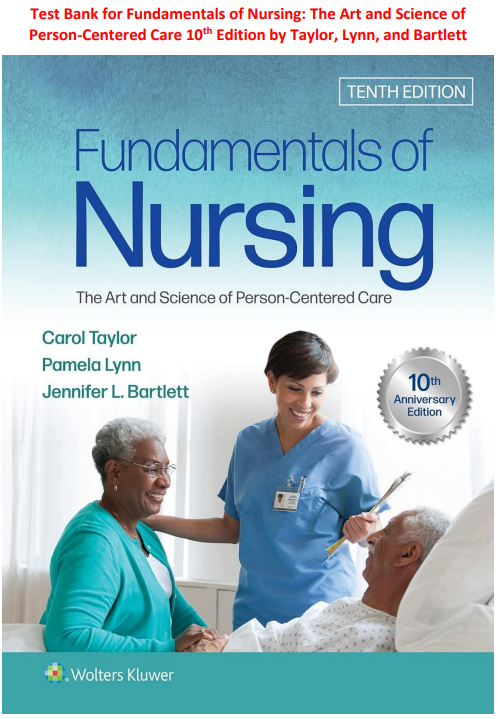
Every nurse traces their clinical identity back to fundamentals. Not because fundamentals is the easiest course in nursing school — it is often the most disorienting. You are learning an entirely new way of seeing people, a new set of responsibilities, a new professional language, and a new standard of care all at the same time. The concepts feel abstract until the day they suddenly become real — the first time you hang an IV line, conduct a full assessment, or sit with a patient who is frightened and realize that what you say next matters.
Taylor, Lynn, and Bartlett’s Fundamentals of Nursing: The Art and Science of Person-Centered Care has built its reputation on accelerating that moment of recognition. The 10th edition does not treat person-centered care as a chapter to be read and moved past. It makes it the organizing philosophy of the entire textbook — woven into every clinical skill, every communication technique, every ethical decision, and every nursing intervention from the most technically complex to the most seemingly simple.
The 10th edition strengthens that foundation with updated evidence-based content across every clinical domain, stronger integration of the clinical judgment framework the Next Generation NCLEX demands, expanded coverage of health equity and social determinants of health, revised infection control and safety content reflecting current CDC and TJC standards, and deeper engagement with the ethical and humanistic dimensions of nursing that Taylor, Lynn, and Bartlett have always placed at the center of what it means to be a nurse.
This test bank was built to match it. Every question reflects both the technical rigor and the humanistic depth of the 10th edition. You practice not just performing nursing skills correctly but understanding the person-centered reasoning that makes correct performance genuinely safe and genuinely caring.
What Is Inside
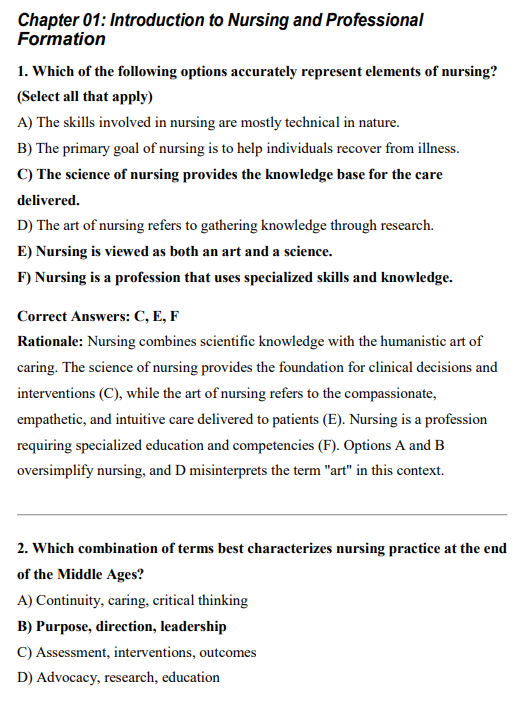
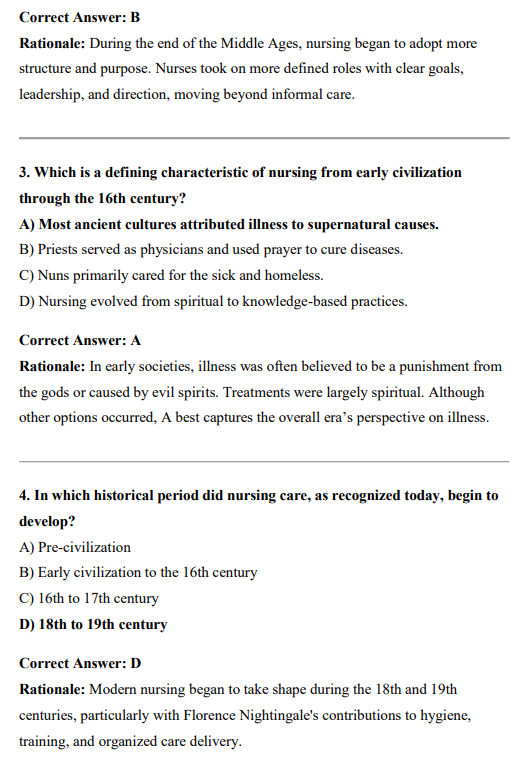
You get over a thousand practice questions covering every major foundational nursing topic in Taylor, Lynn, and Bartlett’s 10th edition. Questions are written in multiple-choice, select-all-that-apply, and ordered response formats — consistent with what you will encounter on nursing school exams and the NCLEX-RN and NCLEX-PN.
Every question has a clearly marked correct answer. Every answer includes a full written rationale. The rationale explains the nursing science, clinical reasoning, person-centered philosophy, or evidence-based standard behind the correct choice and addresses specifically why each wrong option reflects a technical error, a violation of person-centered principles, or a departure from evidence-based nursing practice. In fundamentals, the rationale is where theory becomes practice — and this test bank is designed to make that transition explicit every time.
Topics Covered
The test bank follows the complete structure of the 10th edition across every major content area, including:
The Nurse and the Healthcare Environment — the history and social context of nursing, nursing as a profession and the professional nurse identity, healthcare delivery systems and settings, interprofessional collaboration and team-based care, economics of healthcare and the nurse’s role, health disparities and structural determinants of health, and the future of nursing and the nurse’s role in healthcare transformation
Nursing Theory and Conceptual Frameworks — overview of major nursing theories and their clinical application, the metaparadigm of nursing including person, environment, health, and nursing, relationship between nursing theory and evidence-based practice, and the application of theoretical frameworks to person-centered nursing care
The Nursing Process and Clinical Judgment — the five-step nursing process including assessment, diagnosis, planning, implementation, and evaluation, NANDA-I nursing diagnoses and their components, nursing outcomes and nursing interventions classification, clinical judgment and the NCSBN Clinical Judgment Measurement Model, priority setting in nursing care, critical thinking and evidence-based practice, and the relationship between the nursing process and the Next Generation NCLEX
Legal and Ethical Dimensions of Nursing — sources of law governing nursing practice, the nurse practice act and scope of practice, types of liability including negligence and malpractice, informed consent and the nurse’s role, patient rights including the right to refuse treatment, advance directives and surrogate decision-making, mandatory reporting obligations, the ANA Code of Ethics for Nurses, ethical theories and principles applied to nursing, ethical decision-making frameworks, and advocacy as a core nursing responsibility
Person-Centered Communication — therapeutic communication principles and techniques, phases of the nurse-patient relationship, active listening and attending behaviors, barriers to communication, assertive communication in professional practice, SBAR communication for clinical handoffs, written and electronic communication standards, cross-cultural communication, communication across developmental stages, and communication with patients who have sensory or cognitive impairments
Cultural Humility and Health Equity — distinguishing cultural humility from cultural competence, dimensions of culture and their health implications, implicit bias and structural racism in healthcare, health equity as a nursing responsibility, culturally responsive assessment and care planning, spiritual and religious dimensions of health, and LGBTQ+ inclusive nursing practice
Patient Teaching and Health Promotion — adult learning theory and its nursing applications, health literacy and plain language in patient teaching, assessing learning readiness and barriers, developing and implementing patient education plans, teaching strategies across learning styles and literacy levels, evaluating teaching effectiveness, and documentation of patient education
Documenting, Reporting, and Informatics — principles of nursing documentation, legal implications of the medical record, electronic health records and nursing workflow, nursing informatics competencies, confidentiality and privacy in documentation, types of charting systems, handoff communication and the SBAR tool, incident reporting and variance documentation, and the nurse’s role in health information technology
Health Assessment — components of the comprehensive health history, the general survey, head-to-toe physical assessment techniques, assessment of each body system, cultural and developmental variations in assessment findings, documentation of assessment findings, and clinical judgment in interpreting assessment data
Vital Signs — body temperature measurement methods and normal values across the lifespan, pulse assessment including rate, rhythm, volume, and equality, respiratory rate and character assessment, blood pressure measurement and interpretation including orthostatic assessment, oxygen saturation monitoring, pain as a vital sign, factors influencing vital signs, and abnormal vital signs and their clinical significance
Asepsis and Infection Control — the chain of infection and transmission routes, standard precautions and the reasoning behind each component, transmission-based precautions including contact, droplet, and airborne categories, personal protective equipment selection, donning, and doffing, surgical and medical asepsis, hand hygiene evidence base and technique, healthcare-associated infection prevention, sterile technique and the sterile field, surgical hand scrub, and OSHA bloodborne pathogen standards
Safety — patient safety frameworks and the nurse’s role, fall risk assessment tools and individualized prevention strategies, restraint use policy and alternatives, environmental safety hazards, fire safety and the RACE and PASS mnemonics, medication safety principles, National Patient Safety Goals, safe patient handling and injury prevention, incident reporting and near-miss reporting, and the culture of safety in healthcare
Hygiene and Comfort — oral hygiene for various patient populations including intubated patients, hair care, eye and ear hygiene, skin care and complete versus partial bathing, perineal care, back massage and comfort measures, nail care, and hospital bed types and bed-making techniques
Activity, Rest, and Sleep — physiology of movement and the musculoskeletal system, effects of immobility across every body system, range of motion exercises and therapeutic positioning, transfer techniques and mechanical lift use, ambulation assistance and assistive devices, sleep physiology and sleep stages, factors affecting sleep, common sleep disorders, nursing assessment of sleep, and non-pharmacologic sleep promotion strategies
Comfort and Pain Management — pain physiology and neuroscience, types of pain including acute, chronic, nociceptive, and neuropathic, pain assessment across patient populations including cognitively impaired and pediatric patients, barriers to adequate pain assessment and management, the numeric rating scale and alternative validated tools, pharmacologic pain management principles for nurses, non-pharmacologic pain interventions, equianalgesic dosing principles, and documentation of pain assessment and treatment response
Nutrition — macronutrients, micronutrients, and dietary reference intakes, nutritional assessment including anthropometric, biochemical, clinical, and dietary evaluation, therapeutic diets and medical nutrition therapy, malnutrition recognition and nursing response, dysphagia assessment and aspiration prevention, enteral nutrition types, initiation, and monitoring, parenteral nutrition nursing care, and nutritional considerations across the lifespan
Urinary Elimination — normal urinary elimination physiology, factors affecting urinary elimination, urinary incontinence types and nursing management, urinary retention recognition and management, urinary catheterization including straight and indwelling catheter insertion technique, catheter care and maintenance, catheter-associated urinary tract infection prevention, urinary diversion care, and documentation of urinary output
Bowel Elimination — normal bowel elimination and factors affecting it, constipation and diarrhea assessment and nursing management, fecal incontinence care, enema administration and types, bowel ostomy care including colostomy and ileostomy pouching and skin care, bowel preparation for diagnostic procedures, and documentation of bowel elimination
Oxygenation and Gas Exchange — normal respiratory physiology, factors affecting oxygenation, oxygen therapy modalities and flow rates, pulse oximetry monitoring and limitations, incentive spirometry technique and purpose, chest physiotherapy, suctioning including oropharyngeal and nasopharyngeal technique, tracheostomy care basics, and clinical assessment of respiratory adequacy
Fluid and Electrolyte Balance — fluid compartments and movement mechanisms, fluid volume deficit and excess recognition and nursing response, sodium, potassium, calcium, magnesium, and phosphate disorders and their nursing implications, intravenous fluid types and their clinical indications, peripheral IV catheter insertion and site care, IV complication recognition including infiltration, phlebitis, and air embolism, blood and blood product administration basics, and acid-base balance overview
Medication Administration — pharmacokinetic principles for nursing, the rights of medication administration and their clinical application, medication reconciliation, oral medication administration, topical medication administration, ophthalmic, otic, and nasal medication administration, inhaler and nebulizer technique, rectal and vaginal medication administration, subcutaneous and intramuscular injection technique and site selection, intradermal injection technique, intravenous medication administration basics, controlled substance handling, and medication error prevention and reporting
Perioperative Nursing — preoperative nursing assessment and patient preparation, surgical risk factors, informed consent and surgical site verification, preoperative teaching and anxiety reduction, intraoperative nursing role overview, postoperative assessment using the PACU framework, management of postoperative complications, wound assessment and dressing changes, drain management, and surgical discharge planning
Wound Care — wound classification by etiology and contamination, wound healing phases and factors affecting healing, wound assessment documentation, pressure injury classification using NPIAP staging, pressure injury prevention strategies, wound cleaning and irrigation, dressing selection principles, suture and staple care, and drain management
Loss, Grief, and Death — theoretical frameworks of grief and bereavement, the nurse’s role in supporting grieving patients and families, dying trajectory and the dying process, signs of approaching death, hospice and palliative care nursing, advance care planning and decision-making, postmortem care, and self-care for nurses working with dying patients
Who Should Use This
This test bank is the right resource for nursing students in first and second semester nursing courses whose fundamentals course uses Taylor, Lynn, and Bartlett’s 10th edition, students who want structured chapter-by-chapter question practice to stay on top of the high volume of foundational content in this course, NCLEX-PN candidates who want comprehensive practice across the full range of foundational nursing content the practical nursing examination covers, NCLEX-RN candidates who want to reinforce their foundational clinical reasoning before advancing to more complex adult health content, students who learn best through active application of content rather than passive reading, and nursing faculty teaching fundamentals courses who need a question bank that reflects both the technical and the person-centered philosophy of Taylor, Lynn, and Bartlett’s 10th edition.
Why the 10th Edition Specifically
The 10th edition of Taylor, Lynn, and Bartlett reflects significant updates across every foundational nursing domain — including updated CDC infection control guidelines, revised pressure injury staging and prevention content, expanded health equity and social determinants of health coverage, stronger integration of the NCSBN Clinical Judgment Measurement Model throughout the nursing process chapters, updated medication safety content, and deeper engagement with person-centered care as an evidence-based framework rather than simply a philosophical position.
This test bank was written to align with the 10th edition specifically. The clinical standards, evidence-based guidelines, person-centered frameworks, and clinical judgment language in the questions reflect what is in this edition. If your program uses the 10th edition, this is the resource that matches it directly.
5 Sample Questions
Question 1
A nurse is preparing to administer scheduled medications to four patients on a medical unit. Which situation requires the nurse to stop and clarify before proceeding with medication administration?
A. A patient who needs to take their antihypertensive medication and has a blood pressure of 128/76 mmHg
B. A patient prescribed metoprolol 25 mg orally whose current heart rate is 48 beats per minute
C. A patient who requests to take their oral medications with a small amount of applesauce
D. A patient who states they have taken this medication before without any problems
Correct Answer: B
Metoprolol is a beta-1 selective adrenergic blocker that reduces heart rate and myocardial contractility. A heart rate of 48 beats per minute indicates bradycardia, and administering a beta blocker to a patient who is already bradycardic risks further reduction in heart rate to clinically dangerous levels. The nurse must hold the medication and notify the provider before proceeding. The nurse should know the parameters for which to hold common cardiac medications — particularly that beta blockers are typically held when the heart rate is below 60 beats per minute unless there is a specific provider order to administer within a lower range. This question reflects the safety-first philosophy of person-centered medication management.
Question 2
A nurse is caring for a patient who has been on bed rest for five days following abdominal surgery. During morning assessment, the patient reports new onset of left calf pain that is worse with walking. The left calf appears slightly larger than the right and is warm to the touch. Which nursing action reflects correct clinical judgment?
A. Apply a warm compress to the affected calf to reduce discomfort and improve circulation
B. Perform Homan’s sign by forcefully dorsiflexing the patient’s foot to assess for deep vein thrombosis
C. Notify the provider of the assessment findings, keep the patient on bed rest, and avoid massaging or applying pressure to the affected leg until DVT is ruled out
D. Encourage the patient to ambulate since activity is the most effective intervention for postoperative calf pain
Correct Answer: C
Unilateral calf warmth, swelling, and pain in a postoperative patient on bed rest are classic warning signs of deep vein thrombosis. The nurse must notify the provider immediately and protect the affected extremity from any intervention that could dislodge a potential clot — including massage, compression, and forceful movement. Homan’s sign has been largely abandoned as a clinical test due to poor sensitivity and the risk that forceful dorsiflexion could dislodge a thrombus and cause pulmonary embolism. Ambulating the patient or applying heat before DVT is ruled out creates patient safety risk. This question reflects a core fundamentals principle — recognizing a potential complication and escalating appropriately rather than intervening independently.
Question 3
A nursing student is performing hand hygiene before a patient procedure. The student uses an alcohol-based hand rub and rubs hands together for approximately eight seconds before beginning the procedure. Which problem does the clinical instructor identify?
A. Alcohol-based hand rub is not appropriate before procedures — soap and water is required in all clinical situations
B. The duration of hand rub application was insufficient — alcohol-based hand rub should be rubbed into all hand surfaces until the hands are completely dry, which takes approximately 20 to 30 seconds
C. The student should have donned gloves before applying hand rub since skin contact with the product is a biosafety concern
D. The technique is correct — eight seconds of hand rub application is consistent with current CDC hand hygiene guidelines
Correct Answer: B
The CDC and WHO recommend rubbing alcohol-based hand sanitizer into all hand surfaces — including palms, backs of hands, between fingers, and around thumbnails — until the product has completely evaporated and the hands are dry, which takes approximately 20 to 30 seconds. Eight seconds is insufficient to achieve adequate antimicrobial effect. The student performed the correct type of hand hygiene for this situation — alcohol-based hand rub is appropriate for most clinical procedures in the absence of visible soiling or exposure to C. difficile or norovirus — but the duration was too short. This reflects the fundamentals principle that technique correctness includes both the method and the execution.
Question 4
A nurse is assigned to care for a patient who identifies as transgender. The patient’s legal name on the electronic health record differs from the name and pronouns the patient uses. The patient has asked nursing staff to use their preferred name and pronouns throughout their care. A colleague tells the nurse: “I just use the name on the chart — it is easier and more accurate.” Which response best reflects person-centered, equitable nursing care?
A. Agree with the colleague since using the legal name ensures documentation accuracy and reduces the risk of patient identification errors
B. Explain to the colleague that using a patient’s preferred name and pronouns is a fundamental component of person-centered, equitable care, reduces patient distress, and supports therapeutic relationship-building, while the legal name can still be used for identification verification purposes
C. Avoid the situation by referring the patient to social work for communication support
D. Use the legal name during clinical procedures but the preferred name only in casual conversation to balance accuracy and respect
Correct Answer: B
Person-centered care, as Taylor, Lynn, and Bartlett articulate it throughout the 10th edition, means seeing and responding to the whole person — including their identity, their preferences, and their dignity. Using a patient’s affirmed name and pronouns is not merely a courtesy — it is a clinical practice with documented impact on patient wellbeing, engagement with healthcare, and trust in the clinical relationship. Misgendering and deadnaming have been associated with increased psychological distress and avoidance of care. Legal name verification for patient identification purposes can be handled without requiring staff to use the wrong name throughout care. The nurse has both a professional and an ethical responsibility to advocate for equitable, affirming care and to educate colleagues accordingly.
Question 5
A nurse is planning care for a patient who has been on strict bed rest for seven days following a spinal procedure. The patient is alert, has good nutritional intake, and is cooperative with care. During assessment, the nurse notes a 2 cm × 2 cm area of partial-thickness skin loss over the right heel with a moist, pink wound bed and no slough or eschar. Which pressure injury stage does the nurse document?
A. Stage 1 — non-blanchable erythema with intact skin
B. Stage 2 — partial-thickness skin loss with exposed dermis
C. Stage 3 — full-thickness skin loss with visible subcutaneous tissue
D. Unstageable — the wound bed cannot be visualized due to slough or eschar
Correct Answer: B
A stage 2 pressure injury is defined as partial-thickness loss of skin with exposed dermis. The wound bed is viable, pink or red, and moist. It may also present as an intact or ruptured serum-filled blister. In this case, partial-thickness skin loss over a bony prominence in a patient on prolonged bed rest with a moist pink wound bed and no slough or eschar is the defining description of a stage 2 pressure injury. Stage 1 is characterized by intact skin with non-blanchable erythema. Stage 3 involves full-thickness skin loss that may expose subcutaneous fat. Unstageable injuries have wound beds obscured by slough or eschar that prevents accurate staging. Accurate staging is a foundational nursing skill because it drives wound management decisions, quality monitoring, and legal documentation.
Frequently Asked Questions
Is this the official Wolters Kluwer test bank for Taylor, Lynn, and Bartlett’s 10th edition?
No. This is an independently developed study resource based on the content of Carol Taylor, Pamela Lynn, and Jennifer Bartlett’s 10th edition. It is not published or endorsed by Wolters Kluwer or the original authors. It is a supplementary exam preparation tool for nursing students and faculty.
How many questions are in the test bank?
There are over a thousand questions distributed across all major foundational nursing content areas in the 10th edition, with strong representation across every chapter from nursing theory and the nursing process through wound care, medication administration, and end-of-life nursing.
How does this test bank differ from other fundamentals test banks?
Taylor, Lynn, and Bartlett’s textbook is distinctive in its consistent emphasis on person-centered care as both a philosophical framework and a clinical standard. This test bank reflects that emphasis — questions are not just about whether you performed the right skill, but whether you performed it in a way that respects the patient’s dignity, preferences, and values. Many questions include the human dimension of the clinical scenario alongside the technical component, mirroring the integrated approach of the 10th edition.
Can this test bank be used for both NCLEX-PN and NCLEX-RN preparation?
Yes. Fundamentals content is tested across both the NCLEX-PN and NCLEX-RN. The test bank includes questions at different cognitive levels — foundational knowledge and comprehension appropriate for early nursing students, and application and analysis level questions appropriate for NCLEX preparation.
I am a first-semester nursing student. Is this test bank too advanced for where I am?
No. The test bank builds progressively alongside the structure of the 10th edition — beginning with nursing theory, the nursing process, and communication, and advancing through clinical skills and patient care. First-semester students can use it chapter by chapter alongside their coursework from the very beginning.
Does this test bank reflect the clinical judgment framework of the Next Generation NCLEX?
Yes. The 10th edition integrates the NCSBN Clinical Judgment Measurement Model throughout, and this test bank reflects that integration. Many questions are framed around clinical scenarios that require you to recognize cues, analyze findings, prioritize responses, and evaluate outcomes — the cognitive skills the NGN assesses.
Does every question include a rationale?
Yes, without exception. Every question has a correct answer and a full written rationale explaining the evidence-based standard, person-centered principle, or clinical reasoning behind the correct choice and addressing why each wrong option reflects a technical, safety, or person-centered error. In fundamentals, the rationale is the bridge between theory and practice.
Can nursing faculty use this to build fundamentals course exams?
Yes. Questions are organized by chapter and clinical content area, making it straightforward to build unit quizzes, skills-based assessments, or comprehensive examinations that reflect both the clinical content and the person-centered philosophy of the 10th edition.
What file format is the test bank delivered in?
It comes as a digital file, typically in Word or PDF format. You can search by topic, clinical skill, or nursing process step, print specific chapters for focused study sessions, and access it across multiple devices.
Is this test bank specific to the 10th edition only?
Yes. It was written to align with the updated evidence-based content, revised clinical guidelines, person-centered care philosophy, and clinical judgment framework integration of the 10th edition specifically. Always confirm your edition before purchasing.

Doris King –
Easy-to-follow questions with helpful rationales
Helen Christie –
Easy-to-follow questions with helpful rationales
Romy Cleo –
Clear format made practicing quick and simple
Benjamin Jones –
Made reviewing important concepts more engaging
Bruno Molino –
Helped me feel better prepared for exams.
Warren Brent –
Perfect
Lisa Horton –
It made my study sessions more fulfilling
Peterson S. –
Helpful question bank for additional practice.
Melania Angel –
Practical study material for regular review
Winnie M. –
Useful explanations can support deeper understanding
Danielle Kayle –
Useful resource for testing knowledge
Thomas K. –
Clear format makes studying simple.
Beverly –
Useful questions for turning study time into active practice.
Harry Peters –
A practical resource for revisiting lessons efficiently.
Tess Mwaure –
Questions help reinforce information through repeated practice.
Francis Pelosi –
Good study companion for consistent independent revision.
Vmansteain –
Useful questions for checking progress across different topics.
Grace Parker –
Good resource for practicing patient care principles.
Andrew Pep –
Supports regular review of essential nursing subjects.
Sarah Brown –
Useful exercises for improving topic familiarity.
Anna Bilha –
Helps maintain momentum throughout exam preparation.
Terence V. –
Practical resource for testing comprehension independently.
Dennys Kim –
Makes revisiting important lessons more efficient.