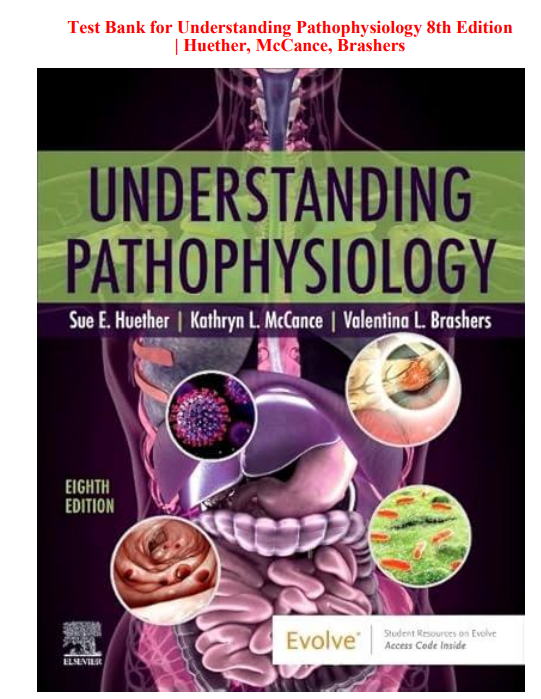
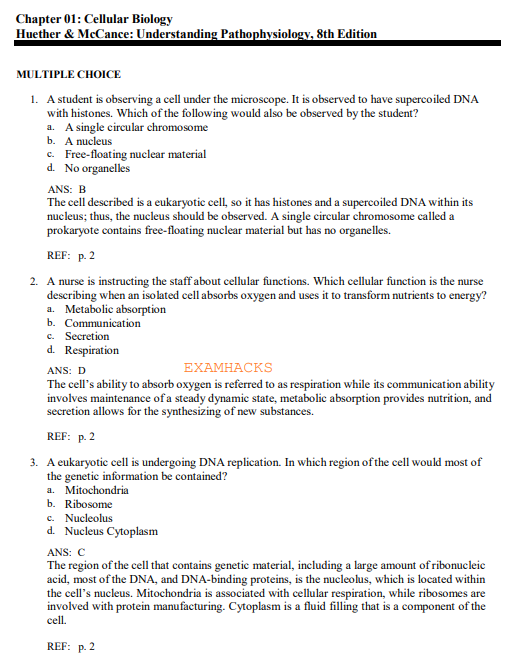
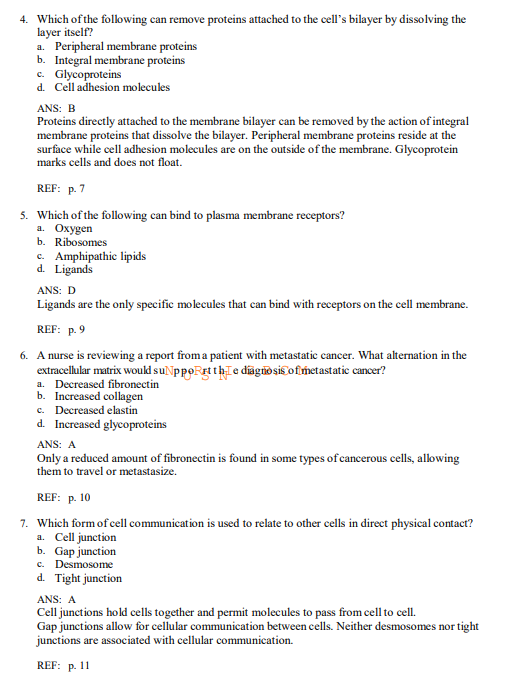
Pathophysiology is the subject that makes everything else in nursing make sense. Before you can understand why a patient in heart failure is short of breath, you need to understand what happens inside a failing ventricle. Before you can recognize why a diabetic patient’s wound will not heal, you need to understand what chronic hyperglycemia does to blood vessels and immune function. Before clinical nursing clicks, pathophysiology has to click first.
Huether and McCance’s Understanding Pathophysiology has been the gold standard pathophysiology textbook in nursing and allied health education for years. The 8th edition, now with Valentina Brashers as a contributing author, builds on that legacy with updated cellular and molecular content, expanded coverage of inflammation and immunity, stronger integration of genetics and genomics, and deeper exploration of the pathophysiological mechanisms behind the conditions nurses encounter most in clinical practice.
This test bank was built to match it. Every question is grounded in the mechanistic thinking Huether and McCance teach — not surface-level disease description, but the cellular, tissue, and system-level processes that explain why patients present the way they do, why complications develop, and why treatments work. That is the kind of thinking the NCLEX rewards and clinical practice demands.
What Is Inside
You get over a thousand practice questions covering every major body system and pathophysiological concept in the 8th edition. Questions are written in multiple-choice, select-all-that-apply, and ordered response formats — consistent with what you will encounter on nursing school exams and the NCLEX-RN.
Every question has a clearly marked correct answer. Every answer includes a full written rationale. The rationale does not just confirm what is right. It explains the pathophysiological mechanism behind the answer — the cellular event, the inflammatory cascade, the compensatory response, or the system failure that makes the correct option the only defensible choice. Reading those rationales is where the real learning happens. It is where pathophysiology stops being a list of facts and starts being a way of understanding patients.
Topics Covered
The test bank follows the complete structure of the 8th edition across every major content unit, including:
Cellular Biology and Genetics — cell structure and function, cellular communication and signal transduction, cellular adaptation and injury mechanisms, cell death including apoptosis and necrosis, epigenetics and gene expression, patterns of inheritance including autosomal and sex-linked disorders, chromosomal abnormalities, and the role of genetics and genomics in disease susceptibility and nursing practice
Alterations in Immunity and Inflammation — innate and adaptive immune responses, hypersensitivity reactions including types I through IV, autoimmune disease mechanisms, immunodeficiency disorders including primary and secondary causes, HIV infection and AIDS pathophysiology, stress and immune function, inflammation and the inflammatory response at the cellular and systemic level, and wound healing and tissue repair
Cancer Biology — cancer cell characteristics and tumor biology, carcinogenesis and cancer development stages, oncogenes and tumor suppressor genes, cancer invasion and metastasis mechanisms, tumor microenvironment, cancer-related paraneoplastic syndromes, cancer treatment mechanisms including chemotherapy and targeted therapy, and cancer in children
Fluid and Electrolyte and Acid-Base Disorders — fluid compartments and movement, edema pathophysiology, sodium and water balance disorders including hyponatremia and hypernatremia, potassium disorders, calcium and phosphate disorders, magnesium disorders, acid-base regulation mechanisms, respiratory acidosis and alkalosis, metabolic acidosis and alkalosis, and mixed acid-base disorders
Neurological Pathophysiology — neuron structure and function at the cellular level, action potential and synaptic transmission, cerebrovascular regulation and blood-brain barrier, traumatic brain injury pathophysiology, stroke mechanisms including ischemic and hemorrhagic subtypes, increased intracranial pressure and herniation syndromes, seizure disorders, neurodegenerative diseases including Alzheimer’s and Parkinson’s disease, demyelinating disorders including multiple sclerosis, spinal cord injury, pain mechanisms and modulation, and headache pathophysiology
Sensory and Cognitive Pathophysiology — visual system disorders including glaucoma and macular degeneration, auditory system pathophysiology and hearing loss mechanisms, vestibular disorders, and pathophysiology of sleep disorders
Endocrine Pathophysiology — hypothalamic-pituitary axis disorders, thyroid gland disorders including hypothyroidism and hyperthyroidism, parathyroid disorders and calcium regulation, adrenal gland disorders including Cushing syndrome and Addison disease, diabetes mellitus type 1 and type 2 mechanisms, diabetic complications including nephropathy, neuropathy, and retinopathy, and metabolic syndrome pathophysiology
Cardiovascular Pathophysiology — normal cardiac electrical conduction and the pathophysiology of dysrhythmias, heart failure mechanisms including systolic and diastolic dysfunction, coronary artery disease and atherosclerosis development, acute coronary syndrome pathophysiology, hypertension mechanisms and target organ damage, valvular heart disease, cardiomyopathy, pericardial disease, shock pathophysiology across all types, and peripheral vascular disease mechanisms
Pulmonary Pathophysiology — ventilation and perfusion relationships and V/Q mismatch, obstructive lung disease mechanisms in asthma and COPD, restrictive lung disease, pneumonia pathophysiology, pulmonary embolism mechanisms, acute respiratory distress syndrome, pulmonary hypertension, lung cancer development, and respiratory failure mechanisms
Renal and Urologic Pathophysiology — glomerular filtration and tubular function, acute kidney injury mechanisms and staging, chronic kidney disease progression, glomerulonephritis, nephrotic syndrome, urinary tract infection pathophysiology, renal calculi formation, urinary incontinence mechanisms, and renal tumors
Gastrointestinal Pathophysiology — mucosal defense and breakdown in peptic ulcer disease, gastroesophageal reflux disease mechanisms, inflammatory bowel disease including Crohn’s disease and ulcerative colitis, irritable bowel syndrome, malabsorption syndromes, intestinal obstruction and ischemia, liver disease including hepatitis and cirrhosis mechanisms, portal hypertension complications, acute and chronic pancreatitis, and gastrointestinal cancers
Musculoskeletal Pathophysiology — bone remodeling and disorders including osteoporosis and Paget disease, osteoarthritis and rheumatoid arthritis mechanisms, gout pathophysiology, muscle disorders including muscular dystrophy and myasthenia gravis, and bone tumors
Hematologic Pathophysiology — red blood cell disorders including iron deficiency, megaloblastic, hemolytic, and aplastic anemias, sickle cell disease mechanisms, polycythemia, platelet disorders and coagulation defects, disseminated intravascular coagulation, leukemia and lymphoma pathophysiology, and multiple myeloma
Reproductive Pathophysiology — menstrual cycle disorders, endometriosis, polycystic ovary syndrome, sexually transmitted infections and their pathophysiology, breast cancer mechanisms, cervical and uterine cancer, ovarian cancer, prostate cancer pathophysiology, and male reproductive disorders
Pathophysiology Across the Lifespan — fetal development and congenital abnormalities, pediatric pathophysiology considerations, and pathophysiological changes of aging and their clinical implications
Who Should Use This
This test bank is the right resource for nursing students taking a pathophysiology course based on Huether and McCance’s 8th edition who need consistent chapter-by-chapter practice that goes beyond memorization, undergraduate nursing students who find pathophysiology abstract and difficult to connect to clinical scenarios and need application-level questions to bridge that gap, NCLEX-RN candidates who want to strengthen the foundational science reasoning behind clinical nursing questions — because understanding the why makes every NCLEX system harder to get wrong, advanced practice nursing students who need to deepen their pathophysiological reasoning before moving into diagnosis and management content, and nursing faculty teaching pathophysiology who need a rigorous, mechanism-focused question pool for building exams that test understanding rather than recall.
Why the 8th Edition Specifically
Pathophysiology is not static. New understanding of cellular mechanisms, inflammatory pathways, and genetic contributions to disease continues to emerge. The 8th edition of Huether and McCance reflects those advances — with updated content on epigenetics, the microbiome and disease, updated cancer biology, expanded inflammatory and immune system content, stronger integration of genomics across body systems, and revised clinical content reflecting current disease understanding.
This test bank was written to align with the 8th edition specifically. The cellular mechanisms, pathophysiological explanations, and clinical connections in the questions reflect what is in this edition. If your program uses the 8th edition, this is the test bank that matches it.
5 Sample Questions
Question 1 A nurse is caring for a patient with left-sided heart failure. The patient is short of breath, has bilateral crackles in the lung bases, and an oxygen saturation of 89%. Using pathophysiological reasoning, which sequence of events best explains these findings?
A. Right ventricular failure causes systemic venous congestion, which backs up into the pulmonary circulation and causes alveolar flooding B. Left ventricular failure reduces forward cardiac output, causing increased left atrial pressure, pulmonary venous hypertension, and transudation of fluid into the alveoli C. Pulmonary vasoconstriction from hypoxia causes increased right heart afterload, which triggers compensatory left ventricular dilation and fluid accumulation D. Decreased renal perfusion from left heart failure causes immediate sodium retention, which directly floods the pulmonary alveoli within hours
Correct Answer: B Left-sided heart failure impairs the left ventricle’s ability to eject blood forward into the systemic circulation. Blood backs up into the left atrium, raising left atrial pressure and subsequently pulmonary venous pressure. This increased hydrostatic pressure in the pulmonary capillaries forces fluid across the capillary-alveolar membrane into the interstitium and eventually into the alveolar spaces — producing pulmonary edema, crackles, and hypoxia. Right ventricular failure causes systemic congestion, not pulmonary edema. Renal sodium retention contributes to volume overload over time but does not directly cause the acute alveolar flooding described.
Question 2 A 19-year-old patient is brought to the emergency department after a severe allergic reaction to a bee sting. The patient has urticaria, angioedema, bronchospasm, and a blood pressure of 72/44 mmHg. Which pathophysiological mechanism is primarily responsible for this presentation?
A. Type II hypersensitivity reaction causing antibody-mediated destruction of vascular endothelial cells B. Type III hypersensitivity reaction resulting in immune complex deposition in blood vessel walls C. Type IV hypersensitivity reaction driven by sensitized T lymphocytes releasing inflammatory cytokines D. Type I hypersensitivity reaction in which IgE-mediated mast cell degranulation releases histamine and mediators causing systemic vasodilation and bronchoconstriction
Correct Answer: D Anaphylaxis is a Type I hypersensitivity reaction. On prior sensitization, the immune system produced IgE antibodies against the bee venom antigen. These IgE antibodies bound to mast cells and basophils throughout the body. On re-exposure, the antigen cross-links those IgE antibodies, triggering massive mast cell degranulation and release of histamine, leukotrienes, and prostaglandins. These mediators cause systemic vasodilation producing hypotension, increased vascular permeability producing angioedema and urticaria, and bronchoconstriction producing respiratory distress. Type II, III, and IV reactions involve different immune mechanisms and do not produce this rapid systemic presentation.
Question 3 A patient with a 30-pack-year smoking history is diagnosed with emphysema. On pulmonary function testing, FEV1/FVC ratio is 0.58 and total lung capacity is elevated. Which pathophysiological explanation best accounts for these findings?
A. Airway inflammation causes mucosal edema and mucus hypersecretion that reversibly obstruct airflow B. Destruction of alveolar walls and loss of elastic recoil cause air trapping, hyperinflation, and irreversible airflow obstruction C. Bronchial wall thickening from fibrosis permanently reduces airway diameter and total lung capacity D. Pulmonary vascular remodeling causes increased airway resistance by compressing bronchioles from outside
Correct Answer: B Emphysema is caused by the destruction of alveolar walls, driven primarily by protease-antiprotease imbalance triggered by cigarette smoke-induced inflammation. Loss of alveolar walls eliminates the elastic tissue that normally recoils to expel air during exhalation. The result is air trapping, hyperinflation, and a barrel chest. The elevated total lung capacity reflects that air cannot be expelled efficiently. The reduced FEV1/FVC ratio confirms obstructive physiology. Unlike asthma, this obstruction is not reversible with bronchodilators because the structural destruction is permanent. Fibrosis would reduce total lung capacity, producing restrictive rather than obstructive physiology.
Question 4 A patient with chronic kidney disease has a serum potassium of 6.6 mEq/L. The nurse notes peaked T waves on the cardiac monitor. Using pathophysiological reasoning, why does hyperkalemia produce this cardiac effect?
A. Elevated potassium increases calcium influx into cardiac cells, speeding conduction velocity and producing peaked T waves B. Hyperkalemia reduces the resting membrane potential of cardiac cells, making them more excitable and altering repolarization C. Excess potassium blocks sodium channels in cardiac cells, preventing depolarization entirely and causing a flat ECG D. High serum potassium increases sympathetic stimulation of the heart, causing rapid repolarization visible as peaked T waves
Correct Answer: B The resting membrane potential of cardiac cells is determined largely by the ratio of intracellular to extracellular potassium. When serum potassium rises, this gradient decreases, causing the resting membrane potential to become less negative — a state called partial depolarization. This increases membrane excitability and alters the repolarization phase of the action potential, producing the characteristic peaked T waves seen on ECG. As hyperkalemia worsens, conduction slows, PR interval widens, QRS broadens, and ultimately ventricular fibrillation or asystole can occur. This is why hyperkalemia is a cardiac emergency requiring immediate intervention.
Question 5 A patient with cirrhosis develops ascites and confusion. Serum albumin is 2.1 g/dL and ammonia level is elevated. Which pathophysiological mechanisms explain both the ascites and the confusion in this patient?
A. Ascites results from portal hypertension and hypoalbuminemia reducing oncotic pressure, causing fluid to shift into the peritoneal cavity; confusion results from ammonia accumulation due to the liver’s inability to convert it to urea B. Ascites is caused by renal failure-induced sodium retention; confusion is caused by cerebral edema from hyponatremia C. Both ascites and confusion result from inflammatory cytokine release from the damaged liver activating systemic and cerebral inflammation simultaneously D. Ascites develops from lymphatic obstruction by regenerating liver nodules; confusion results from direct neurotoxicity of bilirubin accumulating in brain tissue
Correct Answer: A Cirrhosis causes two simultaneous pathophysiological processes that explain this patient’s presentation. First, liver scarring obstructs portal blood flow, raising portal venous pressure. Combined with reduced albumin synthesis — albumin is produced exclusively by the liver — oncotic pressure in the plasma falls. The combination of elevated hydrostatic pressure in portal vessels and reduced oncotic pressure allows fluid to shift into the peritoneal cavity, producing ascites. Second, the damaged liver loses its ability to convert ammonia — produced by gut bacterial metabolism of protein — into urea for renal excretion. Ammonia accumulates in the bloodstream and crosses the blood-brain barrier, producing hepatic encephalopathy, characterized by confusion, altered consciousness, and asterixis.
Frequently Asked Questions
Is this the official Elsevier test bank for Huether and McCance’s 8th edition? No. This is an independently developed study resource based on the content of Huether, McCance, and Brashers’ 8th edition. It is not published or endorsed by Elsevier or the original authors. It is a supplementary exam preparation tool for nursing and allied health students.
How many questions are in the test bank? There are over a thousand questions distributed across all major body systems and pathophysiological content areas in the 8th edition, with the greatest concentration in cardiovascular, pulmonary, neurological, endocrine, and renal pathophysiology — consistently the highest-yield content areas.
I find pathophysiology very abstract and hard to study. Will question-based practice actually help? Yes, significantly — but only if you engage with the rationales, not just the answers. Pathophysiology becomes manageable when you stop memorizing facts and start building mechanisms. Every rationale in this test bank is written to explain the mechanism behind the answer. Over time, working through these questions trains your brain to think in pathophysiological chains — cause leads to effect leads to clinical finding — which is exactly the thinking nursing school and the NCLEX reward.
Does understanding pathophysiology actually improve NCLEX performance? Consistently yes. Students who understand why patients present the way they do are far better equipped to reason through NCLEX questions they have never seen before. The NCLEX does not test memorized facts. It tests applied reasoning. Pathophysiology is the foundation of that reasoning. A student who understands the mechanism of fluid overload in heart failure will correctly answer questions about assessment findings, priority interventions, medication management, and patient teaching — without having memorized each question type separately.
Can advanced practice nursing students use this test bank? Yes. NP and DNP students need a deeper command of pathophysiological mechanisms than undergraduate students, and this test bank is written at a level of mechanistic detail that supports that preparation. Many advanced practice students use it to refresh and deepen their foundational science knowledge before moving into diagnosis and management content.
Does every question include a rationale? Yes, without exception. Every question has a correct answer and a full written rationale that walks through the pathophysiological mechanism behind the answer and explains why each wrong option reflects a misunderstanding of the underlying process. Reading every rationale — especially for questions answered correctly — is the most effective way to use this resource.
Can nursing faculty use this to build pathophysiology exams? Yes. Questions are organized by body system and chapter, making it straightforward to build unit exams or comprehensive assessments that test mechanism-level understanding rather than surface recall. The questions are written at the application and analysis levels appropriate for pathophysiology courses in undergraduate and graduate nursing programs.
What file format is the test bank delivered in? It comes as a digital file, typically in Word or PDF format. You can search by body system, condition, or cellular mechanism, print specific chapters for focused study sessions, and access it across multiple devices.
Is this test bank specific to the 8th edition only? Yes. It was written to align with the cellular mechanisms, pathophysiological explanations, and updated clinical content of the 8th edition, including its expanded genetics, epigenetics, and inflammatory content. Earlier editions do not reflect these updates. Always confirm your edition before purchasing.

Beverly –
Exactly what i needed to fast track my revision.
Janny Cummings –
It is as good as the official test bank.
Winnie M. –
I like it
Lucille Maria –
Perfect!